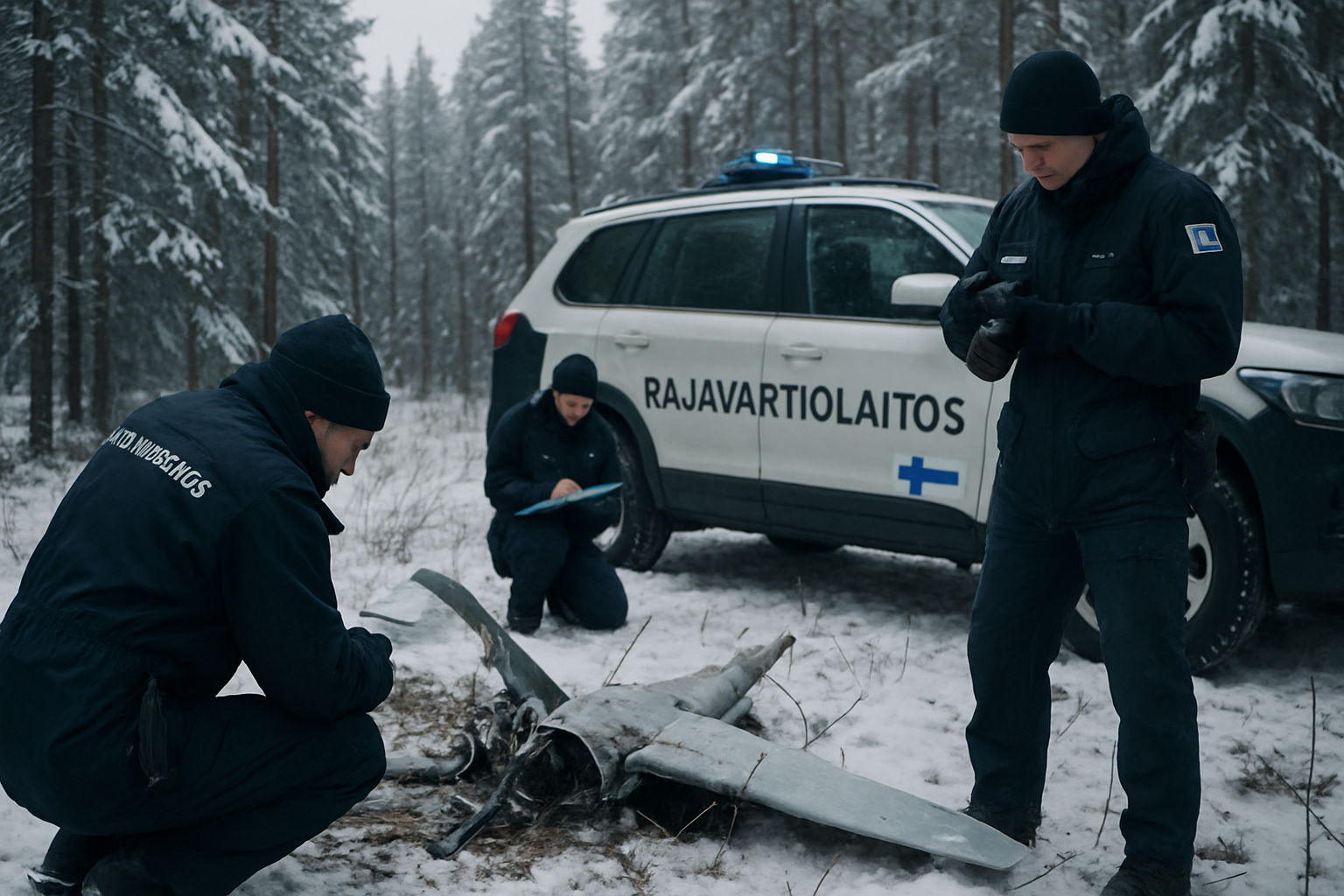
Finland launched a comprehensive investigation into suspected territorial violations after two Ukrainian drones crashed on its soil near the Russian border, marking the first time Ukrainian military assets have strayed into Finnish airspace since the war began.
The incident occurred Sunday morning in southeastern Finland's Kymenlaakso region, near the city of Kouvola, approximately 140 kilometers northeast of Helsinki. Finnish Air Force officials confirmed that at least one of the drones was Ukrainian, with Defense Minister Antti Häkkänen declaring the government is treating the matter "very seriously."
According to Finnish broadcaster Yle, the drones were detected as "several slow-moving objects" in the maritime zone near the Russian border before crashing on Finnish territory. Finnish police have cordoned off the crash sites as investigators work to determine the full circumstances surrounding the incident.
Regional Pattern Emerges
The Finnish drone crashes are part of a broader pattern affecting Baltic states in recent weeks. Estonia, Latvia, and Lithuania have all reported similar incidents involving Ukrainian drones that went astray during attacks on Russian oil export facilities along the Baltic Sea coast.
Just days earlier, Estonian authorities reported that a drone struck the chimney of the Auvere power station in the early morning hours, while Latvian officials confirmed a Ukrainian aircraft crashed and exploded approximately one kilometer from a parish center in Krāslavas county. Both incidents occurred as Ukraine has intensified drone attacks on Russian energy infrastructure as part of its strategy to weaken Russia's war economy.
"This is a suspected territorial violation — a very serious matter," Finnish Prime Minister Petteri Orpo stated during a press briefing. "They are probably Ukrainian drones, but the circumstances are being clarified and we will provide details later."
Escalating Baltic Tensions
The incident comes amid what intelligence officials describe as a systematic escalation of Russian provocations in the Baltic region. According to historical intelligence assessments, Russian military activity has increased by 23% since Finland and Sweden joined NATO, with a pattern of submarine incursions, GPS jamming, and underwater cable sabotage.
Lithuanian intelligence has previously warned that Russia could be ready for "limited military conflict" within 3-5 years if a Ukraine ceasefire permits Moscow to reconstitute its forces. This assessment has taken on new urgency following recent drone incidents across the region.
Military expert Joakim Paasikivi, commenting on the Finnish incident, suggested the drones likely went off course during their intended mission. Ukraine has been conducting an intensive campaign of long-range drone strikes against Russian energy infrastructure, including repeated attacks on the Ust-Luga oil terminal in the Leningrad region.
NATO Response and Security Implications
The drone incidents have triggered enhanced Baltic cooperation through NATO's Arctic Sentry mission, which includes intelligence sharing, satellite surveillance, and maritime patrols. The UK has doubled its troop presence in Norway from 1,000 to 2,000 personnel over three years, while Finland contributes operational planning expertise for Arctic operations.
In response to heightened regional tensions, Finland has announced plans to lift its comprehensive nuclear weapons ban "as soon as possible," with Defense Minister Häkkänen stating that current legislation is inadequate for NATO membership requirements. Sweden has similarly announced its willingness to host nuclear weapons during wartime, breaking an 80-year Nordic nuclear taboo.
These policy shifts occur against the backdrop of the New START Treaty's expiration in February 2026, which eliminated nuclear constraints between the US and Russia for the first time in over 50 years.
Energy Infrastructure Vulnerability
The targeting of Russian energy facilities that led to these drone incidents highlights the vulnerability of critical infrastructure in the Baltic region. Estonia has emerged as a renewable energy leader with 88% renewable electricity and continental Europe's largest battery storage facility, making energy security a paramount concern.
The systematic targeting of civilian energy infrastructure during winter conditions has been documented as violations of international humanitarian law. The Auvere power station strike in Estonia, operated by Enefit Power, demonstrated how military operations can affect civilian energy systems across borders.
Diplomatic Context
The Finnish investigation unfolds as Ukraine's peace negotiations with Russia remain indefinitely suspended due to the Iran crisis consuming American foreign policy attention. The February 2026 diplomatic breakthrough that achieved a 314-prisoner exchange and restored US-Russia military communications has stalled, with the June 2026 Washington summit deadline now uncertain.
Meanwhile, Ukraine has evolved from an aid recipient to a security provider, deploying military experts to five Middle Eastern countries to share expertise in combating Iranian Shahed drones—the same weapons being used against Ukrainian infrastructure that have now strayed into Finnish airspace.
Investigation Priorities
Finnish authorities are focusing on several key aspects of their investigation:
- Determining the exact flight path and intended targets of the drones
- Assessing any damage to Finnish infrastructure or property
- Evaluating air defense response procedures
- Coordinating with Ukrainian authorities on the incident
- Reviewing airspace monitoring capabilities along the Russian border
The investigation will also examine whether the incident represents a one-time navigational error or indicates broader challenges with long-range drone operations in the congested Baltic airspace.
Broader Security Implications
The drone incidents underscore the complex security challenges facing the Baltic region as the Ukraine conflict continues. With Estonia's technological leadership through initiatives like the Tallinn Cyber Diplomacy Winter School and AI-powered monitoring systems, the region has become a testing ground for 21st-century security cooperation.
Baltic national libraries have undertaken unprecedented cooperation in addressing geopolitical challenges, representing the first time cultural institutions have played a role in democratic resilience frameworks. This demonstrates how the security crisis extends beyond traditional military concerns.
Finnish officials emphasize that the investigation will be conducted transparently and in coordination with international partners. The incident serves as a reminder of how regional conflicts can have far-reaching implications for neighboring countries, even those not directly involved in hostilities.
As investigations continue, the Finnish government has pledged to strengthen its air defense capabilities and enhance coordination with Baltic and NATO partners to prevent similar incidents in the future. The outcome of this investigation may influence regional defense policies and cross-border cooperation frameworks for years to come.