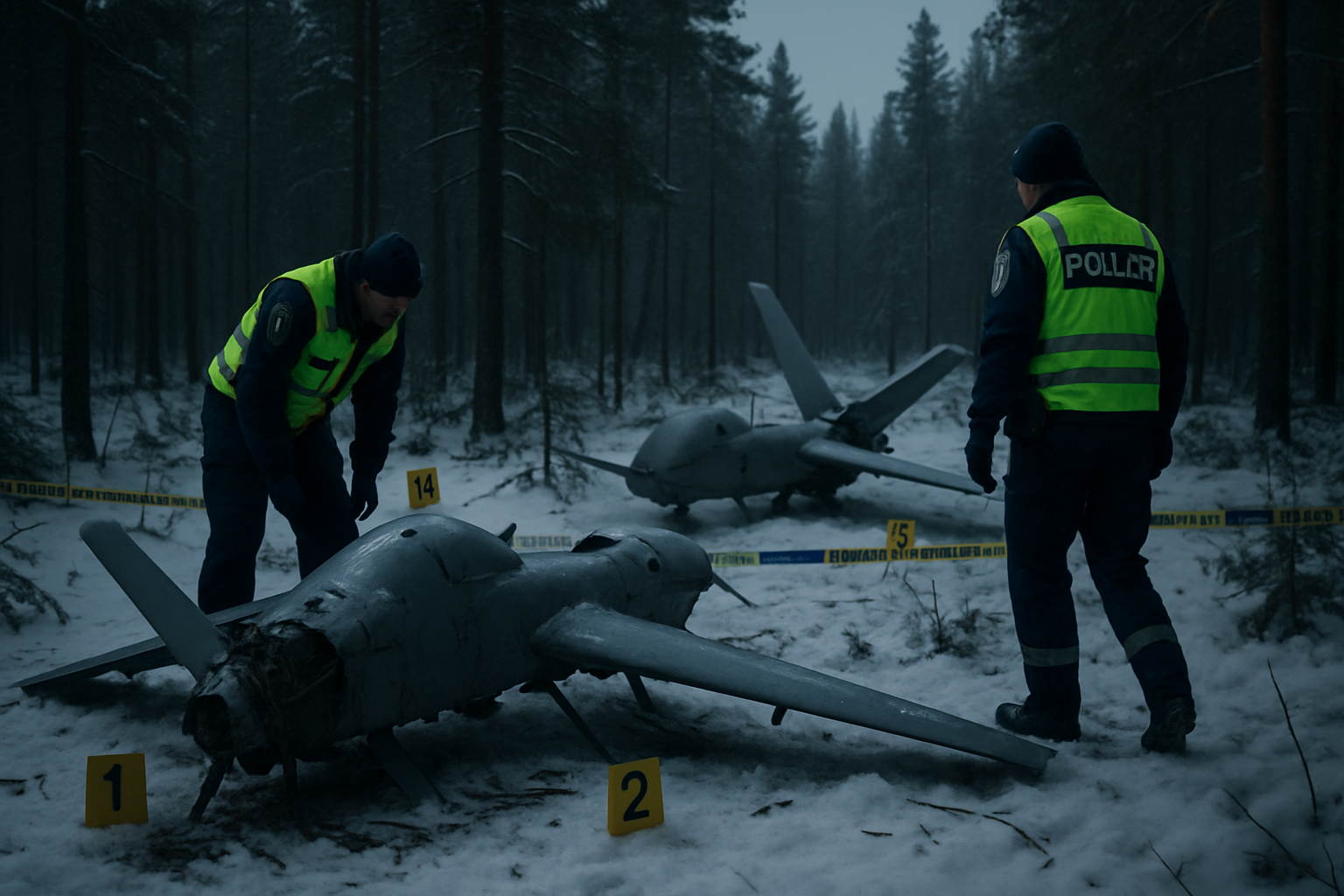
Two Ukrainian military drones crashed in southeastern Finland on March 29, 2026, prompting a comprehensive investigation into potential airspace violations as the broader Baltic region grapples with escalating security concerns.
Finnish authorities have cordoned off crash sites in the Kymenlaakso region near Kouvola, where at least one drone has been confirmed as Ukrainian military hardware by the Finnish Air Force. The incidents mark the first documented case of Ukrainian military assets straying into Finnish airspace since the conflict began, raising serious questions about operational oversight and regional security protocols.
Immediate Response and Investigation
Finnish Defense Minister Antti Häkkänen described the matter as being treated "very seriously" by authorities. Police have established security perimeters around both crash sites while conducting thorough investigations to determine the circumstances that led to the airspace violations.
President Alexander Stubb moved quickly to address public concerns, stating that there was "no military threat" to Finland following the discoveries. The reassuring message came amid heightened regional tensions that have seen similar incidents across the Baltic states in recent weeks.
"While these incidents are concerning, we want to assure the Finnish people that our assessment indicates no direct military threat to our nation."
— President Alexander Stubb
Regional Pattern of Escalation
The Finnish incidents are part of a broader pattern affecting the Baltic region. On March 25, Estonia's Auvere power station was struck by a Russian drone, while Latvia experienced a drone crash in Krāslavas county. These incidents collectively demonstrate the spillover effects of Ukraine's intensified energy infrastructure campaign against Russian war economy targets along the Baltic Sea coast.
The escalation comes amid intelligence reports of a 23% increase in Russian military activity since Finland and Sweden joined NATO. Lithuanian intelligence has warned that Russia could be ready for "limited military conflict" within 3-5 years, adding urgency to regional defense preparations.
Historic Security Transformation
Finland's response to these incidents reflects the country's dramatic security transformation since joining NATO. The nation is currently lifting its comprehensive nuclear weapons ban "as soon as possible," with Defense Minister Häkkänen stating that current legislation is inadequate for NATO membership requirements.
This policy shift, alongside Sweden's willingness to host nuclear weapons during wartime, breaks an 80-year Nordic taboo and occurs against the backdrop of the New START Treaty's expiration in February 2026 - the first time in over 50 years without US-Russia nuclear constraints.
Enhanced Baltic Cooperation
The incidents have accelerated implementation of NATO's Arctic Sentry mission, featuring unprecedented Baltic cooperation through intelligence sharing, satellite surveillance, and maritime patrols. The UK has doubled its troop presence in Norway from 1,000 to 2,000 personnel, while Finland contributes operational Arctic planning expertise.
Finland's role in this regional defense framework has expanded significantly, with the country contributing to enhanced air defense capabilities and cross-border cooperation mechanisms designed to prevent future incidents.
Investigation Priorities
Finnish authorities are focusing their investigation on several key areas: determining the exact flight paths of the crashed drones, assessing any damage to civilian infrastructure, evaluating air defense response protocols, and coordinating with Ukrainian officials to understand the operational circumstances.
The investigation includes a comprehensive review of airspace monitoring procedures and an assessment of whether existing detection systems adequately protected Finnish territorial integrity. Officials have pledged transparency in their findings and emphasized the importance of international coordination in addressing such incidents.
Broader Security Implications
These drone crashes highlight the complex security challenges facing the Baltic region in the 21st century. The incidents demonstrate how regional conflicts can have far-reaching implications for neighboring countries, requiring enhanced coordination and strengthened defense capabilities.
The response to these incidents affects regional defense policies and cross-border cooperation frameworks for years ahead. Success in preventing future incidents depends on strengthened air defense capabilities, enhanced NATO coordination, and continued diplomatic engagement with all parties involved.
Template for Future Responses
Finland's measured but firm response to these incidents provides a template for how democratic nations can address security challenges while maintaining proportionality. The emphasis on investigation, transparency, and international cooperation demonstrates the importance of institutional responses to territorial sovereignty concerns.
As the investigation continues, the incidents serve as a reminder of the evolving security landscape in Northern Europe and the need for adaptive, coordinated responses to emerging threats. The Finnish approach balances legitimate security concerns with diplomatic stability, offering a model for addressing similar challenges across the region.