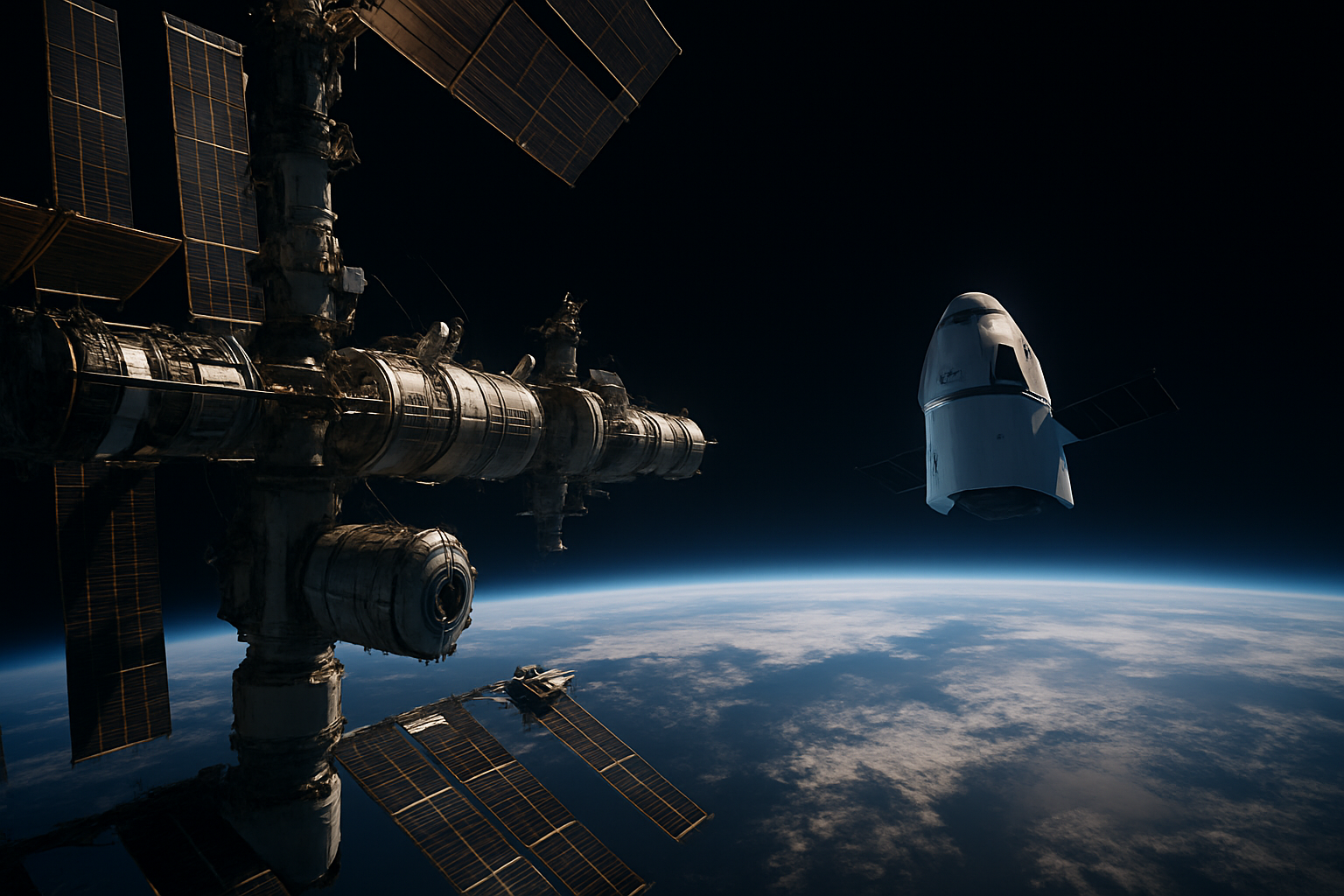
In a landmark revelation for space medicine, veteran NASA astronaut Mike Fincke has publicly identified himself as the individual who suffered the medical issue that prompted the first-ever medical evacuation from the International Space Station, forever changing the protocols for human spaceflight emergencies.
The historic evacuation, which occurred last month during what would have been the Crew-11 mission, represents a watershed moment in NASA's 65-year history of human spaceflight operations. According to official NASA communications released February 25, 2026, Fincke voluntarily disclosed his identity as the affected crew member, paying tribute to his "incredible teammates" who ensured his safe return to Earth.
Breaking Precedent in Space Medicine
The medical emergency that necessitated Fincke's evacuation marks an unprecedented event in the annals of space exploration. Never before in the history of the International Space Station, which has maintained continuous human presence since November 2000, has a crew member required emergency medical evacuation due to health complications developed in orbit.
Spanish media sources, including El País, report that the NASA pilot revealed he was the crew member whose medical condition forced the cancellation of the original Crew-11 mission timeline. The nature of the medical issue has not been disclosed, adhering to NASA's standard privacy protocols for astronaut medical information.
Impact on ISS Operations
The evacuation had cascading effects throughout the International Space Station program. The emergency return left the ISS operating with a skeleton crew of just three personnel, significantly below the optimal seven-person complement needed for maximum scientific productivity and operational safety redundancy.
This operational disruption necessitated the accelerated deployment of Crew-12, which successfully restored the station to full capacity on February 15, 2026. The replacement mission, featuring French astronaut Sophie Adenot as the first French woman to reach the ISS, demonstrates the resilience and adaptability of international space cooperation frameworks.
Current ISS operations have returned to normal seven-person capacity, with crew members conducting critical research including lung tissue cultivation studies and Space-Associated Neuro-Ocular Syndrome (SANS) research—both essential for future lunar settlements and Mars exploration missions.
Medical Emergency Protocols in Space
The successful execution of the first ISS medical evacuation validates decades of emergency preparedness planning by international space agencies. NASA, ESA, Roscosmos, and other ISS partners have long maintained detailed protocols for medical emergencies in orbit, but the Fincke evacuation represents the first real-world test of these systems.
Space medicine presents unique challenges compared to terrestrial emergency care. The microgravity environment affects human physiology in complex ways, potentially complicating both the development of medical conditions and their treatment. Additionally, the limited medical equipment aboard the ISS and the inability to perform complex surgical procedures in space create constraints that don't exist in Earth-based medicine.
The evacuation required coordination between multiple international space agencies, ground control centers, and medical teams across continents—a testament to the sophisticated international cooperation that makes ISS operations possible.
Historical Context and Significance
Mike Fincke's evacuation occurs during what space industry analysts term the transition from the "AI revolution to space economy golden age." This period has seen unprecedented developments in commercial spaceflight, with SpaceX preparing for a potential trillion-dollar IPO in June 2026, and increasing international competition in space capabilities.
The timing is particularly significant as it coincides with ongoing delays to NASA's Artemis II lunar mission, which has faced technical challenges including hydrogen leak issues and helium system failures. The successful medical evacuation demonstrates NASA's operational excellence in crew safety even as the agency works through challenges with its deep space exploration programs.
The evacuation also highlights the maturation of commercial crew capabilities. SpaceX's Dragon spacecraft, which has become the primary vehicle for ISS crew transportation since the retirement of the Space Shuttle, proved capable of adapting to emergency medical evacuation requirements—a capability that will be crucial for future deep space missions where emergency return to Earth may not be possible.
Implications for Future Space Exploration
The successful handling of the first ISS medical evacuation provides valuable lessons for future space exploration endeavors, particularly long-duration missions to the Moon and Mars where immediate return to Earth would be impossible.
Space medicine research has become increasingly critical as mission durations extend and crew sizes grow for lunar base operations and eventual Mars missions. The Fincke evacuation offers a real-world case study for medical emergency management in space, informing the development of protocols for missions where evacuation to Earth is not feasible.
Current ISS research programs, restored to full capacity following Crew-12's arrival, focus heavily on understanding how the human body adapts to long-duration spaceflight. Studies of SANS, cardiovascular changes, bone density loss, and muscle atrophy all contribute to preparing humans for the challenges of deep space exploration.
International Space Cooperation Strength
The evacuation showcased the strength of international partnerships in space operations. Despite terrestrial geopolitical tensions, the ISS continues to operate as a model of international scientific cooperation, with NASA, ESA, Roscosmos, JAXA, and CSA working together to ensure crew safety and mission success.
The rapid coordination required for the medical evacuation, followed by the successful Crew-12 mission that restored ISS operations, demonstrates the resilience of these partnerships. The mission included crew members from the United States, France, and Russia, continuing the tradition of multinational crews that has defined ISS operations for over two decades.
Looking Forward
As space exploration enters what many consider a "golden age," the lessons learned from Mike Fincke's historic medical evacuation will inform safety protocols for the next generation of space missions. The successful emergency response validates the investment in emergency preparedness and demonstrates the capability of current space systems to handle unexpected medical crises.
The evacuation serves as both a reminder of the inherent risks of human spaceflight and a testament to the sophisticated systems and international cooperation that make space exploration possible. As humanity prepares for sustained presence on the Moon and eventual missions to Mars, the protocols proven during this historic evacuation will help ensure crew safety in the most challenging environments humans have ever attempted to explore.
Mike Fincke's voluntary identification as the evacuated crew member, along with his tribute to his "incredible teammates," exemplifies the professionalism and dedication that define the astronaut corps. His experience has contributed valuable data to space medicine and emergency response protocols that will benefit all future space explorers as humanity expands its presence beyond Earth.