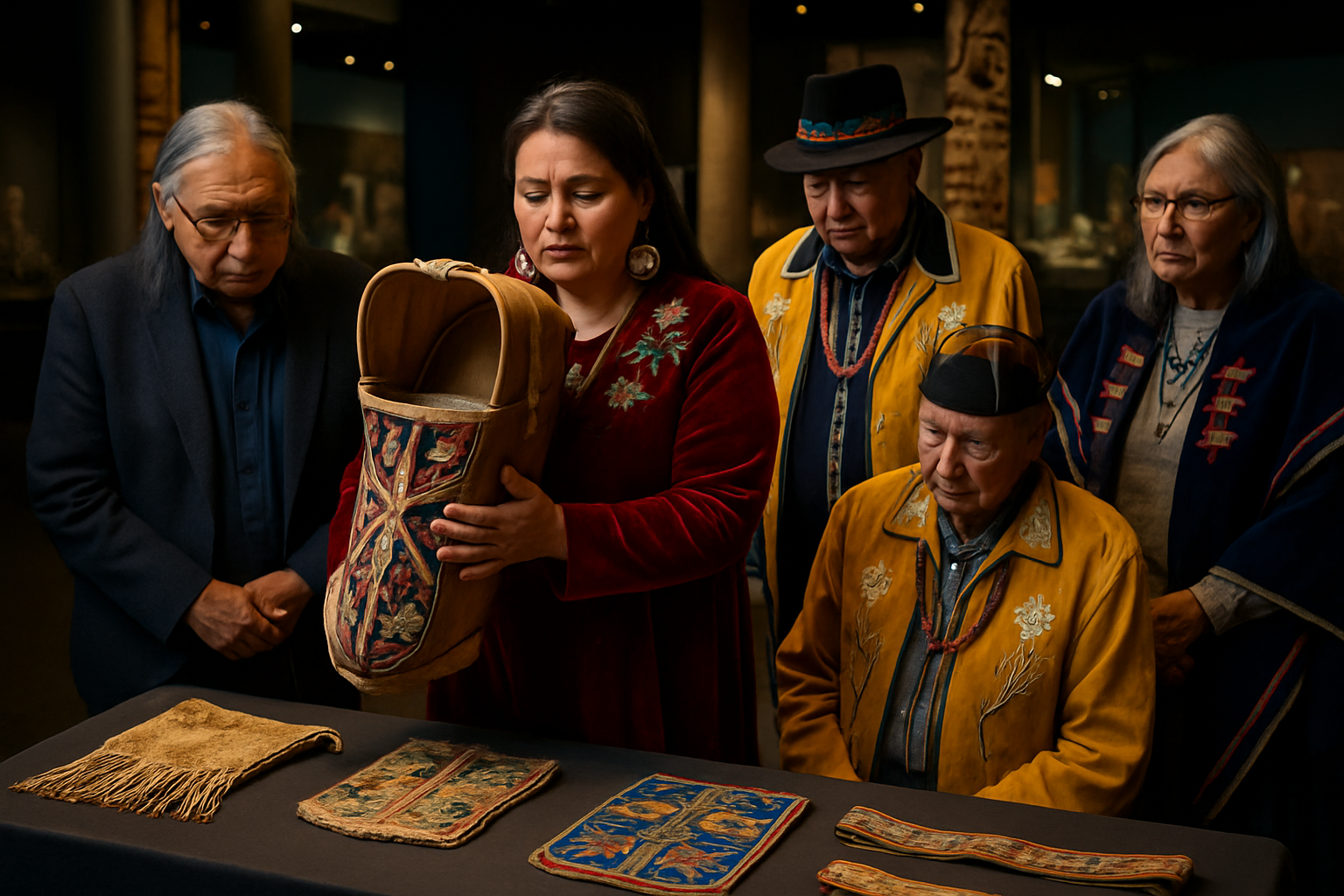
First Nations leaders unveiled five precious cultural items repatriated from Vatican collections after more than a century of separation, in an emotional ceremony Tuesday at the Canadian Museum of History in Gatineau, Quebec, marking another significant milestone in the global movement toward cultural restitution and reconciliation.
Assembly of First Nations National Chief Cindy Woodhouse Nepinak, holding a traditional Tikinagan baby cradle, led the unveiling ceremony as sacred items were returned to their originating communities following extensive negotiations with Vatican authorities. The ceremony represented not just the physical return of cultural artifacts, but a profound spiritual homecoming for Indigenous peoples whose heritage had been displaced for generations.
A Century-Long Journey Home
The five items, which had been housed in Vatican collections for over 100 years, represent more than mere historical artifacts—they embody the living spiritual and cultural traditions of First Nations peoples. The repatriation follows years of diplomatic engagement between Indigenous leaders, Canadian government officials, and Vatican representatives, building on the momentum of Pope Francis's historic 2022 visit to Canada and his formal apology for the Catholic Church's role in the residential school system.
National Chief Woodhouse Nepinak emphasized the profound significance of the moment, noting that these items carry the prayers, ceremonies, and cultural memory of countless generations. "These are not museum pieces," she stated. "They are living connections to our ancestors and our ongoing spiritual practices."
Part of Global Cultural Renaissance
The Vatican repatriation ceremony occurs within what cultural historians are documenting as the "2026 Cultural Renaissance"—an unprecedented period of international coordination in heritage preservation and cultural restitution. This movement has witnessed major voluntary repatriations worldwide, including the Netherlands' return of ancient Egyptian artifacts, France's restitution of sacred items to Ivory Coast, and the University of Cambridge's transfer of 116 African artworks to Nigeria and Benin.
The success of these repatriation efforts demonstrates a fundamental shift in how cultural institutions approach their collections, moving from acquisition-based models toward partnership-based approaches that prioritize community ownership and authentic cultural stewardship.
Technology Enhancing Traditional Preservation
Modern digital documentation techniques played a crucial role in facilitating this repatriation while ensuring the preservation of cultural knowledge. Advanced 3D scanning and digital archiving allowed for comprehensive documentation of each item before their return, creating permanent records that can be accessed globally while respecting the sacred nature of the objects and maintaining Indigenous community ownership.
This technological approach represents the sophisticated balance achieved in contemporary cultural preservation—using innovation to amplify rather than replace authentic cultural connections, enabling global accessibility while preserving local ownership and sacred protocols.
Economic and Diplomatic Dimensions
The Vatican repatriation extends beyond cultural significance to encompass important economic and diplomatic dimensions. Cultural heritage tourism generated by such high-profile repatriations creates substantial economic benefits for Indigenous communities while strengthening international relationships. The ceremony attracted international media attention and scholarly interest, positioning Canada as a leader in ethical cultural practices.
Moreover, the successful negotiation demonstrates the effectiveness of diplomatic approaches to cultural restitution, providing a template that other institutions and communities worldwide can adapt for similar initiatives.
Challenges and Future Implications
While celebrating this success, Indigenous leaders and cultural experts acknowledge the ongoing challenges in cultural repatriation. Climate change threatens the preservation of traditional materials, economic pressures affect the capacity for comprehensive cultural programming, and the need to balance global accessibility with authentic local expression remains complex.
However, the Vatican repatriation establishes important precedents for future cultural stewardship. The ceremony demonstrates that successful repatriation requires sustained political commitment, comprehensive community engagement, and international cooperation that respects Indigenous sovereignty while facilitating cultural exchange.
A Model for Cultural Reconciliation
The emotional ceremony at the Canadian Museum of History represents more than the return of historical objects—it symbolizes a broader transformation in how cultural heritage is understood and managed in the 21st century. The Vatican's voluntary repatriation, combined with the dignified and respectful ceremony organized by Canadian institutions, provides a powerful model for cultural reconciliation.
As National Chief Woodhouse Nepinak observed, these returned items will now serve their intended purpose: connecting contemporary Indigenous communities with their ancestral traditions, supporting ongoing cultural practices, and ensuring that sacred knowledge passes to future generations in accordance with traditional protocols.
The success of this repatriation effort contributes to a growing international recognition that cultural heritage represents shared humanity while belonging fundamentally to the communities that created it. This understanding drives the contemporary cultural renaissance, where institutions worldwide are discovering that ethical practices strengthen rather than weaken their role as bridges between cultures and guardians of human heritage.