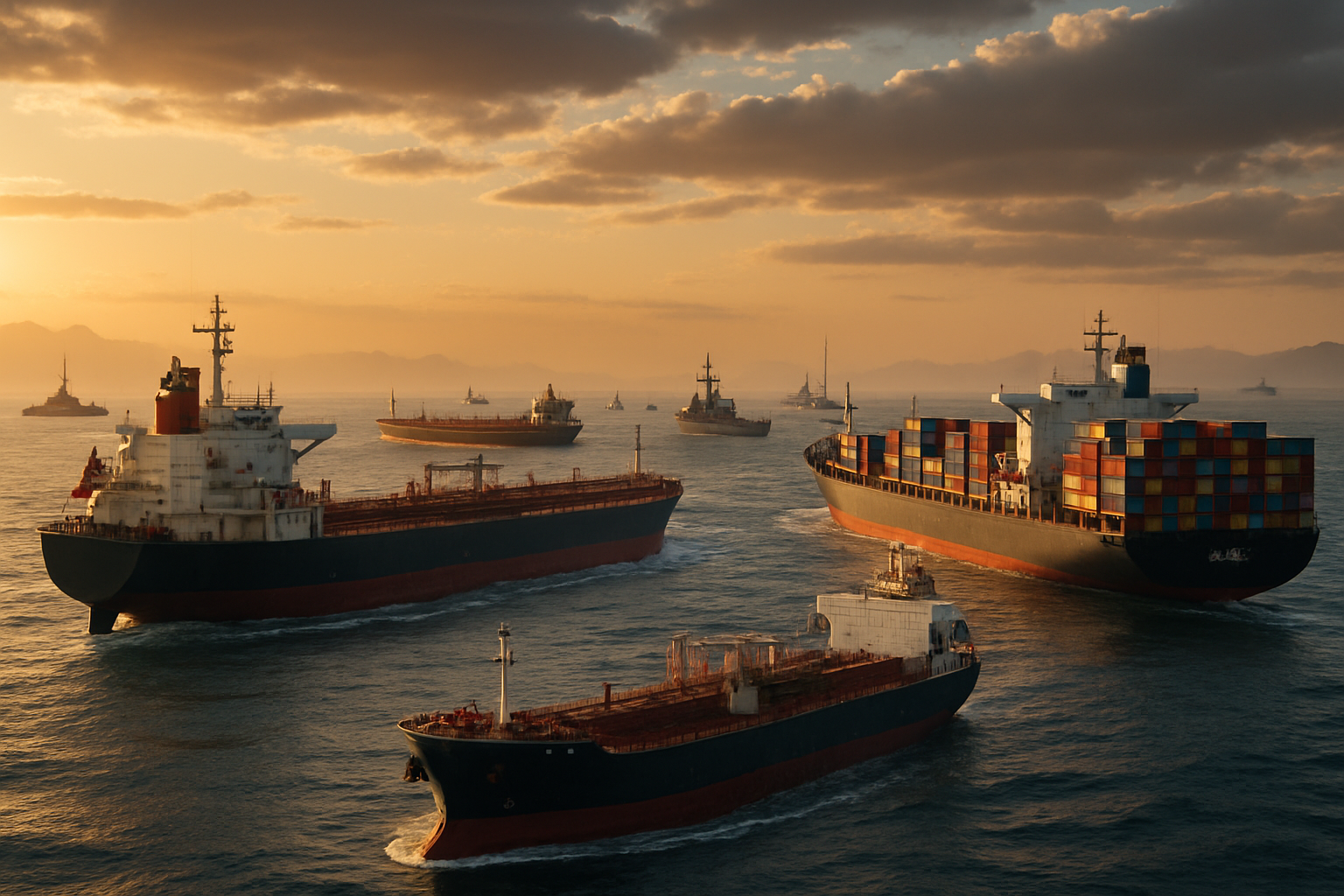
The first merchant vessels have successfully navigated through the Strait of Hormuz following the historic ceasefire agreement reached just 88 minutes before President Trump's "whole civilization will die tonight" deadline, marking the potential end of the most severe global energy crisis since the 1970s oil shocks.
According to multiple maritime tracking sources, including MarineTraffic, two commercial vessels have crossed the strategic 21-mile waterway that handles 40% of the world's seaborne oil transit. The breakthrough comes after Iran's Revolutionary Guard declared the strait "unsafe for shipping" for over a month, triggering unprecedented global disruption.
The Pakistan-Mediated Breakthrough
The diplomatic resolution emerged from intensive mediation by Pakistan Prime Minister Shehbaz Sharif and Field Marshal Asim Munir, who maintained round-the-clock contact with Vice President JD Vance and Iranian officials. Iran's 10-point proposal was accepted as a "workable basis for negotiations" by the Trump administration just hours before the deadline.
Iranian Foreign Minister Abbas Araghchi confirmed Iran's agreement to reopen the Strait of Hormuz for "safe passage" during a two-week ceasefire period "in coordination with Iranian armed forces." The arrangement represents the most direct US-Iran diplomatic engagement in decades.
"This represents a historic victory for diplomatic solutions over military confrontation."
— Iran Supreme National Security Council Statement
Global Markets React with Relief
Financial markets erupted in celebration as news of the ceasefire spread globally. Oil prices, which had surged from normal levels to a peak of $119.50 per barrel for Brent crude during the crisis, began their steepest decline in six years. Asian stock markets saw explosive rallies, with Pakistan's KSE-100 surging a record 12,362 points.
The International Energy Agency (IEA), which had deployed a record 400 million barrels from strategic reserves - the largest intervention in the agency's 50-year history - announced it would begin reducing the emergency release as supply concerns eased.
Aviation Industry Prepares for Recovery
The aviation sector, which saw over 18,000 flights cancelled worldwide at the crisis peak, began immediate preparations for route resumptions. Dubai International Airport, the world's busiest with 86 million passengers annually, started reopening procedures after being shut down due to missile damage.
Major carriers including Emirates, Air France-KLM, and Wizz Air announced they would resume suspended operations as eight Middle Eastern countries ended their simultaneous airspace closures. The crisis had created an "aviation black hole" severing critical Europe-Asia flight corridors.
Energy Crisis Background
The Strait of Hormuz crisis began in early March 2026 when Iran's Revolutionary Guard deployed between 2,000-6,000 naval mines throughout the waterway, effectively blockading the critical chokepoint. The action followed the collapse of US-Iran nuclear negotiations despite achieving "broad agreement on guiding principles" - the most diplomatic progress since the 2018 JCPOA breakdown.
The closure triggered cascading global effects:
- Over 150 oil and LNG tankers worth billions stranded in the Persian Gulf
- Major shipping companies Maersk and MSC completely suspended operations
- Natural gas prices exploded 24% in Europe and 78% in the United States
- Qatar halted LNG production affecting 20% of global exports
Consumer Relief Expected Globally
The reopening brings hope for immediate consumer relief worldwide. Bangladesh, which had implemented fuel rationing for 170 million people, announced it would review emergency measures. Pakistan is considering reversing wartime austerity policies that included four-day work weeks for government offices.
European households anticipate significant electricity and gasoline cost reductions, particularly in Sweden where prices had increased by 10-20 öre per kilowatt-hour during the crisis. Ireland, where heating oil approached €2 per liter, expects rapid normalization of energy costs.
The Human Cost
The month-long crisis extracted a severe human toll beyond economic disruption. Iran's Red Crescent reported over 787 civilian casualties from US-Israeli strikes during "Operation Epic Fury," the largest Middle East military operation since 2003. The Pentagon confirmed responsibility for an elementary school strike that killed 165-185 students due to "outdated targeting data."
International evacuations reached Arab Spring 2011 levels, with Australia requiring evacuation of 115,000 nationals and Germany extracting 30,000 stranded tourists. The EU activated its ESTIA evacuation plan for the first time in bloc history following Iranian drone strikes on Cyprus - the first attack on European territory since World War II.
Regional Coalition Preserved
The diplomatic breakthrough preserved the unprecedented Saudi-UAE-Qatar-Egypt consensus that supported negotiated solutions despite Iranian attacks on coalition territories. The UAE suffered one civilian killed in Abu Dhabi, Kuwait reported 32 injured in airport strikes, and Qatar had 8 wounded while intercepting 65 missiles and 12 drones with Patriot systems.
Egyptian President Abdel Fattah el-Sisi, who had warned of "comprehensive chaos" spreading across the region, welcomed the breakthrough as validation of diplomatic patience over military escalation.
Nuclear Diplomacy Window Created
While the crisis emerged from collapsed Geneva nuclear talks, the ceasefire creates a diplomatic window to address broader concerns. Iran continues 60% uranium enrichment with over 400kg of weapons-grade material - sufficient for multiple nuclear weapons if weaponized. The two-week framework provides opportunity for more comprehensive negotiations addressing nuclear concerns alongside regional security issues.
Formal talks are scheduled for Friday, April 10, in Islamabad under the "Islamabad Accord" framework, with potential participation from VP Vance, Steve Witkoff, and Jared Kushner. China expressed "full support" for the process, while Germany noted "positive signs" for sustained diplomatic engagement.
Template for 21st Century Crisis Resolution
UN Secretary-General António Guterres called the crisis "the greatest test of multilateral cooperation in the modern era." The Pakistan-mediated resolution demonstrates how middle powers can bridge major adversaries when traditional mechanisms fail, providing a template for future crisis management in an increasingly volatile interconnected world.
"This success demonstrates that diplomatic solutions are possible even in the darkest hours when maximum stakes affect energy security, nuclear governance, and international law enforcement simultaneously."
— António Guterres, UN Secretary-General
The breakthrough represents the most significant diplomatic achievement in 21st-century conflict resolution, showing preference for innovative diplomatic credibility over military escalation. However, success in converting the temporary pause into lasting stability will depend critically on the upcoming Islamabad negotiations.
Economic Recovery Timeline
While immediate relief is evident in financial markets, experts warn full economic recovery will require months. The aviation industry faces lengthy restoration of fuel supply chains despite the crisis resolution. Manufacturing supply chains dependent on Gulf logistics networks - including automotive, electronics, and textiles - will need time to remobilize stranded shipments.
The crisis exposed dangerous vulnerabilities in global energy architecture, with the 21-mile Strait of Hormuz proving a catastrophic single-point failure for modern logistics. Strategic petroleum reserves, while successful as a temporary buffer, highlight the urgent need for fundamental transformation to reduce dependence on geopolitical chokepoints.
Looking Forward
As the first ships pass through the reopened strait, the world watches carefully whether this diplomatic breakthrough can establish sustainable frameworks for future crisis prevention. The success or failure of the Islamabad talks will determine whether April 8, 2026, marks a temporary respite or a historic turning point toward more stable international relations in an era of increasing geopolitical competition.
The crisis has fundamentally altered perceptions of energy security planning, requiring accelerated supply diversification and renewable transitions that were previously considered long-term goals. The template-setting nature of this resolution will influence diplomatic approaches to territorial and nuclear disputes for decades, potentially strengthening multilateral cooperation mechanisms over military solutions in future international crises.