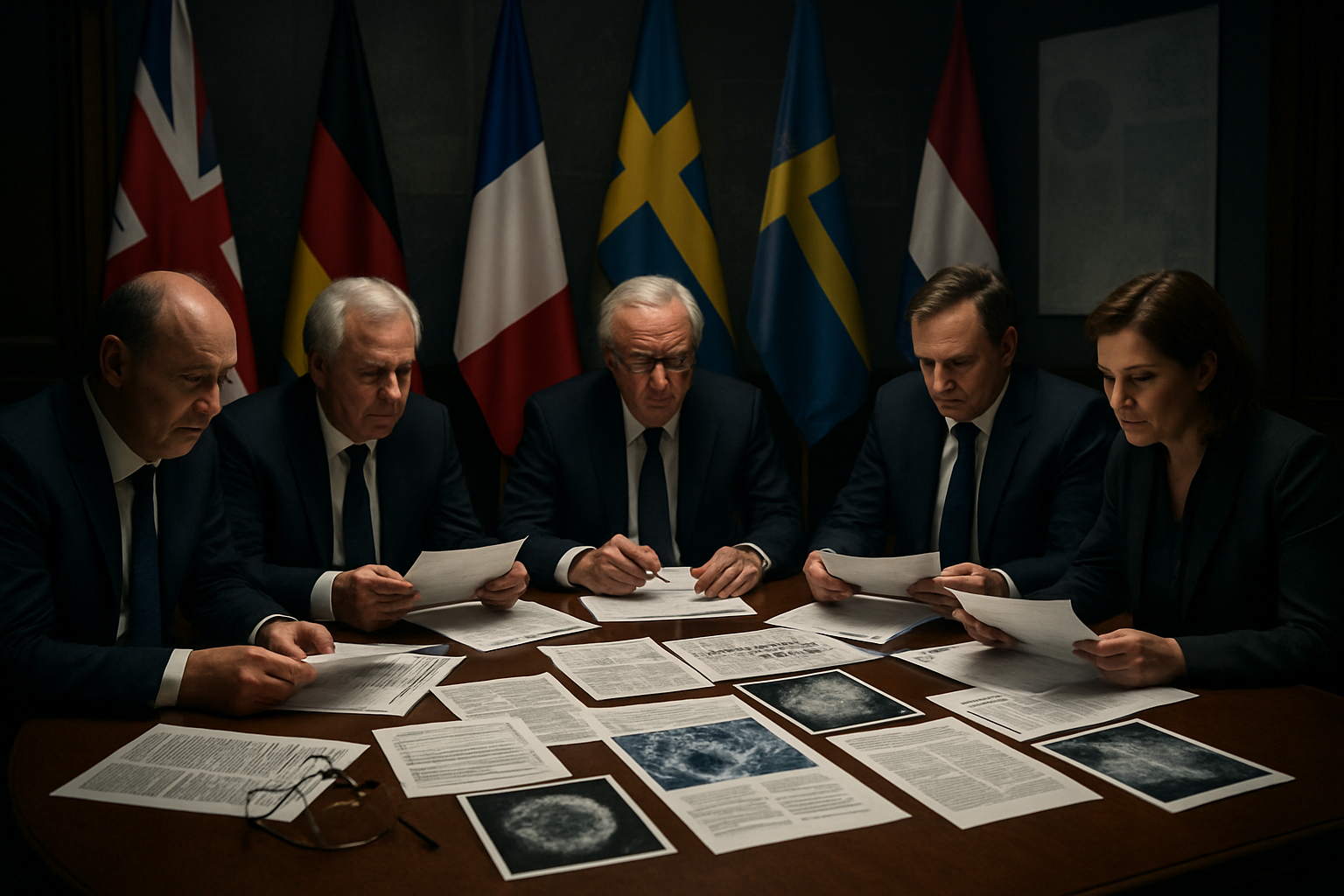
Five European nations have presented definitive scientific evidence that Russian opposition leader Alexei Navalny was assassinated using epibatidine, a lethal neurotoxin extracted from South American poison dart frogs, marking the most sophisticated state-sponsored assassination investigation in modern history.
The United Kingdom, Germany, France, Sweden, and the Netherlands announced their joint findings at the Munich Security Conference on February 14, 2026, exactly two years after Navalny's death at the IK-3 Arctic penal colony. The unprecedented multi-nation investigation represents a breakthrough in international forensic cooperation and accountability for state-sponsored assassinations.
Scientific Breakthrough in Post-Mortem Detection
The foreign ministries of all five nations stated that laboratory analysis conducted independently by multiple European facilities "conclusively confirmed the presence of epibatidine" in biological samples from Navalny's body. This achievement represents an extraordinary technical breakthrough, given that epibatidine typically breaks down rapidly in biological systems.
"The analysis provides unequivocal evidence that Russia had the means, motive, and opportunity to administer this poison," the joint statement declared. The toxin, naturally produced by Ecuadorian poison dart frogs (Epipedobates tricolor), is not found naturally in Russia and requires sophisticated state-level resources for synthesis and deployment.
"Russia used this lethal toxin to target Navalny out of fear of his opposition activities. It can only be Russia since he was in Russian custody."
— Maria Malmer Stenergard, Swedish Foreign Minister
The multi-laboratory confirmation using advanced mass spectrometry represents unprecedented cooperation in chemical weapons analysis. Experts describe the detection as remarkable given the two-year timeframe and the sophisticated nature of the toxin.
A Pattern of Exotic Assassination Methods
The use of epibatidine represents an evolution in Russia's assassination program beyond traditional chemical weapons. Previous attacks include Navalny's 2020 Novichok poisoning (which he survived), the 2006 polonium poisoning of Alexander Litvinenko, and the 2018 Novichok attack on Sergei and Yulia Skripal in Salisbury.
Swedish poison expert Erik Lindeman described the dart frog toxin as "extremely potent" and relatively unknown, emphasizing that its deployment was "no accident." The neurotoxin affects pain and movement receptors, causing death through respiratory paralysis.
The choice of epibatidine demonstrates Russia's deliberate shift toward increasingly exotic and untraceable substances that require exceptional technical capabilities to detect and identify. This escalation has profound implications for international security and the protection of dissidents worldwide.
International Legal Action Initiated
The five European nations announced they will formally report Russia to the Organization for the Prohibition of Chemical Weapons (OPCW) for violating the Chemical Weapons Convention. This marks the first documented use of epibatidine in a suspected state assassination.
The OPCW referral triggers formal international legal proceedings that could result in sanctions, asset freezes, and travel bans targeting Russian intelligence services. The action provides an unassailable scientific foundation compared to previous intelligence-based assessments.
German officials emphasized that the investigation establishes a dangerous precedent for 21st-century authoritarian assassination programs, requiring decisive international response to prevent normalization of such exotic murder methods.
Investigation Complexity and Coordination
The investigation required extraordinary European coordination and secrecy for biological sample transport across borders. Multiple laboratories employed specialized chemical weapons analysis using advanced equipment typically reserved for military applications.
The successful multi-nation investigation demonstrates unprecedented intelligence sharing among NATO allies and EU members, representing the most coordinated Western response to Russian state-sponsored assassination programs in decades.

Sources familiar with the investigation describe the technical challenges as immense, requiring specialized preservation techniques and detection methods developed specifically for this case. The breakthrough represents a new standard for international forensic cooperation in suspected state crimes.
Strategic Timing and Political Context
The announcement's timing at the Munich Security Conference, amid ongoing Ukraine-Russia peace negotiations and nuclear arms control discussions, was carefully calculated to maximize international attention and diplomatic pressure on Moscow.
Russia's Foreign Ministry spokesperson Maria Zakharova dismissed the findings as "Western propaganda deception," stating that Moscow would comment only when "test results and substance formulas are available." The Kremlin has consistently denied involvement in Navalny's death.
The revelation coincides with Russia's continued violations of international law in Ukraine, where systematic civilian targeting and energy infrastructure attacks during extreme winter conditions demonstrate persistent disregard for international humanitarian law.
Impact on Russian Opposition
The assassination effectively decapitated the organized Russian opposition movement. Navalny's Anti-Corruption Foundation continues operations from abroad, but lacks his charismatic leadership and ability to mobilize mass protests within Russia.
The sophisticated nature of the assassination sends a chilling message to Russian dissidents worldwide about the regime's technical capabilities and determination to eliminate opposition regardless of international consequences.
"This murder is now a scientifically proven fact. The murderer Putin must be held accountable."
— Yulia Navalnaya, Navalny's widow
International human rights organizations describe the case as a watershed moment that will either establish meaningful accountability for state-sponsored international crimes or demonstrate continued elite impunity in the face of overwhelming evidence.
Implications for International Security
The case tests international law enforcement mechanisms against authoritarian regime violence and establishes templates for investigating other suspicious opposition deaths. The European response provides a model for 21st-century conflict between democratic institutions and authoritarian assassination programs.
Nuclear security experts warn that the precedent, combined with the February 5, 2026 expiration of the US-Russia New START nuclear treaty, creates unprecedented uncertainty in international security architecture. The elimination of both legal constraints and opposition voices raises concerns about unchecked authoritarian power.
The investigation's success provides hope that scientific evidence and international cooperation can pierce the veil of state-sponsored violence, even when perpetrated by nuclear powers with significant global influence.
Technical and Legal Precedents
The case establishes several critical precedents: the first successful post-mortem detection of epibatidine in assassination investigations; the effectiveness of coordinated multi-nation forensic cooperation; and the ability to build unassailable scientific cases against state-sponsored international crimes.
Legal experts describe the evidence as providing a foundation for accountability measures that could extend beyond individual sanctions to broader restrictions on Russian state activities and international engagement.
The investigation methodology offers a template for similar cases worldwide, potentially affecting how democratic nations respond to authoritarian assassination programs and protect vulnerable dissidents and opposition figures.
Looking Forward
The definitive scientific evidence marks a turning point in international efforts to hold authoritarian regimes accountable for transnational crimes. Whether this leads to meaningful consequences for Russia or demonstrates the limits of international justice mechanisms will significantly impact global security and human rights enforcement.
The case represents the most comprehensive international investigation of suspected state assassination in modern history, setting standards for evidence collection, international cooperation, and legal accountability that will influence diplomatic and legal responses to state-sponsored violence for decades to come.
As the international community watches for concrete consequences, the Navalny investigation stands as both an achievement of scientific forensics and international cooperation, and a test of whether democratic institutions can effectively respond to sophisticated authoritarian violence in the 21st century.