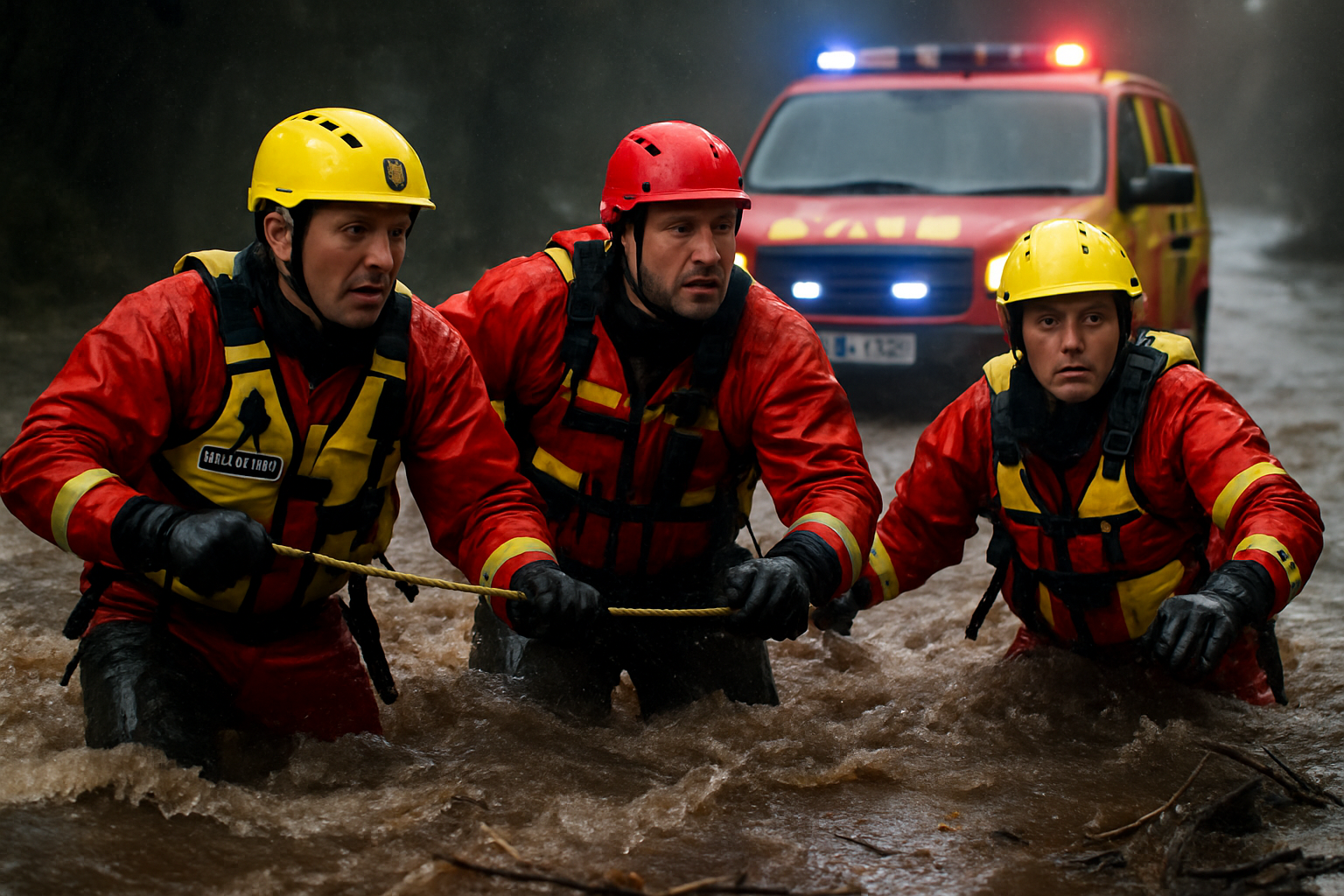
Police officers waded through fast-moving, thigh-deep floodwaters to rescue a schoolboy from a car trapped in dangerous flooding near Bundaberg, Queensland, as Australia faces a complex multi-state water emergency testing emergency services capabilities.
The dramatic rescue unfolded at Bargara, near Bundaberg, where two officers were captured on video pulling the boy through the window of a vehicle stuck in fast-flowing waters on a flooded causeway. The footage, posted to the local "Bargara Facebookers" community Facebook group, shows the officers carrying the child to safety through dangerous flood conditions.
The incident represents part of a broader flooding crisis sweeping multiple Australian states, with the tropical low-pressure system that hammered north Queensland now moving southward, bringing severe weather warnings and life-threatening conditions to populated areas.
Queensland Under Severe Weather Threat
The Bureau of Meteorology has issued severe weather warnings across Queensland, predicting six-hourly rainfall totals of up to 160mm as the tropical low continues its destructive path. The weather system, which devastated northern Queensland last week, is now bearing down on southeastern regions with unprecedented intensity.
Most of Queensland remains under flood watch conditions, with emergency services coordinating responses across vast geographical areas. The current crisis builds upon weeks of extreme weather that has tested the state's emergency preparedness systems and exposed infrastructure vulnerabilities.
Transportation networks face severe disruption, with major highways closed and alternative routes overwhelmed by floodwaters. The scale of the emergency has prompted authorities to advise residents against non-essential travel as conditions continue to deteriorate.
Northern Territory Faces Crocodile Dangers
In the Northern Territory, a separate but equally dangerous situation has emerged in Katherine, where hundreds of residents have been evacuated due to severe flooding. The Katherine River peaked at 19.2 metres – the highest level recorded since 1998 when devastating floods ravaged the area.
Local authorities have issued urgent warnings for residents to stay out of floodwaters due to the presence of crocodiles. "Crocs absolutely everywhere" has become the stark warning from emergency services, highlighting the unique dangers faced by Northern Territory communities during flood events.
The flooding has prompted the evacuation of Katherine Hospital and three local communities, representing one of the most significant emergency responses in the region's recent history. Emergency services report that traditional flood defenses have been overwhelmed by the scale of the current weather system.
Climate Crisis Context
These dramatic rescue operations occur within the context of an unprecedented global climate crisis. According to extensive climate data, January 2026 marked the 20th consecutive month that global temperatures exceeded 1.5°C above pre-industrial levels, creating conditions for extreme weather events that traditional infrastructure was not designed to handle.
The current flooding crisis in Australia demonstrates the increasing frequency and intensity of extreme weather events that emergency services must now manage. Historical flood patterns no longer provide reliable guidance for emergency planning, forcing adaptation to new climate realities.
Emergency management experts emphasize that the simultaneous nature of these flooding events across multiple states represents a fundamental shift from sequential to concurrent disasters, challenging traditional mutual aid mechanisms that typically allow resources to be shared between regions.
Emergency Services Response
The rescue of the schoolboy near Bundaberg exemplifies the heroic efforts of emergency services personnel who risk their own safety to protect communities. Video footage of the rescue shows the dangerous conditions first responders face, with fast-moving water capable of sweeping away vehicles and threatening lives.
Emergency services across Australia report operating at capacity limits, with personnel and equipment stretched across multiple simultaneous incidents. Traditional emergency response models, designed for isolated events, are being tested by the scale and frequency of current weather emergencies.
The coordination of rescue operations has required innovative approaches, with emergency services utilizing social media and community networks to identify people in need of assistance and coordinate volunteer support efforts.
Infrastructure Vulnerabilities Exposed
The current crisis has exposed critical vulnerabilities in Australia's infrastructure systems, particularly transportation networks and flood defenses. Roads and causeways designed for historical weather patterns are proving inadequate for current extreme precipitation events.
The flooding in Katherine represents a particular challenge, with the town's strategic location making it a crucial transportation hub for the Northern Territory. The evacuation of the hospital demonstrates how essential services can be overwhelmed when infrastructure operates beyond design parameters.
Agricultural sectors face mounting challenges as drought-hardened soil struggles to absorb sudden heavy rainfall, creating rapid runoff conditions that contribute to dangerous flash flooding. This drought-to-flood cycle represents a new challenge requiring adaptive agricultural practices.
Community Resilience and Response
Despite the challenges, Australian communities have demonstrated remarkable resilience and mutual support during the current crisis. Local residents have assisted with evacuations, provided emergency accommodation, and supported rescue operations through community knowledge and volunteer efforts.
The posting of rescue footage to community Facebook groups illustrates how social media has become an essential tool for emergency communication and community coordination during crisis events. These networks enable rapid information sharing and resource coordination at the community level.
Mental health services report increased demand as communities cope with repeated extreme weather events. The psychological impact of losing homes, businesses, and community infrastructure requires ongoing support resources as recovery efforts begin.
Looking Toward Recovery and Adaptation
Recovery from the current flooding crisis is expected to take months, with some infrastructure damage potentially requiring years to fully repair. Government officials emphasize the importance of "building back better" with climate-resilient infrastructure designed for future rather than historical weather patterns.
Climate scientists warn that current conditions provide a preview of routine circumstances expected in the 2030s without significant climate adaptation investment. The choice between reactive crisis management and transformative infrastructure adaptation has become increasingly urgent as extreme weather events test national response capabilities.
International cooperation frameworks are being tested as simultaneous environmental emergencies affect multiple continents, limiting traditional mutual aid mechanisms. Australia's experience provides valuable lessons for other nations preparing for similar climate challenges.
The dramatic rescue of the schoolboy near Bundaberg, while representing successful emergency response, also symbolizes the new reality facing Australian communities. As extreme weather becomes more frequent and intense, such heroic rescues may become increasingly common, underscoring the urgent need for comprehensive climate adaptation strategies to protect lives and communities.