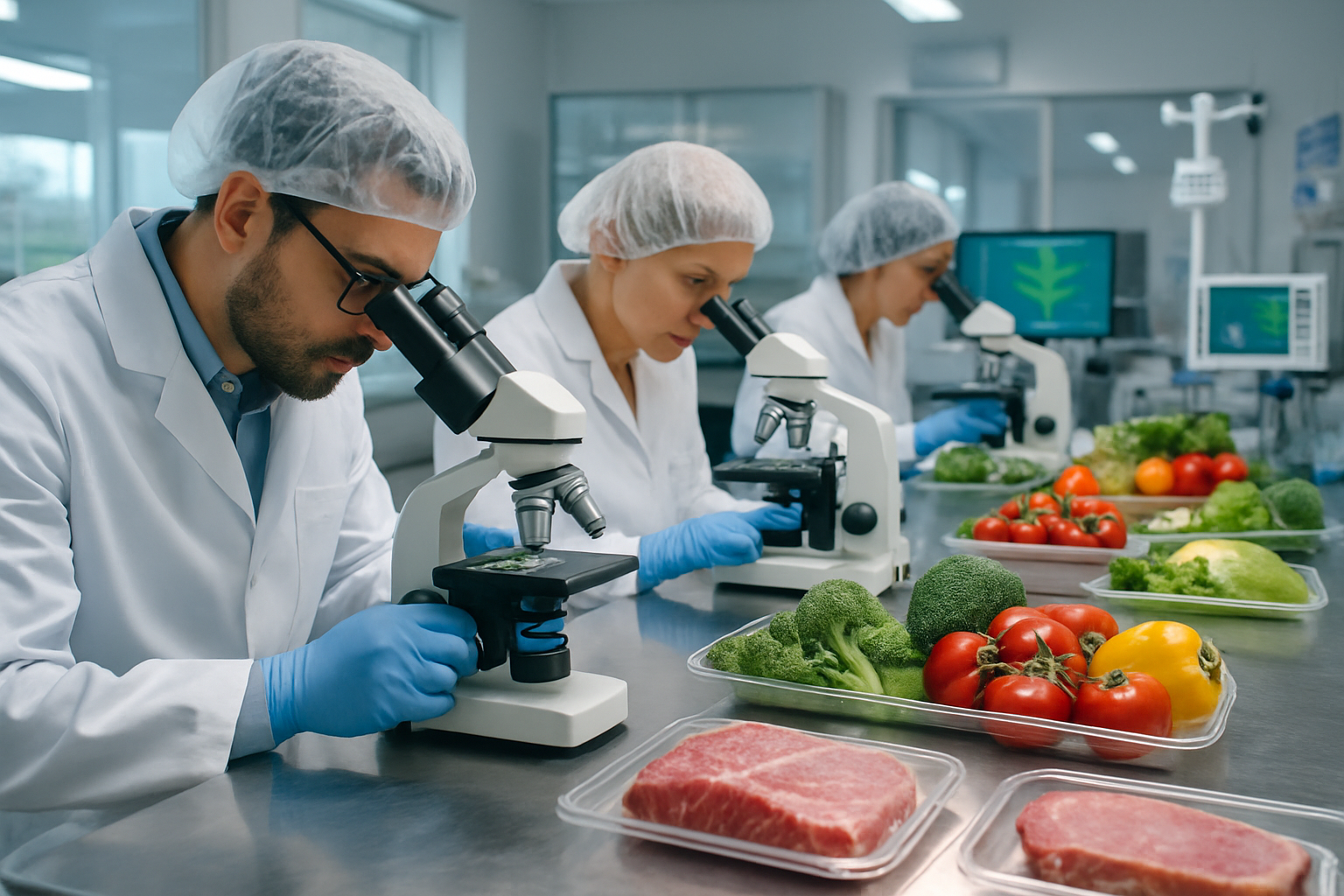
A comprehensive investigation across six countries reveals an unprecedented convergence of food safety violations and agricultural innovations, highlighting both critical vulnerabilities in global food systems and promising developments in sustainable farming practices during Earth's 19th consecutive month of temperatures exceeding 1.5°C above pre-industrial levels.
Widespread Food Safety Violations Expose System Weaknesses
Egypt's veterinary authorities in Gharbia Province seized 1,814 kilograms of meat, poultry, and lobster deemed unfit for human consumption due to unknown origins and improper slaughter practices. The operation demonstrates the ongoing challenges in maintaining food safety standards amid climate pressures that create optimal conditions for pathogen growth and disrupt traditional preservation methods.
This latest seizure adds to a growing pattern of food safety violations documented throughout 2026, building on the devastating European infant formula contamination crisis that affected over 36 infants across multiple countries with cereulide toxin from major manufacturers including Nestlé and Danone products.
Agricultural Innovation Amid Climate Challenges
Contrasting with safety concerns, Jordan launched a comprehensive strategic initiative package for agriculture and food security under the Economic Modernization Vision's second executive program (2026-2029). The government's "high-value industries" initiative emphasizes research, development, and innovation while expanding the use of modern technologies to enhance Jordan's global competitiveness and strengthen national food security systems.
The Jordanian approach represents sophisticated technology-tradition integration that successful agricultural adaptation requires. By combining cutting-edge agricultural science with traditional farming wisdom, the initiative demonstrates how developing nations are becoming agricultural innovation centers rather than merely technology recipients.
European Agricultural Adaptation Efforts
Latvia's agricultural sector demonstrates practical innovation through food preservation education and sustainable cooking initiatives. Agricultural experts are promoting improved storage techniques for fresh leafy greens to reduce food waste, while simultaneously advancing spinach cultivation that serves multiple culinary applications beyond traditional salad preparations.
These seemingly modest innovations address critical challenges in food security by maximizing the nutritional value and longevity of locally-produced vegetables. The focus on reducing post-harvest losses aligns with global efforts to improve food system efficiency amid mounting climate pressures.
Market Price Dynamics Reflect Supply Chain Stress
Nicaragua's Oriental Market experienced significant price reductions for tomatoes and onions due to improved supply of perishable products, according to trader reports. This price volatility illustrates the complex market dynamics affecting food accessibility across Latin America, where local supply disruptions can rapidly affect consumer prices and food security.
"Good supply of perishable products has enabled these price reductions for essential vegetables,"
— Oriental Market traders, Nicaragua
The price movements in Nicaragua contrast sharply with global food inflation trends documented elsewhere, demonstrating how localized agricultural success can provide immediate relief to consumers even amid broader international supply chain disruptions.
Nutritional Innovation Addresses Modern Health Challenges
Slovakia's agricultural sector is advancing evidence-based nutritional recommendations addressing modern lifestyle challenges. Experts revealed breakfast combinations featuring enhanced fiber content and protein combinations for sustained satiation, supporting broader health objectives through dietary optimization that emphasizes complex carbohydrates, protein, and fiber combinations to optimize metabolic function.
This nutritional innovation breakthrough demonstrates how agricultural production increasingly connects with public health outcomes, recognizing food security as encompassing both quantity and nutritional quality in agricultural planning and development initiatives.
Climate Context Amplifies Food Safety Risks
The developments occur during Earth's 19th consecutive month of temperatures exceeding the critical 1.5°C threshold above pre-industrial levels, with January 2026 confirmed as the hottest month in recorded history. This sustained warming fundamentally alters traditional farming cycles, water availability, and pest management requirements worldwide, forcing rapid agricultural system evolution from historical patterns to climate-responsive approaches.
Climate change creates optimal conditions for pathogen growth while disrupting traditional preservation methods, making food safety enforcement increasingly challenging. The intersection of extreme weather events, temperature anomalies, and supply chain disruptions creates compound vulnerabilities that traditional regulatory frameworks struggle to address effectively.
Technology-Traditional Knowledge Integration Success
The most effective agricultural adaptations demonstrate sophisticated synthesis of cutting-edge technology with traditional farming knowledge and community-based management systems. Jordan's strategic framework combines modern research capabilities with generations of regional agricultural expertise, while Latvia's preservation innovations build on traditional food storage wisdom enhanced by contemporary scientific understanding.
This integration approach proves superior to purely technological solutions that ignore local traditions and community needs, representing agricultural development maturation beyond simple technology transfer toward comprehensive systems that respect indigenous knowledge while incorporating beneficial innovations.
South-South Cooperation Emerges as Key Strategy
The agricultural developments reflect a broader trend where developing nations increasingly share expertise through peer-to-peer partnerships, bypassing traditional North-South aid dependencies. Jordan's initiative draws from regional agricultural knowledge networks, while Nicaragua's market improvements benefit from Central American agricultural integration efforts.
This South-South cooperation approach proves more culturally appropriate and economically sustainable than conventional development assistance, enabling countries to adapt innovations developed in similar climatic and economic contexts rather than importing solutions designed for different environments.
Economic Development Beyond Farm-Level Production
Agricultural innovation increasingly functions as an economic development engine extending far beyond simple food production. Jordan's technology integration creates sustainable rural employment while supporting food security objectives. Latvia's food preservation education supports both household economics and commercial food processing capabilities.
The economic multiplier effects include improved transportation networks, enhanced processing capabilities, and expanded international trade opportunities, strengthening entire economic systems through agricultural sector modernization while maintaining cultural food traditions.
Prevention-Focused Transformation Required
Industry experts identify 2026 as a critical transformation turning point requiring enhanced international coordination, climate-adaptive processing technologies, and prevention-focused approaches that integrate traditional dietary wisdom with modern safety science. The shift from reactive crisis management to proactive resilience building demonstrates superior cost-effectiveness while protecting vulnerable populations.
Success requires sustained political commitment that transcends electoral cycles, adequate and predictable funding for both emergency response and long-term development, and comprehensive approaches that address infrastructure, market access, climate adaptation, and social protection systems simultaneously.
Strategic Implications for Global Food Security
The window for building resilient, equitable food systems continues narrowing rapidly as climate change accelerates and population growth increases agricultural resource demands. However, the agricultural innovation demonstrated across Jordan, Latvia, Nicaragua, and Slovakia provides templates for scaling successful interventions globally through community empowerment, technological innovation, and international cooperation.
The convergence of immediate food safety crises with long-term agricultural transformation initiatives demonstrates both the vulnerability and adaptability of global food systems. Egypt's contamination seizures highlight ongoing enforcement challenges, while Jordan's strategic initiatives show how proactive agricultural policy can build resilience against multiple stressors.
Implementation Challenges and Success Factors
Successful agricultural transformation faces persistent challenges including funding sustainability for developing nations with immediate economic pressures that can override long-term environmental considerations. Technical capacity building requires sustained investment in education, training, and institutional development, while climate change disrupts project timelines and requires adaptive management responding to rapidly changing conditions.
Critical success factors include community ownership of agricultural initiatives, international cooperation that respects local autonomy, economic viability that provides tangible benefits to rural communities, transparent governance systems, and sustained political commitment to agricultural development as a national priority.
Future Trajectory Depends on Coordinated Response
The agricultural innovations and food safety challenges documented across these six countries in March 2026 potentially determine whether food production and safety systems can keep pace with environmental change while serving growing populations during the critical climate action decade ahead.
Success depends on sustained international cooperation, enhanced coordination across multiple sectors and scales, and increased financial commitments that recognize food security as essential infrastructure for human prosperity and planetary sustainability. The human dimension remains central—millions of farmers, food workers, and vulnerable communities depend on stable and fair global food systems.
The tools and knowledge exist for comprehensive responses to both immediate food safety threats and long-term agricultural sustainability challenges. The critical question remains whether political will, economic incentives, and international cooperation can align rapidly enough to address the speed and scale of current challenges while maintaining the effectiveness principles that ensure community benefit and environmental protection.