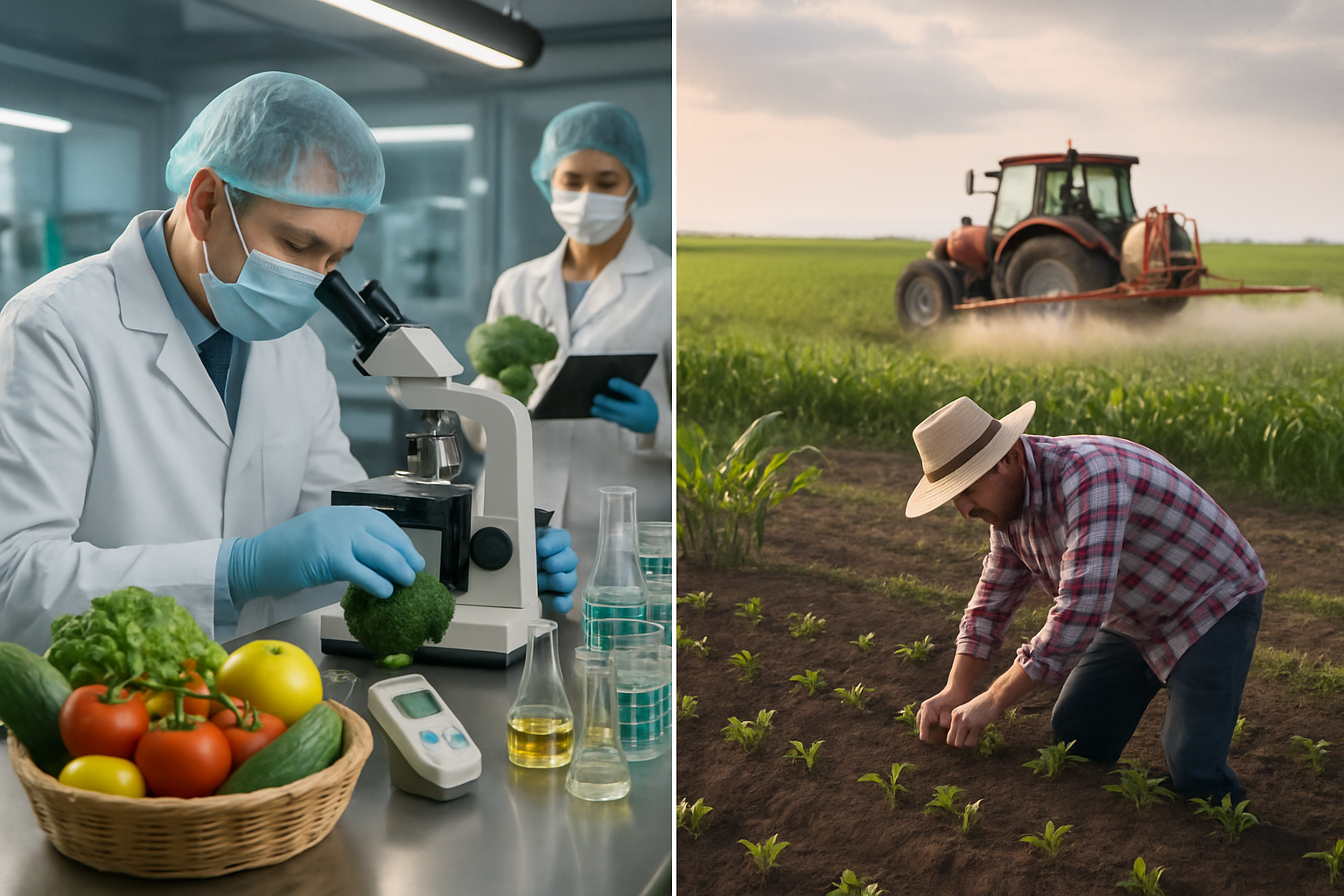
Food safety authorities in Algeria and Norway have launched urgent enforcement actions this week, highlighting a deepening global crisis that threatens public health as agricultural systems struggle under the weight of climate change and regulatory gaps.
In Algeria's Blida province, national gendarme forces seized 46 tons of bananas stored illegally in an unauthorized warehouse, representing the latest in a series of major food safety operations across North Africa. The operation, conducted as part of ongoing efforts to combat illegal speculation and market manipulation, underscores the growing challenges facing food safety enforcement in developing nations.
Simultaneously, Norwegian retail giant Coop issued an emergency recall of its Wokmiks Teriyaki products after discovering undisclosed sesame allergens in the dressing sachets. The recall affects 350-gram packages across the country and represents a critical food labeling failure that could pose life-threatening risks to consumers with severe allergies.
Part of Escalating Global Pattern
These incidents occur within the context of an unprecedented global food safety crisis that has unfolded throughout 2026. The World Health Organization has documented contamination incidents across more than 40 countries since January, with European authorities grappling with cereulide toxin contamination in infant formula that has affected over 36 infants across the UK, France, Luxembourg, and Greece.
The crisis has been amplified by climate conditions, with March marking the 19th consecutive month of global temperatures exceeding 1.5°C above pre-industrial levels. These sustained elevated temperatures create optimal conditions for pathogen growth while disrupting traditional food preservation methods that have protected public health for centuries.
"Climate change is fundamentally altering the food safety risk landscape. We're seeing heat-stable toxins surviving pasteurization processes and contamination patterns that don't follow historical models."
— Dr. Elena Rodriguez, EFSA Food Safety Expert
Supply Chain Vulnerabilities Exposed
The Algerian banana seizure reveals critical vulnerabilities in global agricultural supply chains. The 46 tons of illegally stored produce represents not just a food safety risk, but a breakdown in the complex systems designed to ensure food quality from farm to consumer. Sources within Algeria's agricultural ministry indicate this is part of a broader pattern of storage violations affecting multiple commodities across the country.
In Norway, the allergen mislabeling incident highlights how even sophisticated food safety systems can fail at critical junctures. The presence of undisclosed sesame in Coop's Wokmiks product demonstrates the challenges of managing increasingly complex ingredient supply chains, particularly for products containing multiple components from different suppliers.
These failures come as consumer confidence in multinational food corporations continues to decline, with measurable shifts toward local sourcing and simplified supply chains offering greater transparency and traceability. Economic implications include rising insurance costs for food manufacturers and mandatory investments in enhanced molecular testing capabilities.
International Response and Coordination
The European Food Safety Authority is developing standardized international protocols and coordinated early warning systems to prevent cross-border contamination incidents. The agency has revised safety thresholds for various contaminants and is implementing enhanced molecular testing protocols capable of detecting heat-stable toxins that survive conventional processing methods.
Social media platforms have emerged as powerful enforcement tools, with viral videos exposing food safety violations accelerating regulatory responses. This democratization of food safety oversight has empowered consumers to participate directly in quality control, fundamentally transforming traditional regulatory approaches that relied primarily on official inspection systems.
The African Continental Free Trade Agreement is establishing coordinated agricultural standards that enable individual nations to address food safety challenges that would be impossible to tackle independently. Similar regional cooperation frameworks are emerging across other continents as the global nature of food supply chains demands coordinated responses.
Climate Change as Amplifying Factor
Industry experts have identified 2026 as a critical transformation turning point that requires enhanced international coordination, climate-adaptive food processing technologies, and prevention-focused approaches that integrate traditional dietary wisdom with modern safety science.
The sustained warming trend has created unprecedented challenges for food safety systems designed around historical climate patterns. Traditional seasonal disease patterns are being disrupted, allowing pathogens that typically peak at different times to co-circulate, overwhelming health systems and food safety infrastructure.
Agricultural systems worldwide are experiencing fundamental disruptions to growing cycles, water availability, and pest management strategies. These changes are creating additional stress on food production and storage systems, contributing to the increased frequency of contamination incidents.
Economic and Social Implications
The mounting food safety crisis carries significant economic implications beyond immediate health risks. Insurance costs for food manufacturers are rising substantially, while mandatory molecular testing infrastructure investments are straining industry resources. The infant formula sector has been particularly affected, with potential long-term market share losses forcing companies to reassess their quality control systems.
Prevention-focused strategies are demonstrating superior cost-effectiveness compared to reactive crisis management approaches. Countries implementing comprehensive prevention programs report improved community resilience and reduced demands on healthcare services, suggesting a viable path forward despite current challenges.
The human dimension remains central to sustainable solutions, with millions of farmers, food workers, and vulnerable communities depending on stable and fair global food systems. The effectiveness of global responses will determine whether 2026 marks a turning point toward more resilient systems or deeper food insecurity for the world's most vulnerable populations.
Looking Ahead: Prevention and Resilience
Success in addressing the current crisis requires sustained political commitment, adequate funding, and unprecedented international cooperation that addresses both immediate safety threats and long-term resilience building. The window for building resilient, equitable food systems is narrowing rapidly as climate pressures accelerate and population growth increases demands on agricultural resources.
The convergence of humanitarian emergencies, agricultural policy reforms, and climate challenges demonstrates both the vulnerability and adaptability of global food systems. While immediate crises like those in Algeria and Norway require urgent responses, the development of innovative approaches in other regions provides templates for sustainable food security models.
As authorities continue to grapple with mounting challenges, the choices made in 2026 regarding safety protocols, international cooperation frameworks, and prevention strategies will potentially be decisive for global food security trajectories in the decades ahead. The integration of traditional wisdom with modern science, enhanced international cooperation, and recognition of food security as a global public good represent essential foundations for addressing the unprecedented challenges facing food systems worldwide.