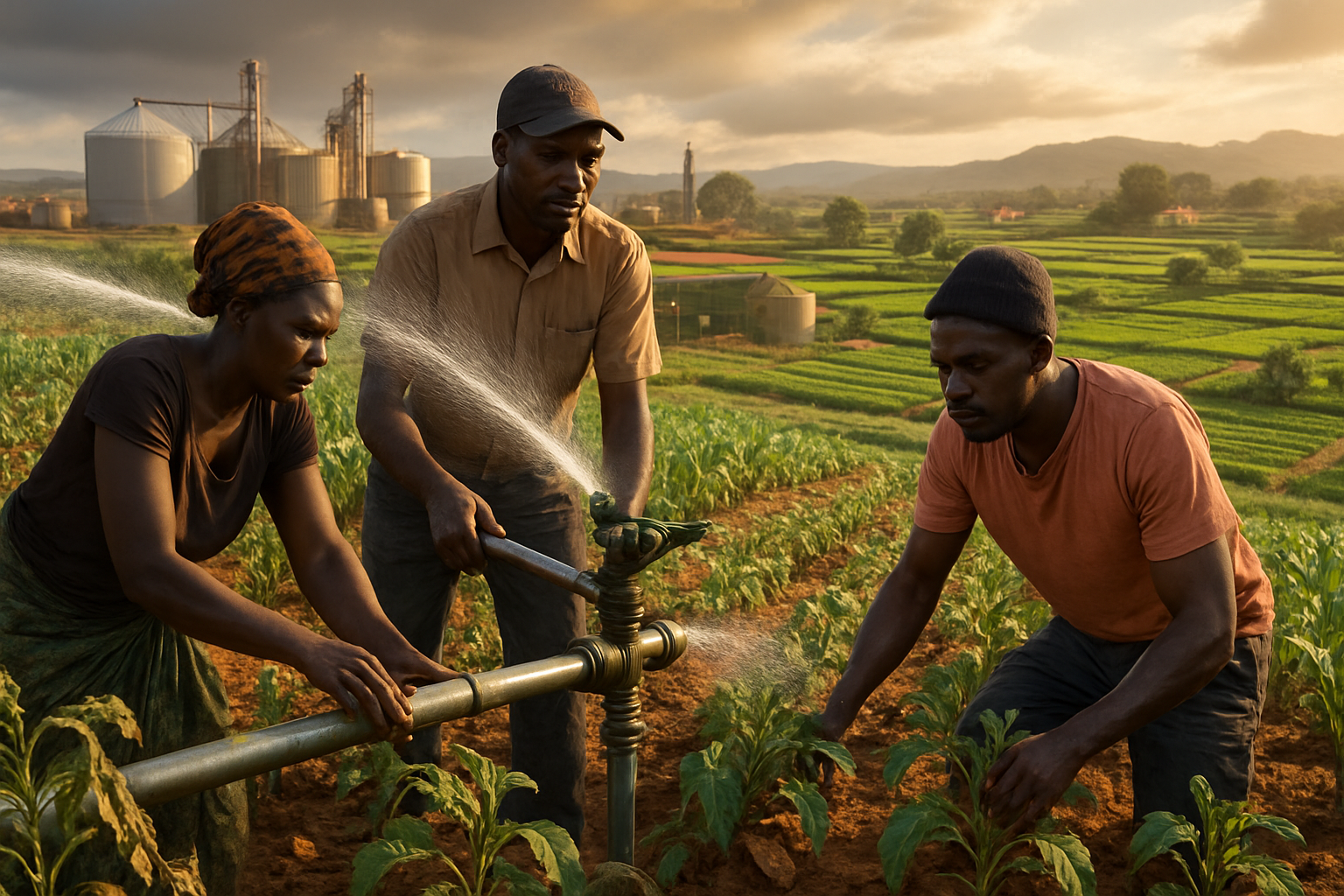
A new comprehensive investigation reveals mounting food security challenges across five nations, from Indonesia's potential school meal program reductions to Greece's livestock export restrictions, occurring during the 20th consecutive month of global temperatures exceeding 1.5°C above pre-industrial levels.
The convergent crises—spanning agricultural trade disruptions, climate-induced production challenges, and domestic food price volatility—paint a sobering picture of global food systems under unprecedented environmental and economic stress.
Indonesia Considers School Meal Cuts Amid Budget Pressures
Indonesia faces difficult decisions regarding its free school meal program, with officials exploring potential scaling back to reduce costs. The program, which has been a cornerstone of the country's nutritional support for students, now confronts budget constraints that threaten its sustainability.
This development comes as Indonesia grapples with broader economic pressures and coincides with the country's recent implementation of comprehensive social media restrictions for minors under 16, demonstrating the government's attempt to balance various policy priorities affecting children.
Greece Battles Foot-and-Mouth Disease Export Crisis
Greece's agricultural sector faces severe disruptions as seven countries have closed their borders to Greek meat exports following foot-and-mouth disease outbreaks. The crisis extends beyond meat products, with particular concern for Greece's renowned feta cheese exports.
The outbreak has triggered heightened vigilance across European food safety networks, reflecting the interconnected nature of global food supply chains where local agricultural challenges quickly become international concerns. Greek authorities are working with European partners to contain the outbreak and restore export confidence.
"These countries concerned about foot-and-mouth disease have not only blocked meat imports but have also raised concerns about other products"
— Greek Agricultural Official
Jordan's Tomato Market Stabilization Efforts
Jordan's Agriculture Minister Saeb Khrisat confirmed that recent tomato price increases in local markets following Ramadan were linked to reduced supply relative to daily demand. The minister expressed optimism that conditions would improve as production increases in the coming days.
The situation illustrates the delicate balance between supply and demand in agricultural markets, where even temporary shortfalls can trigger price volatility affecting household budgets. Jordan's daily tomato requirement of approximately 500 tons currently faces a supply gap, with available quantities reaching only 480 tons.
Norway's Pre-Easter Price Competition
Norwegian retailers are engaged in aggressive price competition on fruits and vegetables ahead of Easter celebrations, with experts suggesting these are primarily marketing tactics rather than genuine market improvements. The competitive pricing reflects broader consumer concerns about food affordability during holiday periods.
This pricing strategy occurs within Norway's broader context of adapting to climate variations, including recent unseasonably warm temperatures reaching 14 degrees Celsius as an early taste of spring following a harsh winter marked by wet, foggy conditions.
Malaysia's Agricultural Water Crisis
In Malaysia's rice-growing regions, temperatures have climbed to dangerous levels during Eid al-Fitr celebrations, severely impacting the country's agricultural heartland. Key dams supporting Malaysia's "rice bowl" have dropped below 8% capacity as the heatwave persists, threatening both immediate crop yields and longer-term food production capacity.
The crisis has dried out rice fields across the peninsular region and drained reservoirs to critically low levels, prompting religious authorities to organize special prayers for rain—a stark indication of the severity of the situation.
Climate Context: The 20th Consecutive Month Above Critical Thresholds
These agricultural challenges unfold against the backdrop of January 2026 marking the hottest month in recorded human history, extending an unprecedented 20-month streak of global temperatures exceeding 1.5°C above pre-industrial levels. This sustained warming represents the longest period of such extreme temperatures in recorded climate data.
The persistent heat is fundamentally altering traditional farming cycles worldwide, affecting water availability, pest management patterns, and seasonal predictability that has guided agricultural practices for millennia. Traditional growing seasons are becoming unreliable, forcing farmers to adapt rapidly to changing environmental conditions.
Emerging Solutions and International Cooperation
Despite these challenges, innovative approaches are emerging across the globe. South-South cooperation initiatives are gaining prominence as developing nations share agricultural expertise through peer-to-peer partnerships, bypassing traditional aid dependencies.
Successful adaptation strategies demonstrate the importance of integrating cutting-edge technology with traditional farming knowledge and community-based management systems. Countries implementing comprehensive agricultural protection programs are showing greater economic resilience and attracting sustainable investment.
Economic Multiplier Effects
The food security challenges create broader economic implications extending well beyond agriculture. Supply chain disruptions affect transportation, processing, and international trade networks. Energy price surges, partially driven by geopolitical tensions, are increasing production and distribution costs throughout food supply chains.
Countries implementing prevention-first approaches to agricultural resilience are demonstrating superior economic outcomes through reduced crisis intervention costs, decreased unemployment, and improved workforce productivity. These investments in agricultural infrastructure are increasingly viewed as strategic 21st-century necessities rather than optional expenditures.
Looking Forward: Templates for Resilience
The diverse challenges facing Indonesia, Greece, Jordan, Norway, and Malaysia provide valuable lessons for global food security planning. Each nation's response offers different pathways toward agricultural resilience—from supply chain management and climate-smart agriculture to agro-processing innovation and water infrastructure development.
Success factors consistently include community ownership, transparent governance, sustained political commitment, and international cooperation that respects local autonomy while providing technical and financial support. The window for building resilient, equitable food systems is narrowing rapidly as environmental pressures intensify.
"The tools and knowledge exist for comprehensive responses to food security challenges, but success depends on coordinated action during this critical climate action decade"
— International Agricultural Expert
The Path Ahead
As March 2026 unfolds, these agricultural developments may prove decisive for global food security trajectories in the decades ahead. The convergence of climate pressures, supply chain vulnerabilities, and economic instabilities creates what experts describe as a "perfect storm" for global food systems.
Yet agricultural communities are demonstrating remarkable adaptive capacity when supported by appropriate policies, infrastructure investment, and international cooperation. The challenge lies in scaling successful interventions globally while maintaining the flexibility and innovation necessary for continued adaptation during humanity's most challenging environmental period.
The human dimension remains central to all solutions—millions of farmers, food workers, and vulnerable communities depend on stable, fair global food systems. The choices made in 2026 regarding agricultural adaptation, international cooperation, and innovation investment will determine whether food production systems can keep pace with environmental change while serving growing populations.