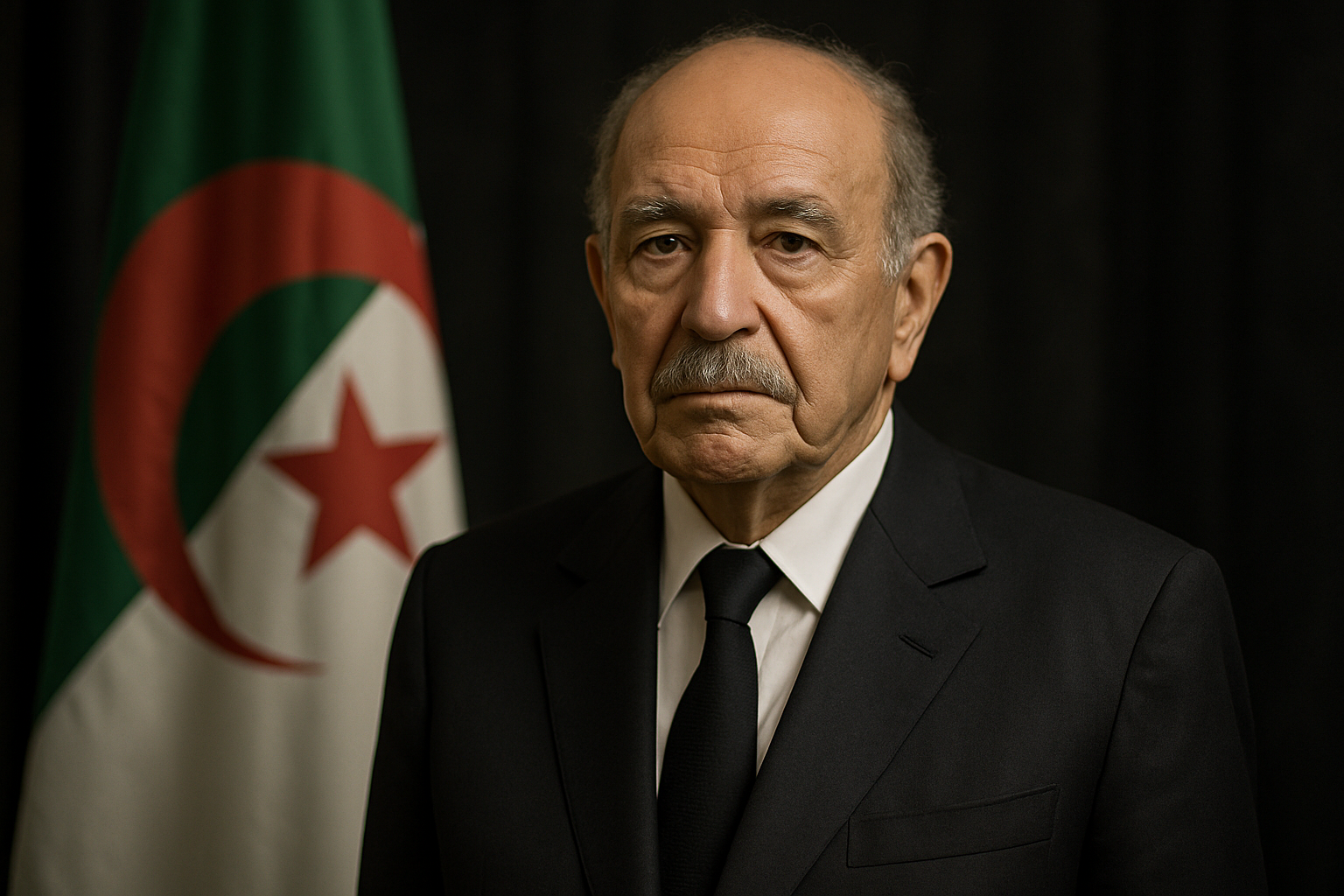
Algeria announced three days of national mourning following the death of former President Liamine Zeroual at age 84, as tributes poured in from across the political spectrum for the independence war veteran who led the nation through one of its most challenging periods.
Zeroual passed away on Saturday evening at Mohamed Seghir Nekkach Military Hospital in Algiers after a prolonged illness, according to multiple official sources. The former president, who served from 1994 to 1999 during Algeria's devastating civil war known as the "Black Decade," died at approximately 85 years old, with some sources citing his age as 84.
A Life Dedicated to Algeria's Struggle and Development
Born on July 3, 1941, in Batna in northeastern Algeria, Zeroual left his studies at age 16 to join the National Liberation Army (ALN) in 1957, fighting against French colonial rule until independence in 1962. This early commitment to Algeria's freedom struggle earned him the revered status of "mujahid" (freedom fighter), a designation that carried special significance throughout his life and political career.
Following independence, Zeroual pursued military training in the Soviet Union and later attended the French Military Academy in 1974. He served in various positions within the National People's Army, eventually commanding the military academy, where he helped shape a new generation of Algerian military officers.
Leading Through the "Black Decade"
Zeroual's presidency from 1994 to 1999 coincided with Algeria's most tumultuous modern period—a civil war between government forces and Islamist insurgents that claimed an estimated 200,000 lives. His unique credentials as both an independence fighter and professional military officer provided the authority needed to navigate this unprecedented crisis while attempting to restore civilian governance.
During his tenure, Zeroual worked to balance military necessity with political reconciliation, seeking to end the violence that had torn Algeria apart. His leadership during this period represented efforts to maintain state institutions while addressing the complex political and social factors that had contributed to the conflict.
Cross-Party Tributes Reflect National Unity
The death of the former president prompted tributes from across Algeria's political spectrum, demonstrating his role as a unifying figure who transcended partisan divisions. The National Liberation Front (FLN) described him as among "Algeria's loyal men" from the first generation who devoted themselves to serving the country, praising his sincere patriotism and wisdom during a delicate historical period.
The Future Front Party called his death a "national tragedy affecting the memory of the Algerian nation," highlighting his qualities of honesty, loyalty, humility, and wisdom as part of the Liberation War generation. The National Democratic Rally (RND) also issued condolence statements honoring his legacy.
"Algeria has lost one of its faithful men who served the nation with dedication and wisdom during some of our most challenging times."
— National Liberation Front Statement
Government Officials Pay Respects
Justice Minister Lotfi Boudjemaa offered condolences to the family of the former president, describing him as one of Algeria's devoted men. Various government officials from provincial governors to ministers emphasized his service during critical historical periods, underscoring the broad respect he commanded across Algeria's political establishment.
The National Organization of Algerian Journalists also paid tribute to the former president's family, acknowledging his contributions to the nation from positions of high responsibility in state institutions, leaving his mark as a dedicated public servant.
Cultural and Sports World Honors Memory
The impact of Zeroual's death extended beyond political circles into Algeria's cultural and sporting communities. Three major Algerian football clubs—Mouloudia Alger, Chabab Belouizdad, and Union of the Capital—expressed condolences through their social media channels, calling on divine mercy for the former president and comfort for his family.
These tributes from diverse sectors of Algerian society reflected the broad recognition of Zeroual's role in the nation's history and his continued relevance to contemporary Algeria.
Historical Legacy and Regional Context
Zeroual's death marks the passing of another prominent member of Algeria's independence generation, representing the connection between the country's founding struggle for sovereignty and its modern state development. His career trajectory from revolutionary fighter to military officer to president embodied the complex challenges of post-independence leadership in Algeria and across North Africa.
The timing of his death occurs amid broader reflection across the region on post-independence trajectories and the ongoing challenges of democratic governance, civil-military relations, and economic development. Algeria's experiences during the 1990s under Zeroual's leadership continue to inform contemporary debates about conflict resolution and institutional development across North Africa and the broader Middle East.
Remembering a Founding Generation Figure
As Algeria observes three days of national mourning with flags at half-mast across all national territory and diplomatic missions abroad, the nation reflects on Zeroual's dual legacy as both an independence fighter and later political leader. His "mujahid" designation connects him to the founding generation of modern Algeria, those who fought to establish national sovereignty and then worked to build the institutions of the modern Algerian state.
The former president's death prompts consideration of the ongoing challenges facing Algeria and the broader region as they balance revolutionary heritage with contemporary democratic aspirations, economic development needs, and the complex realities of 21st-century governance.
Liamine Zeroual's life span from the independence struggle through decades of nation-building represents a bridge between Algeria's foundational period and its continuing evolution as a sovereign state in an increasingly complex global environment. His passing marks the end of an era while his contributions to Algeria's development during critical periods remain part of the nation's institutional memory and historical legacy.