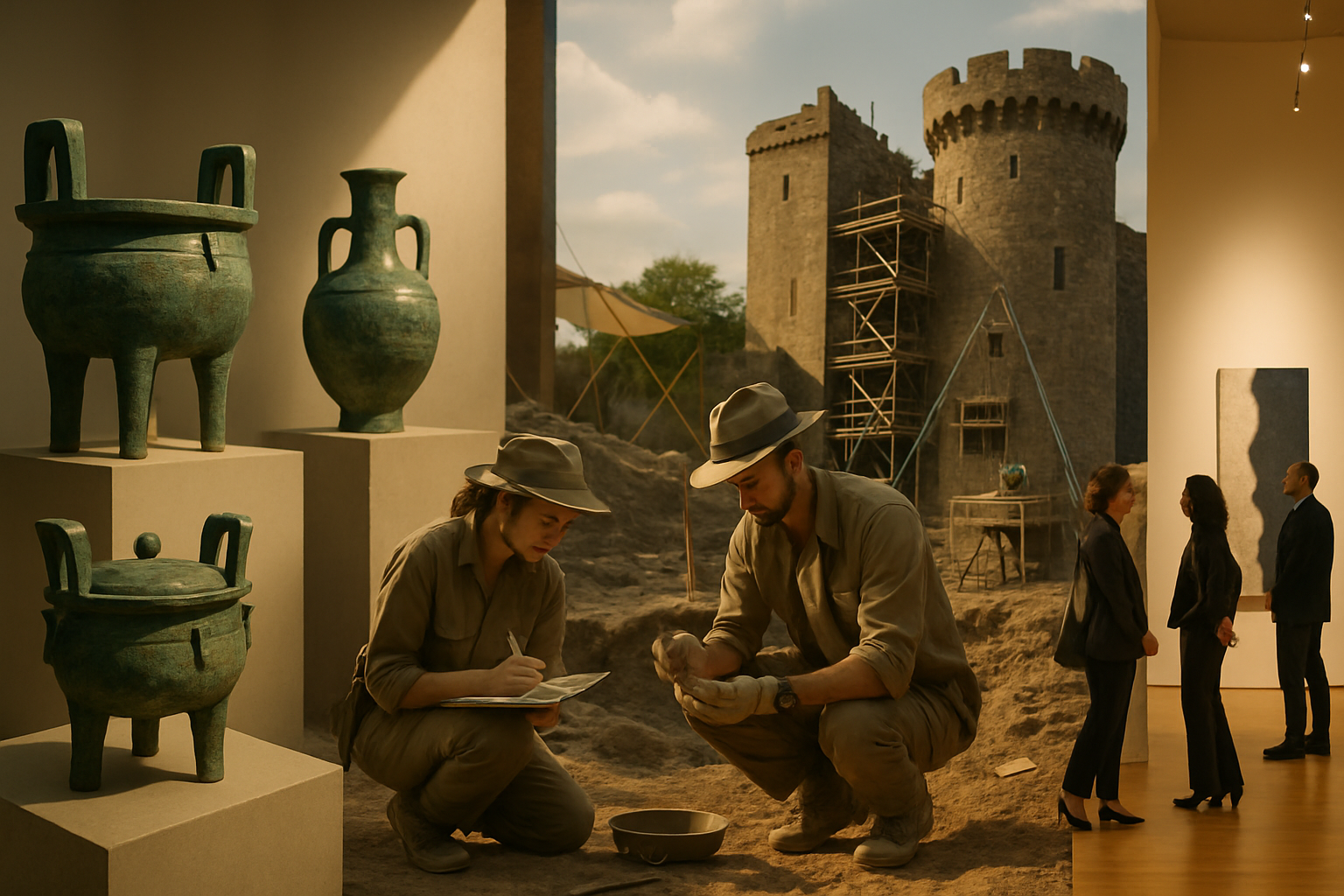
A remarkable global renaissance in cultural heritage preservation is transforming how nations approach arts conservation, with groundbreaking initiatives spanning Argentina's Buenos Aires to Romania's Transylvanian castles demonstrating unprecedented international coordination in heritage stewardship during February 2026.
From the historic transformation of Buenos Aires' oldest warehouse into a cutting-edge maritime museum to Cambridge University's landmark restitution of 116 looted African artifacts, these developments represent a fundamental evolution in cultural preservation philosophy—one that synthesizes technological innovation with authentic community engagement while addressing historical injustices through collaborative international frameworks.
Argentina's Maritime Heritage Revolution
Buenos Aires is witnessing a profound transformation of its cultural landscape with the conversion of the Riachuelo's most ancient warehouse—located in the iconic La Boca district and designated as a Historical Protection Area—into a pioneering museum dedicated to the city's maritime heritage. Scheduled to open in July 2026, this ambitious project will significantly expand the cultural circuit in Buenos Aires' southern districts.
The museum will showcase extraordinary archaeological discoveries that illuminate centuries of maritime history, featuring a 17th-century courtyard complete with its original cistern system and the remarkable "Pecio" shipwreck remains discovered in Puerto Madero. These artifacts provide unprecedented insights into Buenos Aires' evolution as a major South American port, connecting contemporary visitors with the maritime traditions that shaped Argentina's development.
"This project represents our commitment to making Argentina's rich maritime heritage accessible to all citizens while preserving the authentic historical character of our most significant archaeological discoveries."
— Buenos Aires Cultural Heritage Authority
The warehouse conversion exemplifies sophisticated urban cultural planning that balances historical preservation with modern accessibility requirements. Advanced climate control systems protect delicate artifacts while interactive displays utilize digital technology to enhance rather than replace authentic historical narratives.
Cambridge's Historic African Art Restitution
The University of Cambridge has achieved a watershed moment in international cultural justice by officially transferring ownership of 116 African artworks to Nigeria and Benin, marking one of the most significant voluntary restitutions in recent museum history. These objects, known collectively as the Benin Bronzes, were seized during the late 19th-century British punitive expeditions and have remained in Cambridge's collections for over a century.
The transferred works include bronze plaques, ivory carvings, and ceremonial objects that represent the pinnacle of medieval African artistic achievement from the Kingdom of Benin. This restitution goes beyond symbolic gesture—it establishes practical precedents for international cooperation in addressing colonial-era cultural appropriations while maintaining scholarly access through digital documentation and partnership agreements.
Cambridge's approach demonstrates how 21st-century institutions can acknowledge historical injustices while building sustainable frameworks for ongoing cultural collaboration. The university has committed to maintaining research partnerships with Nigerian institutions, ensuring continued scholarly engagement while respecting legitimate ownership claims.

Niger's Contemporary Photography Renaissance
In Niger's capital of Niamey, photographers Apsatou Bagaya and Tracy Beattie are pioneering a contemporary arts renaissance through their collaborative exhibition that bridges traditional Sahelian visual culture with modern photographic expression. This exhibition represents Niger's growing recognition as a significant contributor to contemporary African arts discourse.
The collaboration between local and international artists exemplifies successful cultural exchange that strengthens rather than dilutes authentic artistic expression. Bagaya's work explores themes of identity, tradition, and modernization within Niger's rapidly changing social landscape, while Beattie brings international perspective to local narratives without imposing external interpretations.
This initiative demonstrates how emerging economies can position themselves as cultural innovators rather than passive recipients of international arts programming. Niger's investment in contemporary arts infrastructure creates sustainable platforms for artist development while establishing the nation as a regional cultural hub attracting international attention and collaboration opportunities.
Romania's Renaissance Discovery
Perhaps the most intriguing development comes from Romania's Covasna County, where restoration work at the Daniel Castle in Tălișoara has revealed extraordinary Renaissance-era frescoes that researchers are calling "400-year-old Facebook"—elaborate wall paintings depicting the social networks and political ascension of 16th-century aristocracy.
These newly discovered murals provide unprecedented insights into how European nobility documented their social relationships and political achievements through visual narratives. The frescoes feature detailed portraits of family members, political allies, and significant ceremonial events, creating a comprehensive visual record of aristocratic life during a pivotal period in European history.
The restoration team has employed cutting-edge conservation techniques to stabilize and document these fragile artworks while preserving their historical authenticity. Advanced imaging technology reveals previously invisible details, providing historians with remarkable new source material for understanding Renaissance social structures and artistic patronage systems.
"These frescoes represent a unique window into how power, relationships, and social identity were visualized and celebrated in Renaissance Europe. They are essentially the social media of their era."
— Dr. Maria Popescu, Romanian Heritage Preservation Institute
Global Patterns and Implications
These four initiatives represent components of a broader "February 2026 Cultural Renaissance" documented across multiple continents. Analysis of similar projects worldwide reveals consistent success factors: technology enhancement rather than replacement of traditional methods, genuine international cooperation that respects local authenticity, economic viability through sustainable cultural tourism, and institutional support for community-driven programming.
The economic implications extend far beyond immediate cultural benefits. Argentina's maritime museum positions Buenos Aires as a regional heritage tourism destination. Cambridge's restitution approach enhances the university's reputation for ethical scholarship while strengthening partnerships with African institutions. Niger's contemporary arts scene attracts international collectors and cultural tourists. Romania's castle discoveries boost heritage tourism in Transylvania while advancing Renaissance scholarship.
Technology and Tradition Synthesis
A critical element unifying these initiatives is sophisticated technology integration that enhances rather than replaces authentic cultural experiences. Digital documentation enables global access while preserving fragile originals. Virtual reality applications allow immersive historical experiences without compromising artifact integrity. Advanced conservation techniques reveal previously hidden artistic details while ensuring long-term preservation.
This synthesis approach represents maturation in cultural preservation philosophy. Rather than viewing technology and tradition as competing priorities, successful programs demonstrate how digital innovation can amplify authentic cultural expression while building bridges between communities, nations, and historical periods.
International Cooperation Framework
The success of these diverse initiatives demonstrates the emergence of sophisticated international cooperation frameworks that transcend traditional North-South cultural relationships. Cambridge's restitution establishes protocols now being adopted by institutions worldwide. Argentina's maritime museum incorporates international conservation best practices while maintaining distinctly local content. Niger's photography exhibition creates South-South cultural exchanges independent of Western institutional mediation.
These frameworks suggest a fundamental shift toward genuinely collaborative cultural stewardship where source communities, academic institutions, and government agencies work as equal partners rather than hierarchical relationships that characterized previous eras of cultural preservation.
Challenges and Future Prospects
Despite remarkable successes, significant challenges remain. Climate change threatens physical heritage sites across all regions. Economic pressures limit funding for comprehensive preservation programs. Digital attention spans compete with traditional cultural engagement. Balancing global accessibility with local authenticity requires ongoing calibration.
However, February 2026's developments provide practical templates for addressing these challenges. Community engagement ensures local ownership and sustainability. International cooperation enables resource sharing and expertise exchange. Technology integration extends reach while preserving authenticity. Economic models demonstrate cultural preservation as investment rather than expense.
The success of these four initiatives—representing different continents, cultural contexts, and preservation approaches—suggests that humanity has developed sophisticated tools for honoring the past while building bridges to the future. As these projects mature and their methodologies spread, they may well define the standard for 21st-century cultural stewardship that balances innovation with tradition, global cooperation with local authenticity, and economic development with cultural integrity.
The February 2026 Cultural Heritage Renaissance represents more than isolated success stories—it demonstrates coordinated international recognition that culture serves as essential infrastructure for community resilience, international understanding, and sustainable development in an increasingly interconnected world.