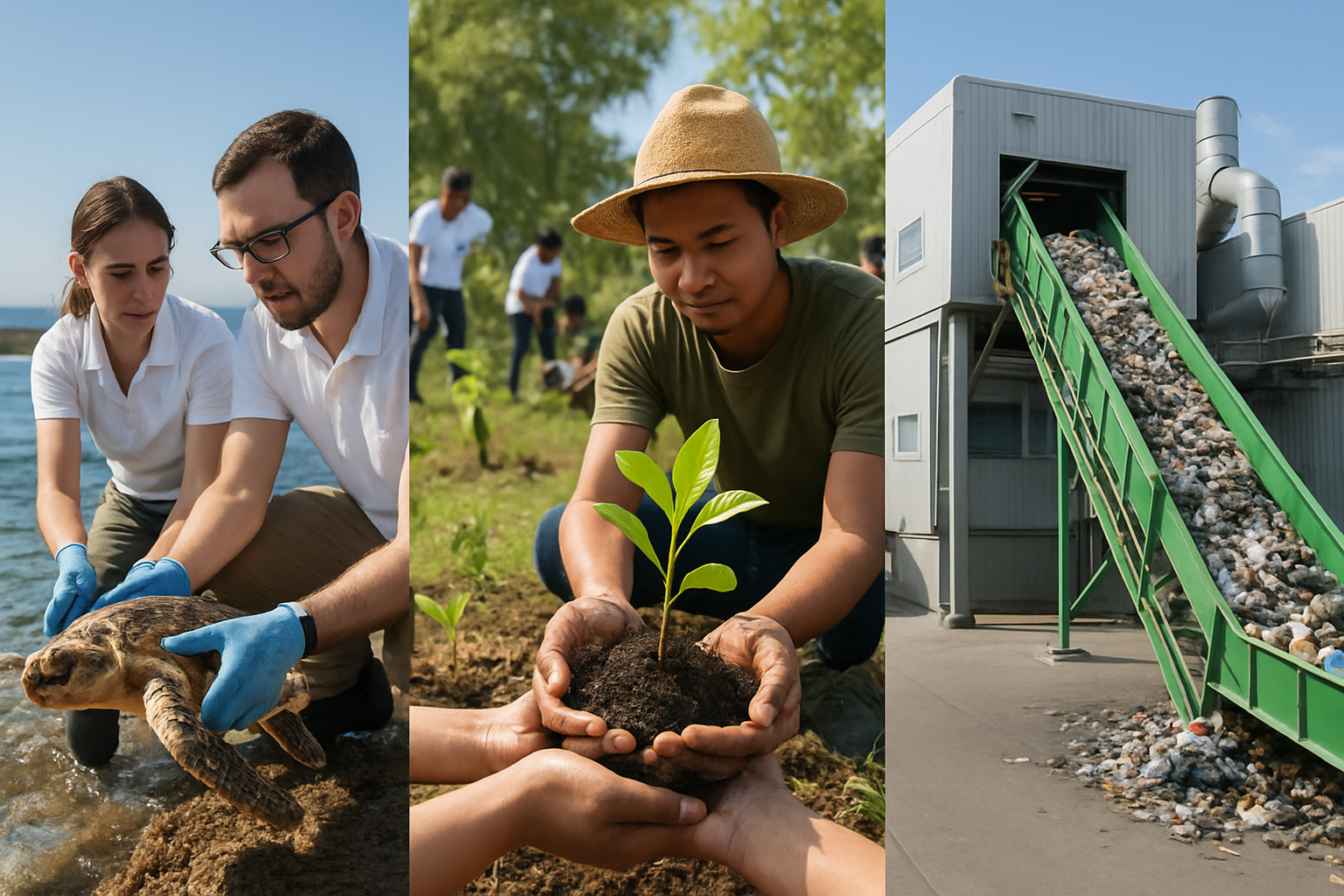
A remarkable convergence of environmental conservation initiatives across four nations demonstrates unprecedented global coordination in protecting biodiversity during what climate scientists confirm as the 19th consecutive month of global temperatures exceeding the critical 1.5°C pre-industrial threshold.
From Bolivia's push for UNESCO recognition of ancient geological formations to South Africa's innovative urban forest solutions combating extreme heat, these coordinated efforts represent a fundamental shift from reactive crisis management to proactive ecosystem service management at a time when such action has never been more critical.
Bolivia Champions Geological Heritage Protection
La Paz municipal authorities have submitted groundbreaking legislation to protect the Valle de Gigantes, a remarkable geological site featuring towering rock formations over 80 meters high that showcase millions of years of Earth's history. The initiative, spearheaded by Director of Governance Gonzalo Barrientos, aims to secure UNESCO recognition for these extraordinary badlands formations.
"We have been working to advance approval of a municipal autonomous law. Through this instrument, we will be able to register with UNESCO and guarantee preservation and protection of this important geological tourist site," Barrientos explained during a press conference this week.
The Valle de Gigantes features unique geoforms including badlands—steep slopes joining to form sharp ridges resembling saw teeth, pyramids, and obelisks. These formations serve as natural libraries documenting ancient climate patterns and geological processes, making their protection crucial for both scientific research and cultural heritage preservation.
Mauritania Confronts Migratory Bird Crisis
Environmental authorities in Mauritania have identified escalating threats to the country's critical migratory bird populations, which serve as vital links in global bird migration corridors connecting Europe and Africa. Salah Eddine Ould El Abbas, Legal Advisor to the Minister of Environment and Sustainable Development, highlighted the mounting challenges during the launch of the second phase of the Sustainable Wildlife Management project.
"Migratory birds that Mauritania receives annually face increasing threats, most notably illegal hunting and habitat degradation, in addition to the impacts of climate change," Ould El Abbas stated, emphasizing how these pressures threaten species that depend on Mauritania's wetlands for breeding and rest during seasonal migrations.
The wetland regions in southern Mauritania provide essential habitat for millions of birds traversing between European breeding grounds and African wintering areas. Climate change has intensified these challenges by altering traditional weather patterns and water availability, forcing adaptive management strategies that combine international cooperation with local community engagement.
Romania Celebrates Danube Delta Conservation Success
The Danube Delta, one of Europe's most biodiverse ecosystems, has achieved a significant conservation milestone with the emergence of a new generation of critically endangered curly pelicans (Pelecanus crispus). This species, considered globally threatened, has found one of its few remaining safe havens in the protected zones of the Danube Delta.
Radio Constanța reports that the Delta remains among the world's few locations where curly pelicans can successfully breed and reproduce. The species, distinguished as one of Romania's most impressive and valuable bird species, benefits from comprehensive habitat protection measures that have created conditions favorable for population recovery.
The success represents years of coordinated conservation efforts combining advanced monitoring technology with traditional ecological knowledge, demonstrating how targeted protection can yield remarkable results for species on the brink of extinction.
South Africa Pioneers Urban Climate Solutions
As Cape Town sweltered under extreme heat with classroom temperatures reaching 40°C, students at Siyabulela Primary School found refuge in their pioneering "pocket forest" where temperatures remained a comfortable 29°C—an 11-degree difference that illustrates the power of nature-based climate solutions.
Grade 7 student Cebu Mnqwazi and his classmates represent a new generation benefiting from innovative urban forestry projects that demonstrate how strategic tree planting can create cooling microclimates in densely populated areas. These pocket forests serve multiple functions: reducing urban heat island effects, improving air quality, providing educational opportunities, and creating biodiversity refuges within city environments.
The initiative reflects growing recognition that urban green infrastructure represents one of the most cost-effective approaches to climate adaptation, providing immediate relief from extreme temperatures while building long-term resilience against climate change impacts.
Technology-Tradition Integration Drives Success
What distinguishes these current conservation initiatives is their sophisticated integration of cutting-edge technology with traditional ecological knowledge and community-based management approaches. Bolivia combines satellite monitoring with Indigenous geological understanding, Mauritania employs advanced bird tracking alongside traditional migration knowledge, Romania utilizes environmental DNA sampling with decades of delta ecosystem expertise, and South Africa merges urban planning science with community forest stewardship.
This synthesis represents a fundamental evolution in conservation methodology, moving beyond purely technological or traditional approaches toward comprehensive frameworks that are both scientifically rigorous and culturally sensitive.
Economic Engine of Environmental Protection
Contrary to traditional views of environmental protection as regulatory burden, these initiatives demonstrate how conservation functions as an economic development strategy. Bolivia's geological heritage protection enhances eco-tourism potential while positioning the country as a regional conservation leader. Mauritania's migratory bird protection supports eco-tourism and attracts international research partnerships. Romania's pelican conservation strengthens the Danube Delta's UNESCO World Heritage status, supporting tourism worth millions annually. South Africa's urban forests reduce energy costs, improve property values, and attract sustainable investment.
Countries implementing comprehensive environmental protection consistently demonstrate greater economic resilience and attract sustainable development investment across multiple sectors, from green technology manufacturing to nature-based tourism.
Climate Crisis Context Intensifies Urgency
These conservation successes emerge against an unprecedented climate backdrop. January 2026 has been confirmed as the hottest month in recorded history, extending a streak of 19 consecutive months exceeding the 1.5°C pre-industrial threshold. This sustained warming is overriding natural climate variability, including La Niña cooling effects that typically moderate global temperatures.
The current temperature trajectory demonstrates that human-induced climate change has fundamentally altered Earth's atmospheric systems beyond natural recovery mechanisms, creating additional stress on vulnerable ecosystems while disrupting traditional conservation approaches that evolved under more stable climate conditions.
International Cooperation Framework Essential
The success of these diverse conservation initiatives highlights the critical importance of international cooperation in addressing transnational environmental challenges. Migratory birds connect ecosystems across continents, climate systems transport effects globally, and species conservation requires coordinated action that transcends political boundaries.
Knowledge sharing between these four nations creates global conservation networks that provide resilience through multiple adaptation pathways. Bolivia's geological protection techniques inform similar efforts worldwide, Mauritania's bird conservation strategies guide other migration corridor countries, Romania's wetland management approaches benefit river delta ecosystems globally, and South Africa's urban forest solutions offer templates for cities facing extreme heat challenges.
Implementation Challenges and Opportunities
Despite remarkable successes, significant challenges remain. Funding sustainability proves particularly difficult for developing nations where immediate economic pressures can override long-term environmental considerations. Technical capacity building requires sustained investment in education, training, and institutional development. Climate change increasingly disrupts project timelines, requiring adaptive management approaches that can respond to rapidly changing conditions.
However, the diversity of approaches demonstrated by these four nations provides resilience against single-solution dependencies. Bolivia's legislative approach, Mauritania's international partnership model, Romania's protected area strategy, and South Africa's community-based solutions offer multiple pathways for addressing complex environmental challenges.
Strategic Significance for Global Conservation
March 2026 represents a critical juncture for global environmental protection, offering a choice between reactive crisis management and proactive ecosystem service management. The conservation initiatives across these four nations demonstrate that effective environmental protection can keep pace with accelerating environmental change, but only through unprecedented coordination and commitment.
The environmental action window is narrowing as ecological systems approach critical thresholds that could trigger irreversible changes affecting global food security, climate stability, and human settlements. However, the tools, knowledge, and cooperation frameworks exist for comprehensive environmental protection, as demonstrated by these diverse international initiatives.
Future Trajectory and Global Implications
The success or failure of current conservation efforts may prove decisive for environmental protection approaches in the decades ahead. Bolivia's UNESCO application process, Mauritania's migratory bird protection outcomes, Romania's pelican population trends, and South Africa's urban forest expansion will provide crucial lessons for scaling environmental protection globally.
These initiatives offer templates for comprehensive conservation that addresses multiple challenges simultaneously while building local capacity and fostering international cooperation. The window for effective environmental action continues to narrow, but the convergence of innovation, cooperation, and political commitment demonstrated across these four nations offers hope for maintaining planetary habitability during Earth's most environmentally challenging period.
Success depends on sustained international cooperation, enhanced coordination across sectors and scales, and increased financial commitments that recognize environmental protection as essential infrastructure for human prosperity and planetary sustainability. The conservation renaissance emerging in March 2026 may determine whether humanity develops the adaptive capacity necessary to protect the essential environmental systems upon which all life depends.