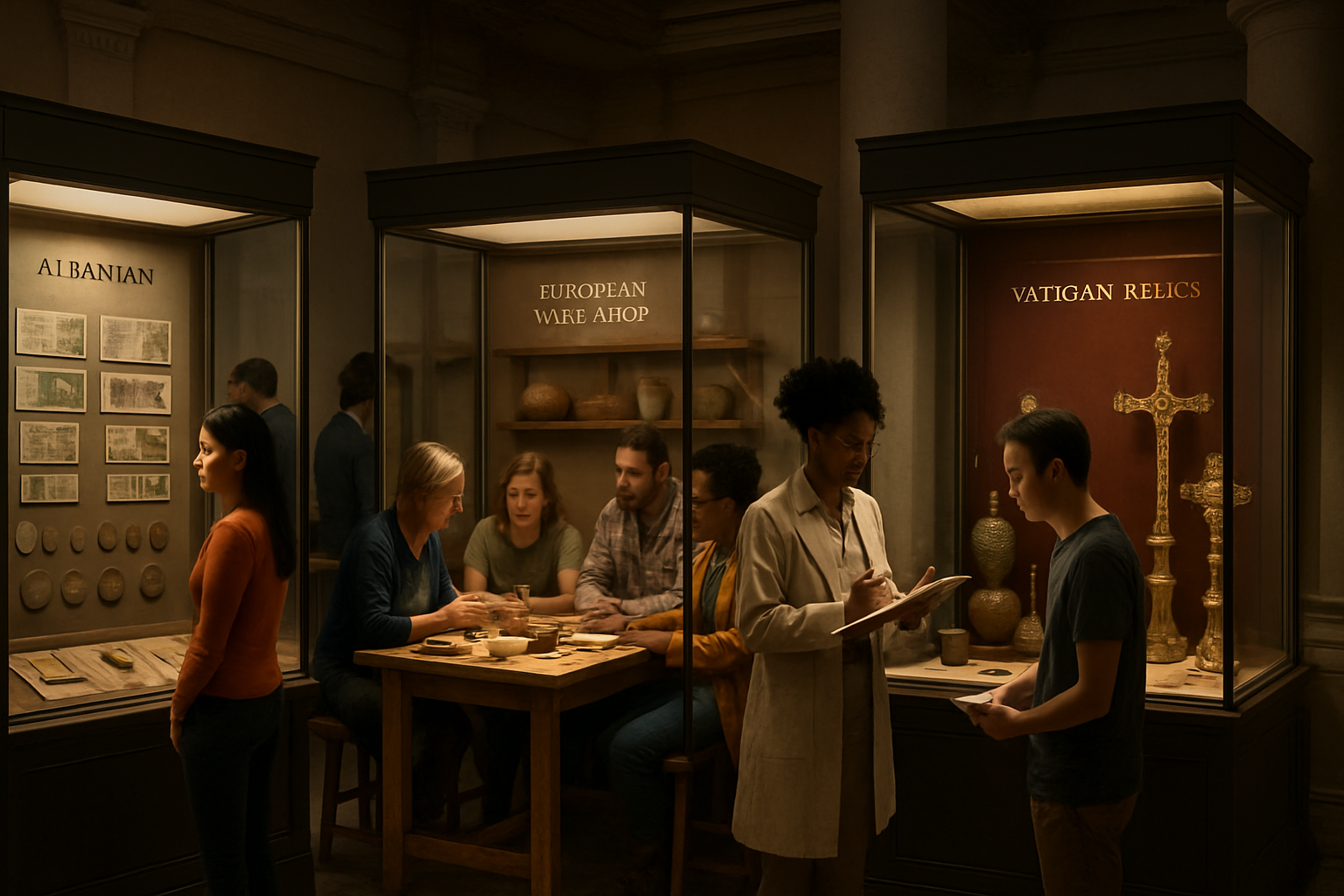
A remarkable convergence of cultural preservation initiatives across Albania, Azerbaijan, Finland, and Vatican City demonstrates the continuing momentum of February 2026's global cultural heritage renaissance, as institutions worldwide embrace innovative approaches to preserving and sharing their most treasured artifacts and traditions.
Albania's Monetary History Takes Center Stage in Kosovo
The Bank of Albania's historic exhibition "Money Tells the Story: 100 Years of Life and Events" has successfully transitioned to Pristina in celebration of Kosovo's 18th Independence Day anniversary. This significant cultural diplomacy initiative showcases the shared heritage between Albania and Kosovo through numismatic treasures spanning centuries.
Governor Gent Sejko emphasized the exhibition's deeper significance, stating that it places "special emphasis on the beginnings of the modern Albanian state" and commemorates November 1912's independence along with "the symbols that unite us." The exhibition features historical figures from Naim Frashëri and Ismail Qemali to Pjetër Bogdani, King Gent, Skanderbeg, and Asdreni, represented through six banknotes and seven legal tender coins alongside dozens of historical currencies used over a century.
Sejko highlighted Ismail Qemal Vlora's vision for creating an Albanian central bank as a "basic cell" for economic recovery and building an independent Albanian state – a vision that provided "clear orientation for the path we would follow later." This exhibition represents more than monetary history; it serves as a tangible connection between Albanian cultural identity and national sovereignty.
European Cultural Workshop Bridges East and West
Azerbaijan's capital Baku concluded the two-day creative workshop "Heritage of Europe," jointly organized by the European Union and the NGO Arts Council Azerbaijan. This initiative represents Azerbaijan's strategic positioning as a cultural bridge between Eastern and Western traditions, building upon the country's growing reputation as a facilitator of international cultural cooperation.
The workshop aligns with Azerbaijan's broader cultural diplomacy efforts, including previous Egyptian-Azerbaijani poetry evenings and various international artistic collaborations. These initiatives demonstrate how smaller nations can leverage cultural programming to enhance their international standing while fostering genuine cross-cultural understanding.
Finnish Archaeological Discovery Emerges from Receding Waters
An extraordinary archaeological revelation has emerged in Stockholm as the Baltic Sea water levels have dropped to heights not seen in approximately a century. This dramatic environmental change has exposed a 17th-century warship wreck of significant historical importance, providing marine archaeologists with unprecedented access to maritime heritage.
The discovery underscores the complex relationship between climate change and cultural heritage preservation. While environmental changes pose threats to many historical sites, this instance demonstrates how such changes can also reveal previously hidden aspects of our cultural past. The exposed wreck offers researchers a unique opportunity to study 17th-century shipbuilding techniques and naval history in exceptional preservation conditions.
Marine archaeologists are working rapidly to document and preserve the newly accessible artifacts before potential water level changes could threaten the site. This discovery adds to Finland's rich maritime heritage and contributes valuable insights into Baltic Sea naval history during a crucial period of European development.
Vatican Prepares Sacred Relics for Public Veneration
The Sacred Convent of Assisi has announced that the relics of St. Francis will be made visible for public veneration, marking a significant moment as the Church approaches the 800th anniversary of the saint's death. Fr. Giulio Cesareo, director of the Communications Office, emphasized the profound significance of this decision for contemporary spiritual and cultural life.
The display of St. Francis's remains represents more than religious observance; it connects modern pilgrims and visitors with eight centuries of Christian mystical tradition and Italian cultural heritage. St. Francis's message of simplicity, environmental stewardship, and social justice continues to resonate across religious and secular communities worldwide.
This initiative aligns with the Vatican's broader efforts to make religious heritage more accessible while maintaining appropriate reverence and scholarly standards. The public display will provide educational opportunities for historians, theologians, and cultural heritage specialists while serving the spiritual needs of pilgrims and believers.
Technology Enhancing Traditional Preservation
These four initiatives collectively demonstrate the sophisticated balance between technological innovation and traditional preservation methods that characterizes the February 2026 cultural renaissance. From Albania's digital documentation of monetary history to Finland's environmental monitoring of archaeological sites, modern tools are enhancing rather than replacing fundamental preservation practices.
The success of these programs reflects several key factors: community engagement with authentic participation from traditional knowledge bearers, economic viability through sustainable funding models, institutional support maintaining local adaptation flexibility, and international cooperation enabling knowledge sharing without imposing standardized solutions.
Economic and Diplomatic Benefits
These cultural preservation efforts generate substantial economic multiplier effects through tourism development, educational partnerships, and enhanced international recognition. Albania's exhibition in Kosovo strengthens bilateral cultural ties while attracting heritage tourism. Azerbaijan's European workshop positions the country as an attractive destination for cultural tourism and international conferences.
Finland's archaeological discovery is likely to boost academic tourism and maritime heritage interest, while the Vatican's St. Francis exhibition will undoubtedly attract pilgrims and cultural tourists from around the world. These economic benefits create sustainable funding models that support long-term preservation efforts while serving broader community development goals.
Challenges and Future Directions
Despite their success, these initiatives face common challenges including climate change threats to historical sites, economic pressures affecting youth participation in traditional practices, and the need to balance global visibility with authentic local expression. The Baltic Sea discovery particularly highlights how environmental changes create both opportunities and risks for cultural heritage.
The solutions emerging from these programs emphasize adaptive management strategies that respect traditional practices while embracing helpful technological innovations. International cooperation frameworks are proving essential for sharing resources, expertise, and best practices across national boundaries.
Template for Global Cultural Stewardship
These four initiatives establish precedents for 21st-century cultural heritage stewardship that balances preservation with accessibility, tradition with innovation, and local authenticity with international cooperation. They demonstrate that successful cultural preservation requires active community engagement, sustainable economic models, and adaptive strategies that respond to contemporary challenges while maintaining essential cultural character.
The success across varied contexts – from Albanian monetary history to Finnish maritime archaeology, from Azerbaijani cultural diplomacy to Vatican religious heritage – provides practical templates that other institutions worldwide can adapt to their specific circumstances and cultural contexts.
As part of the broader February 2026 cultural renaissance, these initiatives represent humanity's remarkable capacity for preserving and sharing cultural treasures while building bridges between communities, nations, and traditions. They offer hope that cultural heritage can serve as a foundation for international understanding and cooperation in an increasingly interconnected world.