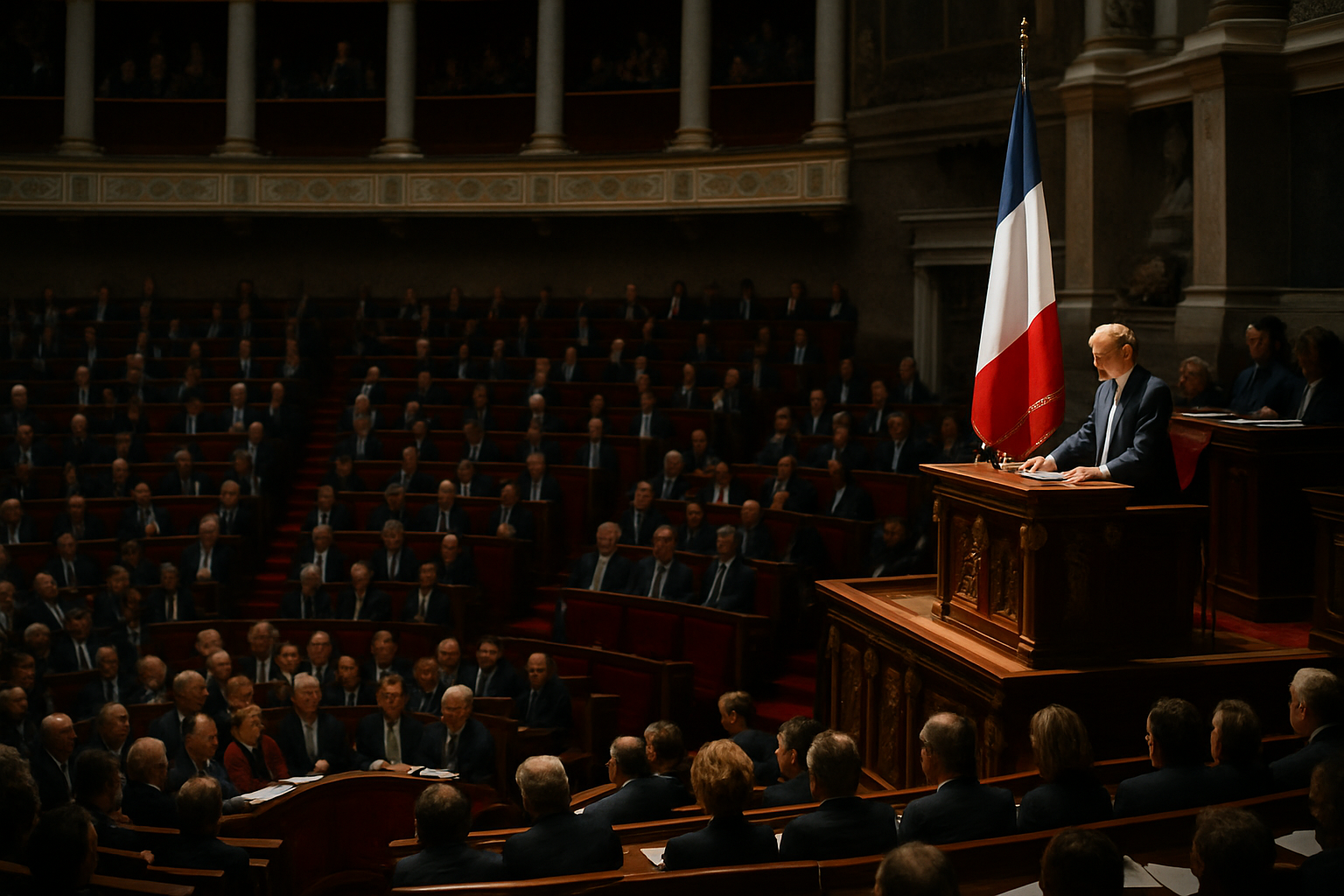
France finally adopted its 2026 budget on Monday evening after Prime Minister Sébastien Lecornu's government successfully survived two consecutive no-confidence votes in the National Assembly, ending months of political deadlock that had left the eurozone's second-largest economy operating without a approved budget for the new year.
The dramatic parliamentary showdown concluded around 9 PM local time, with Lecornu's administration emerging intact after opposition parties failed to garner sufficient support for their censure motions. The survival of the government immediately paved the way for the budget's final adoption, marking a crucial victory for President Emmanuel Macron's embattled administration.
A Historic Political Standoff
The budget crisis had paralyzed French politics since late 2025, with two previous prime ministers falling victim to the parliamentary arithmetic that has defined French politics since the inconclusive June 2024 legislative elections. Lecornu, who took office following the collapse of his predecessors' governments, had staked his political survival on securing passage of the controversial 2026 budget through the use of Article 49.3 of the French Constitution.
This constitutional provision allows the government to bypass a parliamentary vote and adopt legislation directly, but it also triggers an automatic opportunity for opposition parties to file no-confidence motions. The high-stakes gamble meant that Lecornu's government would either secure the budget's passage or face collapse, potentially triggering France's third government crisis in as many months.
"After months of stalemate, the long-overdue State budget for 2026 has finally been adopted,"
— Government spokesperson, confirming the resolution
The Price of Political Survival
Multiple international sources described the cost as significant, with Bulgaria's Dnevnik reporting that France had achieved budget passage "at the price of two governments" - a reference to the previous administrations that collapsed attempting to navigate the same treacherous political waters. The prolonged crisis had raised serious questions about the stability of French democratic institutions and the country's ability to govern effectively in a fragmented political landscape.
German media noted that while Lecornu succeeded where his predecessors failed, the victory came after "months of struggle" that highlighted the fundamental challenges facing French governance. The Tagesschau report emphasized that the prime minister had "more luck" than his two predecessors who had "failed" at the same task.
Parliamentary Dynamics and Opposition Response
The no-confidence votes were filed by opposition parties across the political spectrum, reflecting the broad dissatisfaction with both the government's methods and the budget's contents. However, the fragmented nature of the French opposition worked to Lecornu's advantage, as parties from the far-left France Unbowed to Marine Le Pen's National Rally struggled to coordinate their efforts effectively.
Lithuanian sources reported that the government's survival opened the path to the budget's "final adoption," emphasizing the immediate practical consequences of the parliamentary vote. The resolution removes the immediate threat of governmental collapse that had hung over French politics for months, providing a measure of stability as the country grapples with significant economic challenges.
Economic Implications and Market Response
The budget's adoption addresses mounting concerns about France's fiscal management and its ability to meet European Union deficit reduction targets. The prolonged uncertainty had begun to affect financial markets and raised questions about France's commitment to fiscal responsibility within the eurozone framework.
European partners had watched the crisis with growing concern, as France's political paralysis threatened to undermine broader EU economic coordination efforts. The resolution of the budget crisis removes a significant source of uncertainty for European policymakers as they navigate complex economic challenges in 2026.
Constitutional Questions and Democratic Process
The repeated use of Article 49.3 to force through contentious legislation has reignited debates about democratic legitimacy and the balance of power between the executive and legislative branches. Critics argue that the government's reliance on constitutional mechanisms to bypass parliamentary opposition undermines the democratic process, while supporters contend that such tools are necessary to ensure effective governance in a fragmented political environment.
French constitutional scholars have noted that while Article 49.3 provides a legitimate means of government action, its frequent deployment reflects deeper structural problems in the current political system. The resolution of the budget crisis, while providing short-term stability, does not address these underlying tensions.
Looking Ahead: Challenges Remain
Despite surviving the immediate crisis, Lecornu's government faces continued challenges in implementing its legislative agenda. The narrow margin of survival and the need to use constitutional mechanisms to secure budget passage highlight the precarious nature of the government's parliamentary position.
Political analysts suggest that while the budget's adoption provides breathing room, the fundamental arithmetic that created the crisis remains unchanged. The government will need to carefully navigate future legislative priorities to avoid triggering additional confidence crises that could threaten its survival.
The successful resolution of France's budget crisis marks a significant moment for European politics, demonstrating both the resilience of French democratic institutions and the ongoing challenges posed by political fragmentation. As France moves forward with its 2026 budget in place, attention now turns to whether the government can build on this victory to address the country's broader economic and social challenges while maintaining political stability in an increasingly complex parliamentary environment.