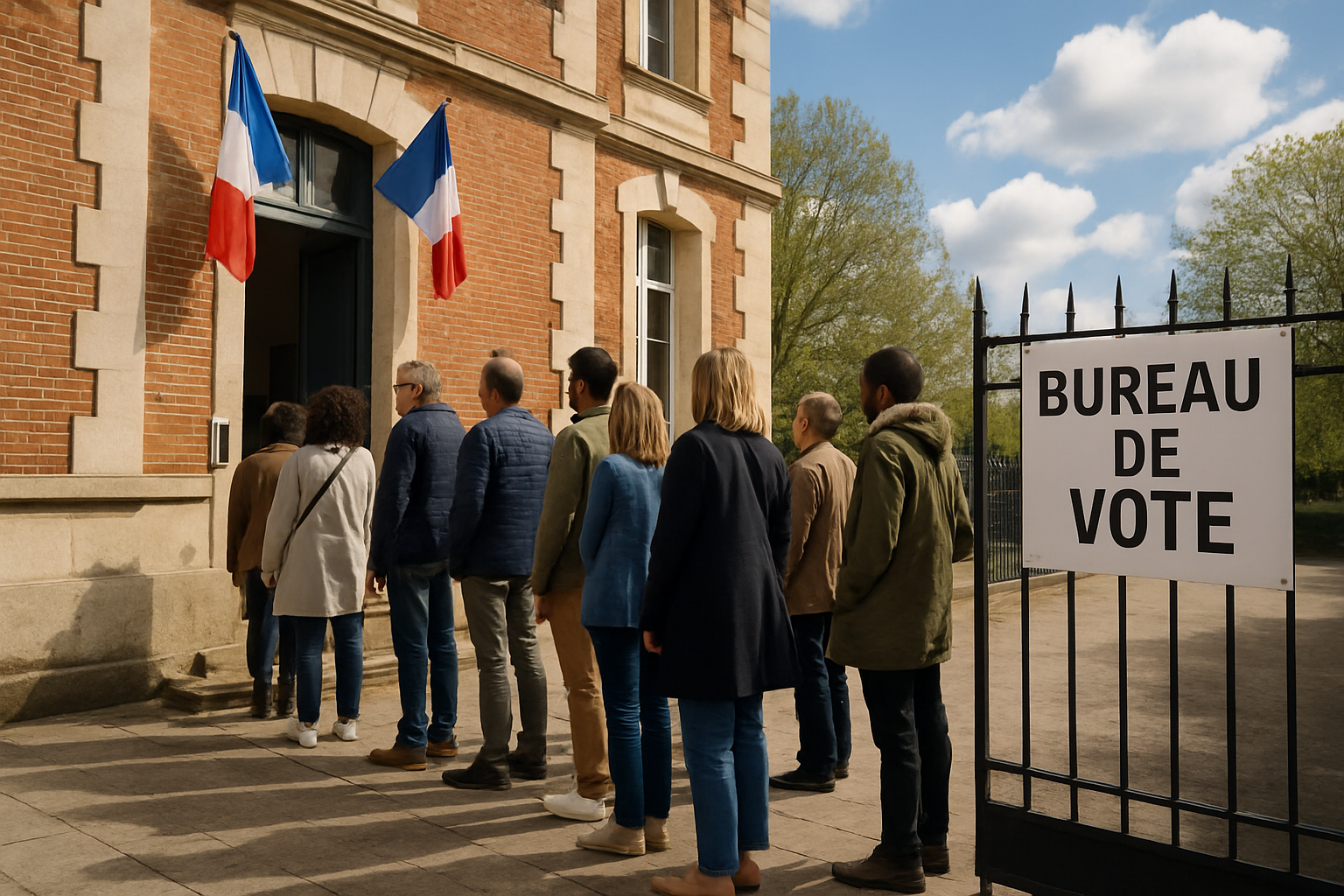
French voters across 1,526 communes cast ballots Sunday in the second round of municipal elections, with polling stations opening at 8 AM local time for runoffs that will determine mayors in key cities including Paris and Marseille, serving as a crucial test of democratic resilience amid the nation's most severe political crisis in decades.
The elections proceeded against the backdrop of unprecedented political tensions following the February death of 23-year-old Quentin Deranque during violent clashes in Lyon, an incident that has fundamentally altered France's electoral landscape and intensified debates over political extremism just one year before the 2027 presidential election.
From New Caledonia and Réunion, where voting began earlier due to time zone differences, to metropolitan France, electoral authorities reported steady participation despite the charged political atmosphere. The Interior Ministry confirmed that 1,580 municipalities required second-round voting after no candidate achieved an absolute majority in the March 15 first round.
Paris: Historic Left-Right Confrontation
In the capital, Socialist Emmanuel Grégoire faced a unified conservative challenge after center-right candidate Rachida Dati successfully merged with Pierre-Yves Bournazel's centrist faction. The contest represents the first direct left-right battle in Paris in 25 years, with Grégoire having led the first round with 37.98% compared to Dati's 25.46%.
The Paris race has taken on national significance as both parties view control of the capital as crucial for building momentum toward 2027. Grégoire's campaign emphasized continuity with socialist governance that has controlled Paris City Hall for the past quarter-century, while Dati positioned herself as the candidate of change and fiscal responsibility.
Marseille Under Pressure
France's second-largest city witnessed perhaps the most dramatic electoral transformation, with incumbent left-wing mayor Benoît Payan facing an unexpectedly competitive challenge from Marine Le Pen's National Rally candidate. The Mediterranean port city, traditionally a progressive stronghold, has become a symbol of the far-right's "authoritarian innovation" strategy—evolving from rural populism to sophisticated urban campaigning.
Payan's decision to reject alliance overtures from La France Insoumise (LFI) created a four-way contest, with hundreds of protesters gathering outside campaign headquarters following his refusal to build left-wing unity against the far-right challenge.
Political Violence Casts Long Shadow
The electoral campaign has been overshadowed by the Lyon violence that claimed Deranque's life during clashes on the margins of a pro-Palestinian conference. Seven suspects face intentional homicide charges, including Jacques-Elie Favrot, a parliamentary assistant to LFI deputy Raphaël Arnault, creating unprecedented fractures within France's left-wing coalition.
"This represents the most challenging period for continental democracy since World War II. We're watching whether France can channel political tensions through democratic institutions or witness further extremist fragmentation."
— European Political Observer
The Interior Ministry's controversial decision to reclassify La France Insoumise from "left" to "extreme left" has triggered Council of State legal challenges, with critics denouncing administrative manipulation of democratic processes during a sensitive electoral period.
National Rally's Urban Strategy
Marine Le Pen's National Rally targeted five cities for historic municipal breakthroughs, representing a sophisticated evolution from the party's traditional rural base to competitive urban campaigning. This "authoritarian innovation" approach has achieved unprecedented success, with the far-right polling competitively in cities like Marseille that were previously considered impregnable progressive bastions.
The strategy occurs amid Le Pen's own legal challenges, with a Paris Court of Appeal ruling expected by July 2026 on prosecutors' demands for a five-year public office ban that could eliminate her from the 2027 presidential race.
Alliance Mathematics and Democratic Fragmentation
The second round has exposed the complexity of modern French electoral mathematics, with traditional left-right alliance patterns disrupted by new political dynamics. While some cities like Nantes achieved successful left-wing coalitions between Socialists and LFI, others like Paris and Marseille witnessed ideological divisions that prevented unified opposition to conservative or far-right challenges.
Socialist Party leadership has declared a "definitive break" with LFI over democratic values concerns following the Lyon violence, creating a fundamental realignment that extends far beyond municipal politics into preparations for the 2027 presidential contest.
International Implications
International observers are monitoring the elections as a bellwether for European democratic resilience against far-right populism. The successful conduct of free and fair elections despite security concerns, political violence, and institutional pressures provides crucial precedents for other European nations facing similar challenges.
Results will be announced from 8 PM local time, with particular attention focused on whether National Rally achieves its first major urban breakthroughs. Municipal victories would provide the party with governing experience and credibility crucial for Marine Le Pen's presidential ambitions.
2027 Presidential Preview
With President Emmanuel Macron constitutionally barred from seeking a third term, these municipal elections offer the first major insights into party organizational strength and voter sentiment ahead of the wide-open 2027 presidential race. The alliance patterns, voter transfer dynamics, and party performance will heavily influence coalition strategies and candidate positioning.
Bruno Retailleau of Les Républicains has already announced his presidential candidacy, promising immigration reduction through referendums and positioning himself as a "responsible conservative" alternative to both far-right extremism and centrist failures.
Democratic Resilience Under Test
The elections represent a fundamental test of France's democratic institutions managing political extremism through electoral rather than extra-legal means. The ability to channel political anger into constructive governance mechanisms while preserving democratic values will establish templates for European democracies facing 21st-century pressures.
Eurobarometer polling shows 89% of Europeans demand greater EU unity, yet political reality demonstrates increasing fragmentation—a critical disconnect between public aspirations and institutional capacity that these French elections may help resolve or exacerbate.
As polling stations prepared to close at 8 PM, France awaited results that will determine not only municipal leadership for the next six years but also establish crucial precedents for democratic governance under pressure. The stakes extend far beyond local administration to encompass France's political direction and Europe's democratic future in an increasingly multipolar world.