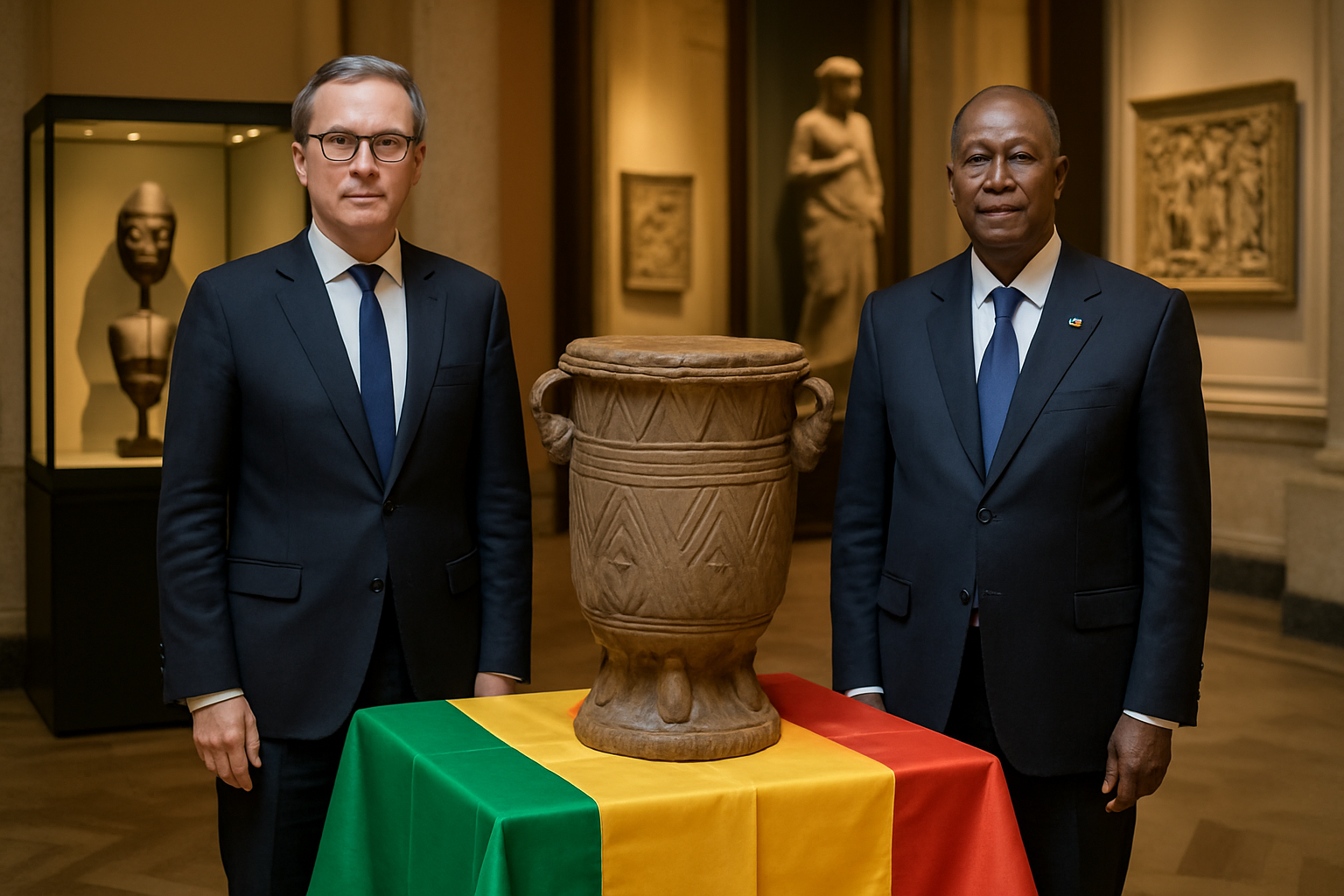
France returned a sacred Djidji Ayôkwé talking drum that was taken from the Ivory Coast during colonial rule at a ceremony in Abidjan on Friday, marking the first official restitution of a cultural artifact from France to the West African country and a pivotal moment in the global cultural repatriation movement.
The historic ceremony, held at a formal diplomatic venue in Abidjan, represents the culmination of years of negotiations and diplomatic efforts between the two nations. The sacred drum, seized during French colonial occupation in 1916, has spent over a century in French collections before this momentous return to its homeland.
A Century-Long Journey Home
The Djidji Ayôkwé drum, traditionally known as a "talking drum" for its capacity to communicate complex messages across distances, holds profound spiritual and cultural significance for Ivorian communities. These instruments serve not merely as musical tools but as vessels of ancestral wisdom, cultural memory, and spiritual connection between generations.
The drum's seizure in 1916 occurred during the height of French colonial expansion in West Africa, when cultural artifacts were systematically removed from their communities as part of broader colonial appropriation policies. For over 100 years, the drum remained in French institutional collections, separated from the communities that created and venerated it.
Part of a Global Renaissance
This repatriation occurs within what historians are documenting as the "February 2026 Cultural Renaissance" - an unprecedented period of international coordination in cultural heritage preservation and voluntary restitution efforts. The movement represents a fundamental shift from acquisition-based to partnership-based approaches in museum and cultural institution practices worldwide.
France's return of the Djidji Ayôkwé drum parallels similar initiatives across continents. The Metropolitan Museum of Art's 2024 repatriation of 16 ancient Khmer sculptures to Cambodia and Thailand established protocols now being adopted globally. The Netherlands has voluntarily returned a 3,500-year-old Egyptian sculpture following investigations into Arab Spring-era thefts, while the Vatican recently returned five sacred cultural items to First Nations communities in Canada after over 100 years.
"This ceremony represents more than the return of a single artifact - it symbolizes a new era of cultural partnership and mutual respect between nations."
— French Culture Minister, speaking at the Abidjan ceremony
Diplomatic and Cultural Significance
The repatriation ceremony was attended by high-ranking officials from both nations, including French Culture Ministry representatives and Ivorian cultural authorities. The event utilized sophisticated diplomatic protocols while maintaining respect for the drum's sacred nature and cultural protocols surrounding its handling and presentation.
Advanced 3D scanning and digital documentation techniques were employed before the physical return, creating permanent digital records that allow global access while respecting indigenous community ownership. This technological approach represents the maturation of preservation philosophy where innovation amplifies rather than competes with authentic cultural expression.
Economic and Educational Impact
Beyond its symbolic importance, the repatriation generates substantial multiplier effects through cultural tourism, international media attention, enhanced diplomatic relationships, and educational partnerships. Countries pursuing proactive restitution approaches report improved diplomatic relationships, increased tourism revenue, and strengthened international standing.
The ceremony serves as cultural diplomacy, demonstrating that ethical heritage practices enhance rather than weaken international cultural relationships. Museums worldwide are discovering that collaboration with source countries creates more authentic presentations and attracts greater visitor engagement than contested acquisitions.
Setting New Standards
France's voluntary repatriation establishes important precedents for future cultural heritage stewardship. The process included proactive provenance investigation, transparent communication about problematic acquisitions, and comprehensive solutions addressing broader categories of questionable objects rather than isolated cases.
The success builds upon earlier groundbreaking initiatives, including the previous return of sacred items documented in February 2026, when France facilitated the return of the Djidji Ayôkwé talking drum from the Musée du Quai Branly-Jacques Chirac, ending over a century of colonial-era seizure.
A Living Heritage Approach
The returned drum represents what experts call "living heritage" - cultural items that continue to serve active spiritual and social functions within their originating communities rather than existing as static museum pieces. This approach treats cultural heritage as shared responsibility requiring global cooperation while respecting creators' rights and dignity.
The repatriation enables the drum to return to its intended purpose: connecting contemporary Ivorian communities with ancestral traditions, supporting ongoing cultural practices, and ensuring sacred knowledge transmission according to traditional protocols maintained across generations.
Future Implications
This milestone ceremony represents a fundamental paradigm shift from museums as repositories of acquired treasures to facilitators of cultural understanding and preservation. The success demonstrates that ethical practices and institutional success are mutually reinforcing rather than competitive.
The framework established through this France-Ivory Coast repatriation provides practical templates for other institutions facing similar heritage restitution questions. The diplomatic model emphasizes collaboration rather than confrontation, viewing repatriation as the beginning of partnerships rather than the end of museum involvement.
As cultural institutions worldwide grapple with colonial-era acquisition ethics, this ceremony offers a powerful example of how voluntary repatriation can strengthen international relationships, support authentic cultural preservation, and demonstrate leadership in addressing historical injustices while building foundations for future cooperation.
The return of the Djidji Ayôkwé drum marks not just the end of its long exile, but the beginning of a new chapter in international cultural cooperation that promises to reshape how museums, nations, and communities approach shared heritage in an interconnected world.