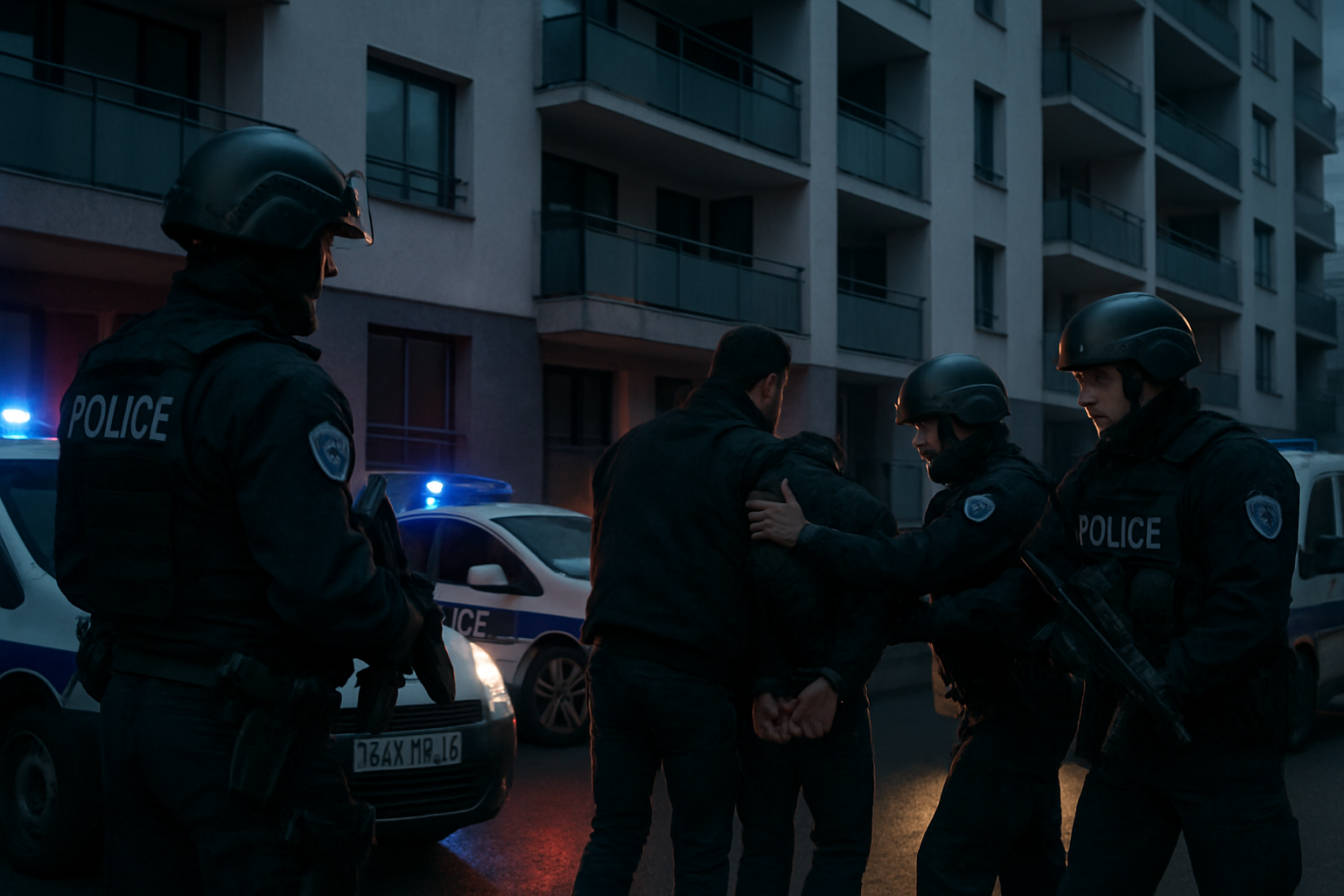
French authorities have arrested two brothers of Italian-Moroccan origin accused of planning a deadly antisemitic terrorist attack, with prosecutors announcing terrorism charges in what officials describe as a significant threat to public safety and religious communities.
The suspects, identified as a 22-year-old engineering student and his 20-year-old brother, were presented to an investigating judge following their arrest on charges of criminal conspiracy to commit terrorism. The case represents the latest in an alarming surge of antisemitic violence across Europe, adding urgency to international efforts to combat religiously-motivated extremism.
Details of the Terror Plot
According to the French anti-terrorism prosecutor's office, the brothers admitted during questioning to planning a terrorist attack in France after concluding they could not travel to carry out jihad in Syria or Palestine. In their confession, they acknowledged "nourishing for several weeks, faced with the observation of the impossibility of going to carry out jihad in the Cham [Syria] or in Palestine, a terrorist project in France for which they aspired to martyrdom."
French media reports indicate the suspects were arrested near the Longuenesse prison in northern France, where authorities seized semi-automatic weapons, explosives, and an Islamic State flag from their vehicle. The discovery of such sophisticated weaponry and explosives suggests extensive planning and preparation for what prosecutors described as a "deadly and antisemitic" plot.
Intelligence sources indicate the brothers had been radicalized online over the past two years, highlighting the persistent challenge of internet-based extremist recruitment. Their apparent targeting of Jewish communities reflects the calculated nature of sectarian violence that has increasingly plagued European nations.
Broader European Context
This arrest comes amid a devastating wave of antisemitic attacks across Europe. Recent incidents include the December 14, 2025 Bondi Beach Hanukkah festival massacre that killed 15 people, the February 21, 2026 Brisbane synagogue ramming attack, and the March 13, 2026 Rotterdam synagogue arson that resulted in four arrests.
European security agencies have documented sophisticated Iranian surveillance operations targeting Jewish communities across Denmark, Germany, France, and the Netherlands. These networks employ advanced operational security, encrypted communications, and compartmentalized cells, with operations reportedly intensifying following the collapse of nuclear negotiations.
Ireland alone documented 143 antisemitic incidents between September 2025 and February 2026, while British counter-terrorism forces recently arrested four men, including one Iranian national and three dual nationals, for conducting surveillance of Jewish institutions in London.
Security Response and Investigation
The investigation into the French plot involves multiple agencies working under terrorism protocols, which allow for extended detention periods and enhanced surveillance of suspect networks. Authorities are conducting comprehensive background checks and examining digital evidence to determine potential connections to broader terrorist networks.
French officials have not disclosed specific details about the intended targets, but the classification as an antisemitic plot suggests Jewish institutions or communities were likely in the crosshairs. The seizure of weapons and explosives indicates the attack could have resulted in significant casualties had it proceeded.
The case highlights the evolution of terrorist threats from traditional international networks to increasingly sophisticated domestic plots inspired by global extremist ideologies. The brothers' admission that they turned to domestic terrorism after being unable to join foreign jihadi movements illustrates how European authorities must now combat both international recruitment and homegrown radicalization.
Pattern of Religious Violence
Security experts note troubling similarities between recent European attacks, including the use of vehicles as weapons, targeting of religious gatherings, and coordination with religious holidays or significant dates. The December 2025 Bondi Beach attack specifically targeted a Hanukkah celebration, while the February 2026 Brisbane incident involved ramming synagogue gates with a Toyota Hilux.
These incidents demonstrate what analysts describe as a systematic campaign designed to terrorize religious minorities, particularly Jewish communities. The technical sophistication observed in recent attacks, including the use of explosive devices and coordinated assault tactics, mirrors methodologies found in state-sponsored terrorist training materials.
International Cooperation and Response
The French case underscores the critical importance of international intelligence cooperation in preventing terrorist attacks. The ability to trace radicalization patterns, monitor weapons procurement, and intercept plots before execution depends heavily on coordinated efforts between European security services.
Enhanced security protocols have been implemented at Jewish institutions throughout France and neighboring countries. Police patrols have been increased in areas with significant Jewish populations, and intelligence-led monitoring has been expanded to identify potential threats before they materialize.
The arrest also highlights the ongoing challenge of online radicalization, as investigators work to understand how the suspects became radicalized through internet platforms over a two-year period. This digital dimension of modern terrorism requires sophisticated counter-messaging strategies and enhanced monitoring of extremist content online.
Legal Proceedings and Implications
The brothers face serious terrorism charges that could result in lengthy prison sentences if convicted. French anti-terrorism laws provide prosecutors with robust tools to pursue cases involving conspiracy to commit terrorist acts, even when attacks are prevented before execution.
The investigation is expected to examine the suspects' travel history, financial records, and communications to determine if they received support from external networks or operated independently. The presence of military-grade weapons and explosives suggests significant logistical capabilities that may have required outside assistance.
This case represents a crucial test of European legal systems' ability to prosecute complex terrorism cases while maintaining due process protections. The outcome will likely influence future counter-terrorism strategies and legal frameworks across the European Union.
Community Impact and Resilience
Despite the terror threat, Jewish communities across France and Europe have demonstrated remarkable resilience, continuing religious activities under enhanced security measures. Community leaders emphasize their determination not to be intimidated by extremist violence, while working closely with security services to protect congregants.
Interfaith support has emerged as a crucial element in combating religious hatred, with Christian and Muslim leaders joining Jewish communities in condemning antisemitic violence. This solidarity represents an important counter-narrative to the division and fear that terrorist groups seek to create.
Mental health services have been made available to community members affected by the ongoing climate of threat, recognizing that the psychological impact of terrorism extends far beyond direct victims to entire communities living under the shadow of potential violence.
Looking Forward
The successful prevention of this attack demonstrates the effectiveness of French security services when credible intelligence is developed and acted upon swiftly. However, the case also highlights the persistent and evolving nature of terrorist threats in contemporary Europe.
As authorities continue their investigation, the focus will likely expand to understanding the broader radicalization ecosystem that produced these suspects. This includes examining online platforms, potential recruiting networks, and the pathways through which individuals transition from consuming extremist content to planning actual attacks.
The arrest serves as a stark reminder that the threat of religiously-motivated terrorism remains active across Europe, requiring sustained vigilance, international cooperation, and comprehensive strategies that address both immediate security concerns and the underlying ideological factors that drive individuals toward extremist violence.