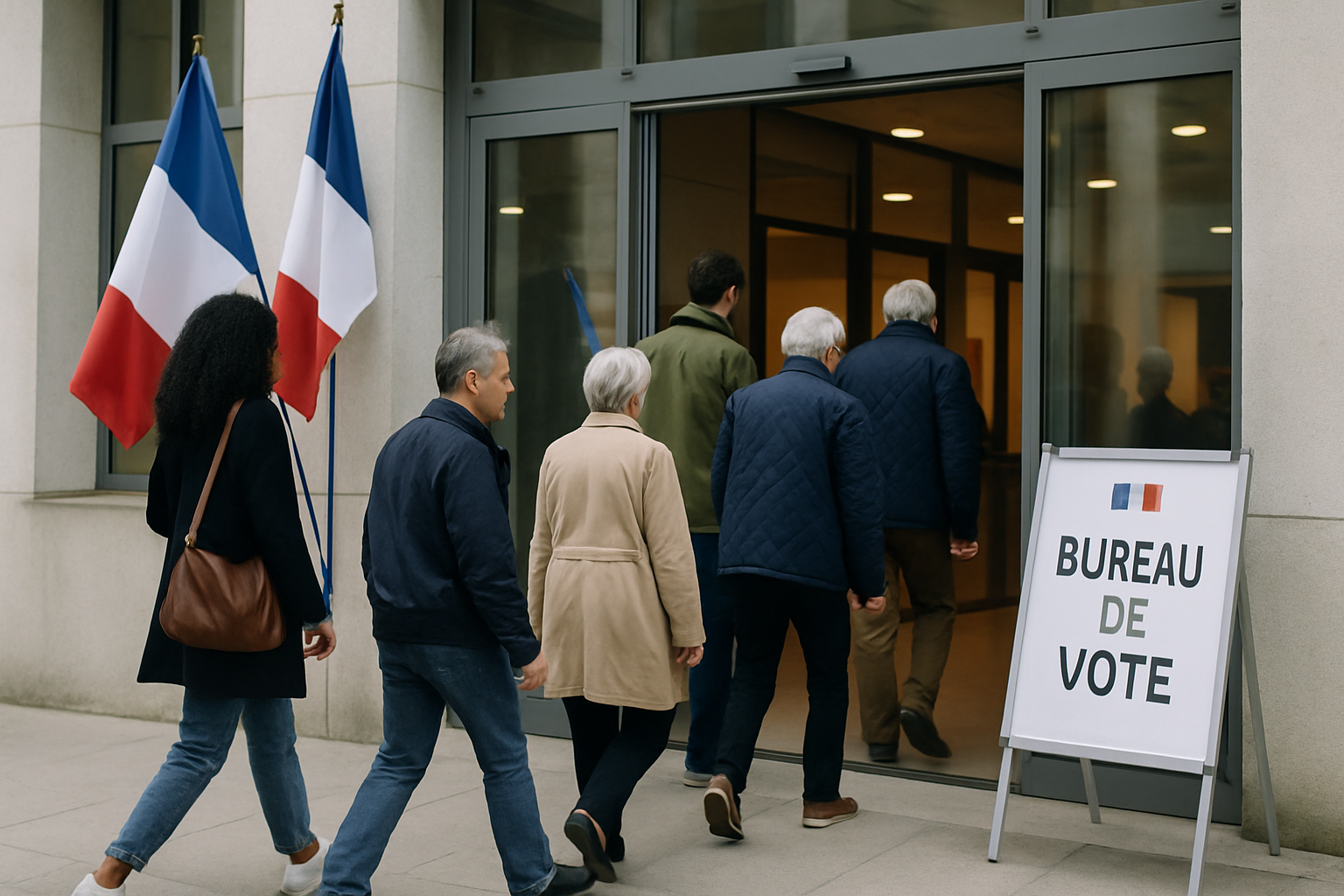
Nearly 50 million French voters went to the polls on Sunday, March 15, 2026, for the first round of municipal elections that serve as a critical barometer of France's political mood just one year before the pivotal 2027 presidential election.
The municipal elections, which determine local leadership for the next six years, have taken on outsized national significance amid unprecedented political tensions following the February Lyon violence that killed 23-year-old far-right activist Quentin Deranque. The tragedy has intensified political polarization and provided a rallying cry for Marine Le Pen's National Rally as it pursues an ambitious strategy to break into urban governance.
National Rally's Urban Strategy
For the first time in its history, the National Rally has shifted from rural populism to sophisticated urban campaigning, targeting five specific cities for historic municipal breakthroughs. This strategic evolution represents what political analysts describe as "authoritarian innovation" - far-right movements operating within democratic systems while gradually eroding liberal norms through electoral success rather than revolutionary violence.
Le Pen's party faces this crucial test while the leader herself confronts potential career-ending legal challenges. A Paris Court of Appeal ruling expected before summer 2026 could impose a five-year public office ban that would eliminate France's most prominent far-right leader from the 2027 presidential race.
"This election will serve as a test for the different political forces ahead of next year's presidential election."
— Mediapart Political Analysis
Paris: First Left-Right Battle in 25 Years
The capital emerges as a symbolic battleground, witnessing its first direct left-right confrontation in a quarter-century. This reflects broader national polarization as traditional centrist politics finds itself increasingly squeezed between radical alternatives.
The contest represents more than local governance - it symbolizes the fundamental choice facing French voters between maintaining democratic institutions and embracing populist alternatives that have gained traction across Europe.
Political Crisis Context
The elections unfold against the backdrop of France's most severe political crisis since the Fourth Republic. The February Lyon violence, where parliamentary assistant Jacques-Elie Favrot of La France Insoumise was charged with intentional homicide in Deranque's death, has created unprecedented tensions.
The Interior Ministry's controversial decision to reclassify La France Insoumise from "left" to "extreme left" for electoral purposes has triggered Council of State challenges, with accusations of administrative manipulation of democratic processes. Meanwhile, the Socialist Party has distanced itself from Jean-Luc Mélenchon's movement, contributing to left-wing fragmentation at a critical moment.
Participation and Democratic Resilience
Turnout figures show 19.37% participation at midday, representing a slight increase compared to the 2020 elections held during the COVID-19 pandemic. The modest uptick suggests renewed civic engagement despite - or perhaps because of - the current political tensions.
Results will be announced from 8 PM local time, with a second round scheduled for March 22 in municipalities where no candidate achieves an absolute majority. The two-round system allows for complex alliance negotiations that often reshape local and national political dynamics.
European Context and International Implications
The French elections occur within a broader pattern of European democratic challenges. Sweden's Liberal Party recently considered historic cooperation with the far-right Sweden Democrats, while Germany's Baden-Württemberg saw the Alternative for Germany (AfD) achieve breakthrough results.
International observers are monitoring the French results for insights into European institutional responses to 21st-century political pressures while preserving democratic values. The stakes extend beyond France, potentially influencing continental approaches to extremist challenges.
Presidential Race Preview
With President Emmanuel Macron constitutionally barred from seeking a third term, the 2027 presidential field remains fluid. Bruno Retailleau of Les Républicains has announced his candidacy, promising to "drastically reduce immigration" through direct referendums and criticizing "excesses of rule of law."
The municipal results will provide crucial insights into voter sentiment and party organizational strength ahead of what promises to be the most consequential French election in decades. Success or failure in municipal contests often determines national campaign viability and coalition possibilities.
Stakes for French Democracy
Beyond immediate electoral outcomes, these municipal elections represent a fundamental test of democratic institutions' capacity to manage political violence through legal channels rather than extrajudicial means. The ability to conduct free and fair elections amid heightened tensions demonstrates institutional resilience.
The results will influence European discussions about democratic governance under pressure, providing templates for other nations facing similar challenges of political extremism, fragmentation, and institutional stress.
As France navigates this critical democratic moment, the municipal elections serve as both a reflection of current tensions and a preview of the choices facing voters in 2027. The outcome will determine whether French democracy emerges strengthened from its current crisis or faces deeper challenges in the years ahead.