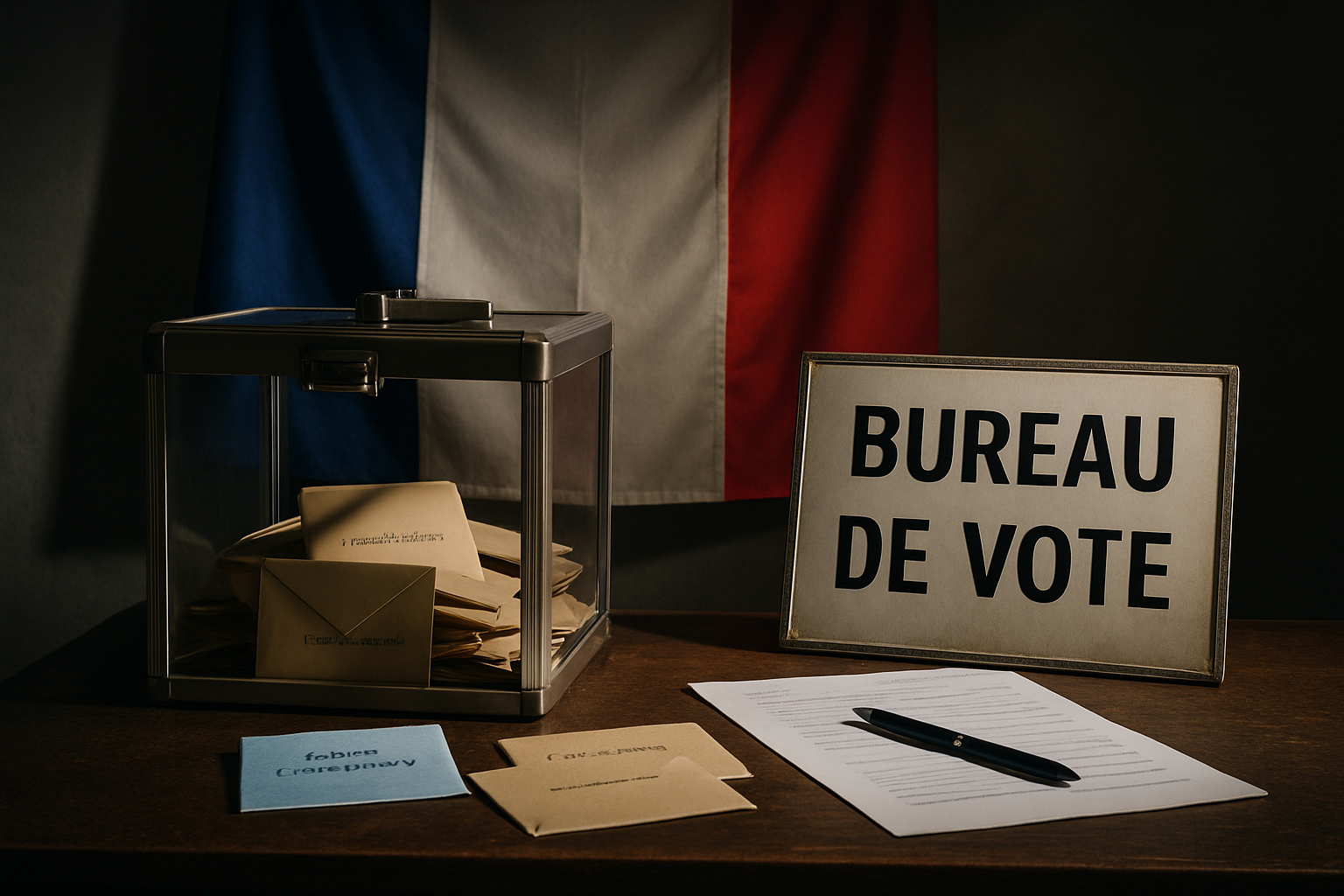
France's municipal elections first round on March 15, 2026, delivered significant gains for Marine Le Pen's National Rally across major cities, while recording disappointing turnout levels that reflect deep voter fatigue amid the country's most severe political crisis since the Fourth Republic.
The elections, serving as a crucial preview for the 2027 presidential race, unfolded against the backdrop of February's Lyon violence that claimed the life of 23-year-old far-right activist Quentin Deranque, fundamentally altering France's political landscape and campaign dynamics.
National Rally's Historic Urban Breakthrough
The far-right party achieved its most significant municipal gains in decades, with candidate Laure Lavalette securing a commanding 42.05% in Toulon—more than twelve points ahead of incumbent center-right mayor Josée Massi. This victory represents the highest participation rate in Toulon since 2001, demonstrating the National Rally's successful evolution from rural populism to sophisticated urban campaigning.
In Marseille, France's second-largest city, the incumbent left-wing mayor Benoît Payan found himself in a dead heat with National Rally challenger Franck Allisio, with both candidates polling within mere percentage points. This unprecedented competitiveness in a traditionally progressive stronghold marks a historic breakthrough for the far-right in urban France.
The National Rally's strategy, described by political analysts as "authoritarian innovation," has successfully expanded beyond traditional rural strongholds into diverse urban demographics, capturing municipalities across the north and southeast regions where the party has consolidated its influence.
Major Cities Face Uncertain Second Round
Paris saw Socialist candidate Emmanuel Grégoire maintaining a clear lead over Les Républicains' Rachida Dati, continuing the capital's 25-year streak under left-wing control. However, the margin represents the first direct left-right confrontation in Paris in a quarter-century, reflecting broader national polarization trends.
Lyon presents a tight race between Green incumbent Grégory Doucet and businessman Jean-Michel Aulas, while several other major cities require second-round voting to determine final outcomes. The complex electoral mathematics have created unprecedented coalition negotiations as traditional withdrawal and endorsement strategies face new challenges.
Traditional Parties Struggle with Fragmentation
Les Républicains, despite claiming status as France's "premier party," failed to achieve decisive victories in major urban centers. The disappointing results for Rachida Dati in Paris and Jean-Michel Aulas in Lyon underscore the party's continued struggles in metropolitan areas, even as it maintains strength in medium-sized municipalities.
The left-wing coalition faces severe fragmentation, with La France Insoumise and the Socialist Party conducting bitter campaigns against each other rather than presenting unified opposition to far-right gains. This internal warfare has complicated potential second-round alliances, with some disputes so acrimonious that traditional unity agreements appear uncertain.
Former Prime Minister Édouard Philippe emerged victorious in Le Havre with nearly 44% of first-round votes, positioning himself strongly for the 2027 presidential race. His performance demonstrates the continued appeal of centrist figures capable of transcending traditional party boundaries.
Low Turnout Reflects Political Fatigue
Preliminary results indicate voter participation fell significantly short of previous municipal elections, with turnout struggling to reach 50% in many areas. This represents a concerning decline from 2020 levels and suggests widespread disillusionment with the political system despite the high stakes involved.
The reduced participation occurred despite intensive campaigning and media coverage emphasizing the elections' importance as a 2027 presidential preview. Political scientists attribute the apathy to ongoing budget crises, repeated use of constitutional Article 49.3 to bypass parliament, and the traumatic impact of February's political violence.
Lyon Violence Casts Long Shadow
The electoral campaign was profoundly shaped by the killing of Quentin Deranque during clashes at a Lyon university conference. Seven suspects, including Jacques-Elie Favrot, a parliamentary assistant to La France Insoumise deputy, face charges of intentional homicide. The incident triggered government restrictions on university political meetings and intensified calls for law and order.
Justice Minister Gérald Darmanin's attribution of blame to the "ultra-left" and Marine Le Pen's characterization of the case as evidence of left-wing extremism provided powerful campaign ammunition for far-right candidates across France.
Democratic Institutions Under Pressure
The elections demonstrated both the resilience and strain of French democratic institutions. Despite security concerns and political tensions, voting proceeded smoothly across 35,000 municipalities with over 48 million eligible participants, including 358,000 EU nationals.
However, the Interior Ministry's controversial reclassification of La France Insoumise from "left" to "extreme left" for electoral purposes triggered legal challenges at the Council of State, raising concerns about administrative manipulation of democratic processes.
European Implications and International Attention
International observers closely monitored the elections as a bellwether for European democratic resilience against far-right populism. The National Rally's urban gains occurred alongside similar far-right advances across Europe, from Germany's Baden-Württemberg to Spain's Aragón region.
The successful conduct of elections despite security challenges and political polarization provided a template for democratic institutions managing extremist pressures through electoral rather than extra-legal means.
Looking Toward March 22 Second Round
The decisive second round on March 22 will determine final outcomes in municipalities where no candidate achieved absolute majorities. Traditional strategic withdrawals and endorsement patterns face unprecedented complexity as political fragmentation complicates alliance-building.
For Marine Le Pen's National Rally, municipal victories would provide crucial governing experience and credibility ahead of 2027, when the party polls suggest potential presidential success. The party has strategically targeted these elections to demonstrate mainstream governing competence rather than mere protest politics.
The stakes extend beyond local governance to fundamental questions about France's political direction and role in Europe. With President Macron constitutionally barred from seeking a third term, these municipal results offer the first major insights into party organizational strength and voter sentiment for the 2027 presidential contest.
As France navigates this critical democratic moment, the March 22 second round will reveal whether traditional republican coalitions can effectively counter far-right advances or whether the country faces a fundamental political realignment that could reshape European democracy itself.