Left-wing candidates achieved decisive victories across France's major cities in the second round of municipal elections on March 22, 2026, delivering a significant blow to Marine Le Pen's National Rally strategy while reinforcing progressive control of urban centers.
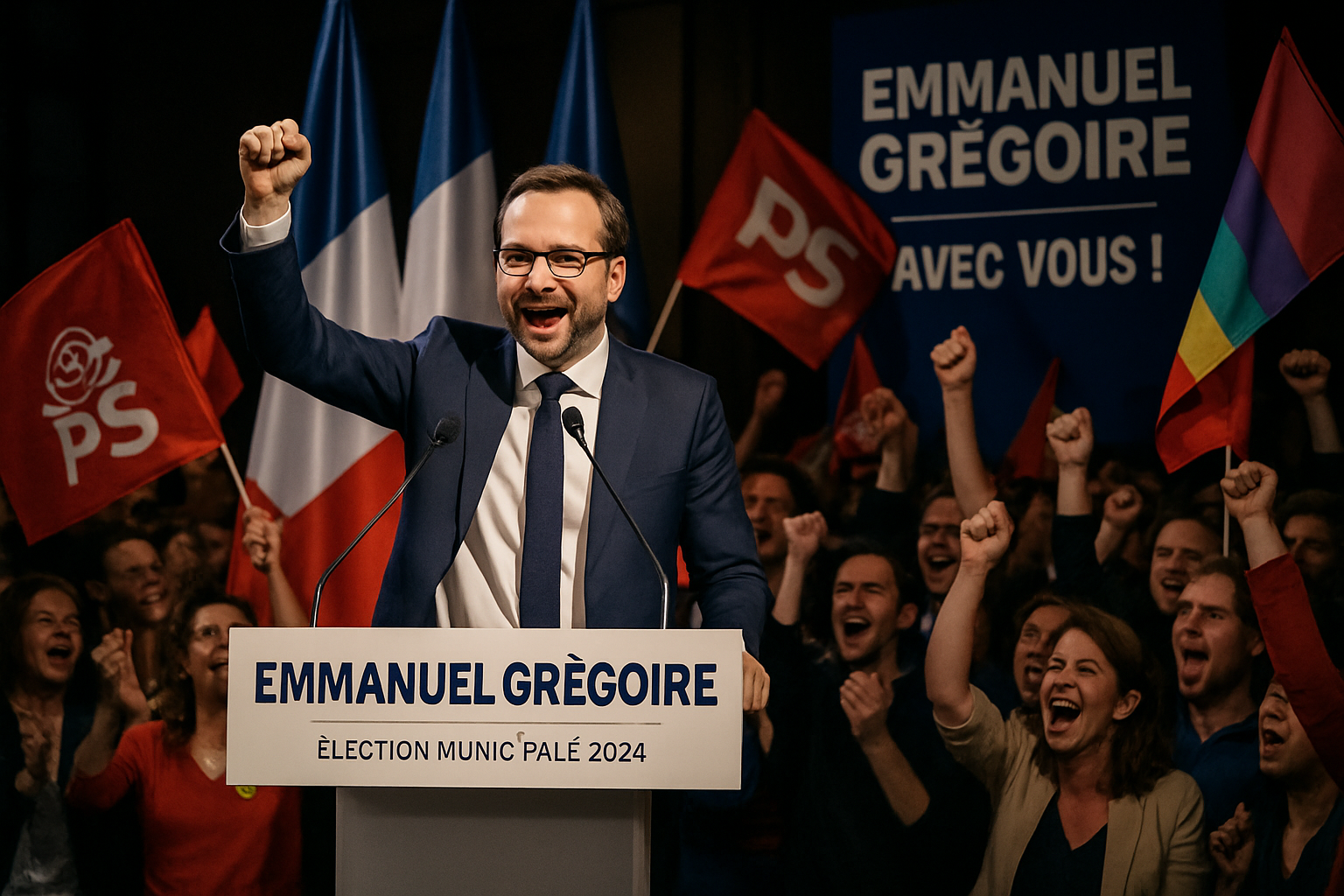
Emmanuel Grégoire, the Socialist candidate, secured a commanding victory in Paris with 50.52% of the vote against Les Républicains' Rachida Dati's 41.52%, marking the first direct left-right confrontation in the French capital in 25 years. The victory extends left-wing control of Paris for another six-year term, maintaining a streak that began in 2001.
The results represent a major setback for the National Rally's ambitious "authoritarian innovation" strategy, which aimed to evolve from rural populism to sophisticated urban campaigning. Despite unprecedented competitiveness in traditionally progressive strongholds, the far-right party failed to capture any major French cities.
Socialist Resilience Despite Left-Wing Fragmentation
Grégoire's Paris victory came despite significant tensions within the left-wing coalition. The Socialist Party's "definitive break" with Jean-Luc Mélenchon's La France Insoumise (LFI), following the February Lyon violence that resulted in the death of 23-year-old Quentin Deranque, created complex electoral dynamics.
"The left has shown it can win when it focuses on governing rather than ideological purity," said political analyst Marie Dubois. "Grégoire's success demonstrates that pragmatic socialism still resonates with urban voters."
In Marseille, incumbent mayor Benoît Payan successfully defended France's second-largest city against an unprecedented challenge from National Rally's Franck Allisio. The victory was particularly significant given that Marseille had been identified as one of five target cities for the far-right's urban breakthrough strategy.
Green Party Maintains Lyon Control
Environmental politics proved resilient in Lyon, where Green incumbent Grégory Doucet secured reelection by a narrow margin of less than 3,000 votes over businessman Jean-Michel Aulas. The victory comes despite the shadow cast by the February political violence in the city, which had intensified political polarization.
Aulas announced his intention to file a legal challenge over alleged irregularities in ballot colors, though electoral authorities confirmed the vote's validity. The narrow victory underscores the continued strength of environmental politics in France's third-largest city, even amid challenging circumstances.
"This victory belongs to all Lyonnais who believe in ecological transformation and social justice."
— Grégory Doucet, Mayor of Lyon
Far-Right Urban Strategy Falls Short
The National Rally's failure to capture major urban centers represents a significant strategic setback for Marine Le Pen's presidential ambitions. The party had invested heavily in developing sophisticated urban campaigning capabilities, moving beyond its traditional rural base to compete in metropolitan areas.
The strategy's most notable success came in Nice, where Éric Ciotti of the Union des Droites pour la République (allied with RN) defeated longtime incumbent Christian Estrosi with 48.54% of the vote. However, this victory was overshadowed by failures in larger cities like Marseille, Paris, and Lyon.
In Toulon, despite high expectations, far-right candidate Laure Lavalette was defeated by a "republican front" that united diverse opposition forces. The result demonstrated the continued effectiveness of anti-far-right coalitions in preventing National Rally victories.
Surprising Left-Wing Gains
Beyond defending traditional strongholds, the left achieved unexpected victories in contested territories. In Nîmes, Communist candidate Vincent Bouget led a left-wing coalition to victory, overturning 25 years of conservative rule and defeating both the incumbent right and the National Rally challenge.
In Sarcelles, 38-year-old Bassi Konaté achieved a remarkable victory with over 55% of the vote, creating a surprise in this former Socialist stronghold by building a diverse coalition that emphasized the commune's multicultural character.
Meanwhile, in Lille, Socialist incumbent Arnaud Deslandes secured a commanding reelection with nearly 16 points over his LFI challenger, demonstrating the continued strength of traditional Socialist politics in northern France.
Political Crisis Context
The elections took place under the shadow of February's Lyon violence, which resulted in seven suspects being charged with intentional homicide, including Jacques-Elie Favrot, a parliamentary assistant to LFI deputy Raphaël Arnault. The incident significantly impacted campaign dynamics and contributed to the fragmentation of left-wing politics.
The Interior Ministry's controversial decision to reclassify La France Insoumise from "left" to "extreme left" for electoral purposes triggered legal challenges at the Council of State, adding institutional tension to an already complex political landscape.
Implications for 2027 Presidential Race
The municipal results provide crucial insights into France's political landscape ahead of the 2027 presidential election, where President Emmanuel Macron is constitutionally barred from seeking a third term.
The left's success in maintaining control of major cities offers a foundation for presidential campaign organizing, though persistent divisions between Socialists and LFI complicate potential coalition-building strategies.
For the National Rally, the failure to achieve urban breakthroughs represents a setback, but the party's competitive performance in traditionally progressive areas demonstrates expanded appeal beyond its rural base.
Democratic Resilience Demonstrated
Despite political tensions and security concerns following the Lyon tragedy, the elections proceeded smoothly with a turnout of 48.1%. International observers praised the conduct of the elections as a demonstration of democratic resilience during a period of significant political stress.
"France has shown that democratic institutions can channel political tensions through electoral processes rather than extra-legal means," noted European democracy expert Dr. Klaus Weber. "This provides an important template for other democracies facing similar challenges."
The successful completion of the electoral process, despite ongoing investigations into political violence and institutional controversies, reinforces confidence in French democratic institutions ahead of the crucial 2027 presidential contest.
Looking Forward
The municipal election results establish important precedents for alliance-building and electoral strategy as France approaches the 2027 presidential race. The left's ability to maintain urban strongholds while navigating internal divisions suggests potential for coalition politics, while the far-right's mixed performance indicates both opportunities and limitations for populist appeals.
With turnout remaining stable despite political turbulence, French voters demonstrated continued engagement with democratic processes, providing a foundation for the transformative political competition expected in 2027.