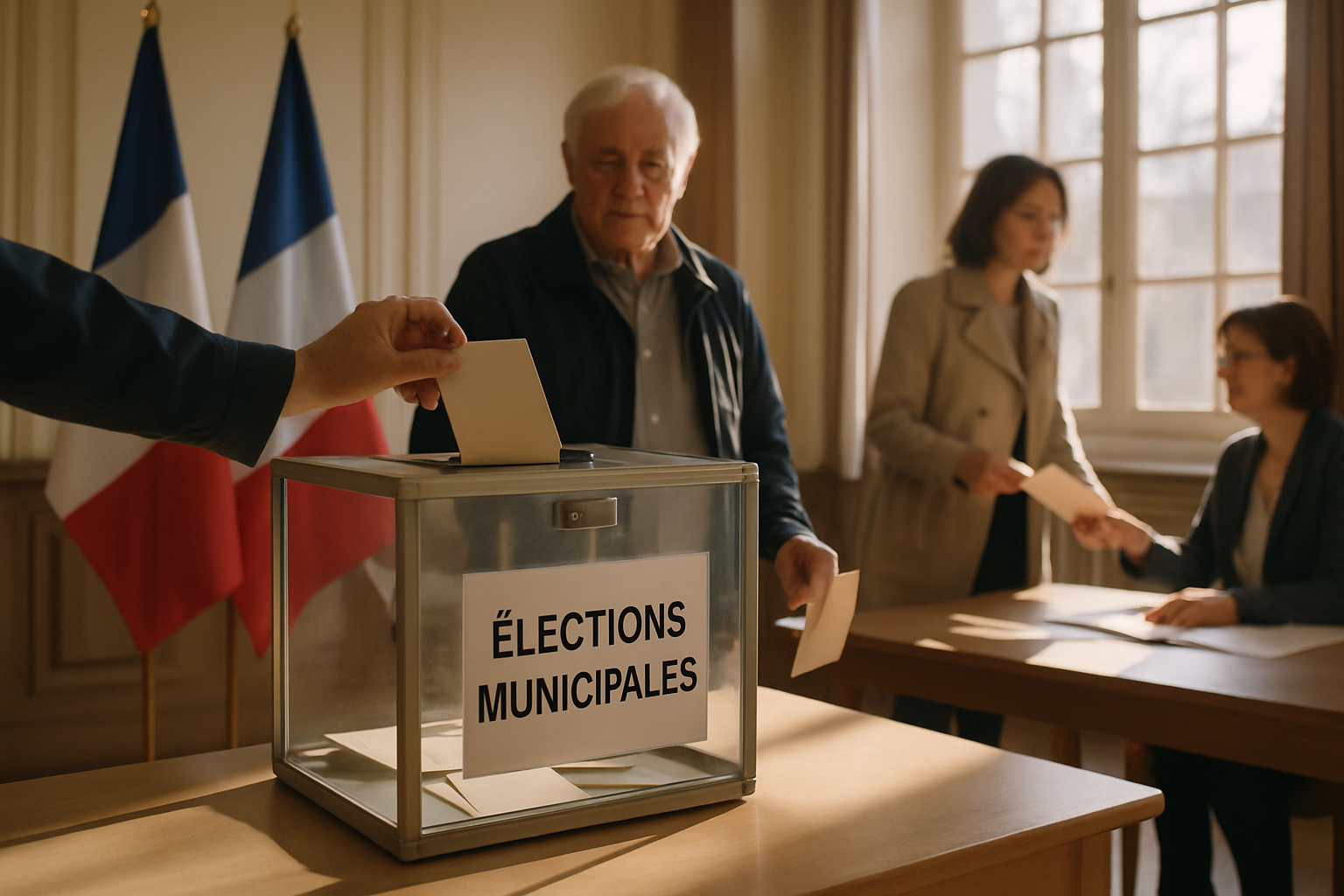
France's left-wing parties successfully retained control of the country's three largest cities—Paris, Lyon, and Marseille—following the second round of municipal elections on March 22, 2026, while Emmanuel Macron's Renaissance party claimed victory in Bordeaux and conservative candidates captured several provincial centers in results that highlighted the nation's deepening political fragmentation.
The elections, conducted under the shadow of February's deadly political violence in Lyon and amid unprecedented security measures, saw Socialist Emmanuel Grégoire elected mayor of Paris with 50.52% of the vote, defeating center-right challenger Rachida Dati who secured 41.52%. The victory marked the first direct left-right confrontation in the French capital in 25 years and ensured continued left-wing control of City Hall.
Major Urban Centers Remain Left-Wing Strongholds
In Marseille, incumbent mayor Benoît Payan successfully defended France's second-largest city against an unprecedented challenge from the far-right National Rally, leading a broad left-wing coalition that rejected alliance offers from La France Insoumise (LFI). The victory came despite the National Rally achieving historic competitiveness in the traditionally progressive Mediterranean port city.
Lyon's Green mayor Grégory Doucet secured reelection, maintaining environmental party control of France's third-largest city. The result was particularly significant given that Lyon had been the epicenter of political tensions following the February death of 23-year-old far-right activist Quentin Deranque during violent clashes, an incident that profoundly shaped the electoral campaign.
"The left has demonstrated remarkable resilience in defending its urban bastions despite facing unprecedented challenges from both the far-right and internal fragmentation,"
— Political analyst speaking to Le Monde
Renaissance Captures Bordeaux, Right Wins Provincial Cities
President Macron's centrist Renaissance party achieved its most significant municipal victory by capturing Bordeaux, where their candidate defeated the incumbent Green mayor Pierre Hurmic. The win provided a crucial boost for the governing party ahead of the 2027 presidential race, where Macron is constitutionally barred from seeking a third term.
Conservative candidates made substantial gains in mid-sized cities across France. Notable victories included the capture of Besançon, ending 70 years of left-wing rule in the Franche-Comté capital, and wins in Brest and Clermont-Ferrand. These results reflected broader demographic and political shifts affecting provincial France.
Former Prime Minister Édouard Philippe strengthened his national political profile with a commanding victory in Le Havre, securing 47.71% of the vote. Philippe's success is widely viewed as positioning him for a potential presidential bid in 2027.
Far-Right Breakthrough in Nice
The elections' most shocking result came in Nice, where Eric Ciotti of the Union of the Democratic Right-National Rally alliance defeated longtime incumbent Christian Estrosi with 48.54% of the vote. The victory delivered France's fifth-largest city to far-right control after a bitter triangular contest that included Green candidate Juliette Chesnel-Le Roux, who received 14.26%.
The Nice result represented the culmination of Marine Le Pen's "authoritarian innovation" strategy, which evolved the National Rally from rural populism to sophisticated urban campaigning. However, the far-right party failed to achieve its primary objectives of capturing major metropolitan areas like Marseille or Toulon.
Socialist Victories Amid Left-Wing Fragmentation
Socialist candidates demonstrated remarkable individual strength despite broader left-wing fragmentation. In addition to Grégoire's Paris victory, Socialist mayors were reelected in Rennes (Nathalie Appéré), Nantes (Johanna Rolland), and Lille (Arnaud Deslandes). These victories occurred despite the Socialist Party's "definitive break" with La France Insoumise over concerns about democratic values following the Lyon violence.
The fragmentation of France's traditional left coalition was evident in several cities where LFI and Socialist candidates competed separately, potentially weakening their combined appeal. However, successful pragmatic alliances in some locations, such as Lyon and Toulouse, demonstrated that cooperation remained possible when electoral necessity demanded it.
Political Violence Casts Long Shadow
The elections were fundamentally shaped by the February 15 death of Quentin Deranque in Lyon, where violent clashes between far-right and far-left groups during a pro-Palestinian conference resulted in the young activist's fatal beating. Seven individuals, including Jacques-Elie Favrot, parliamentary assistant to LFI deputy Raphaël Arnault, were charged with intentional homicide.
The incident intensified France's political polarization and provided ammunition for National Rally campaigns emphasizing law and order. It also contributed to the Socialist Party's decision to distance itself from LFI, fundamentally altering traditional left-wing alliance patterns.
Administrative Controversies and Democratic Concerns
The electoral campaign was further complicated by the Interior Ministry's controversial decision to reclassify La France Insoumise from "left" to "extreme left" for administrative purposes. The move triggered legal challenges at the Council of State, with critics characterizing it as administrative manipulation of democratic processes.
Despite these tensions and security concerns, the elections proceeded smoothly with a turnout of 48.1%, demonstrating French democratic institutions' resilience under pressure. International observers monitored the process as a bellwether for European democracy's capacity to manage political extremism through electoral rather than extra-legal means.
Implications for 2027 Presidential Race
The municipal results provide crucial insights into party organizational strength and voter sentiment ahead of the wide-open 2027 presidential contest. The National Rally's urban expansion, while falling short of breakthrough victories in major cities, demonstrated broader appeal beyond its traditional rural base.
The left's retention of major urban centers offers a foundation for rebuilding, though persistent fragmentation complicates coalition strategies. Les Républicains' mixed performance indicates continued challenges for the traditional right, while Renaissance's Bordeaux victory provides momentum for the governing party's succession planning.
Philippe's strengthened profile following his Le Havre victory positions him as a potential centrist alternative, while the National Rally's Nice success validates its strategy of mainstreaming far-right governance through municipal experience.
European Context and Democratic Resilience
The French municipal elections occurred within the broader context of what observers describe as "the most challenging period for continental democracy since World War II." Despite 89% of Europeans demanding greater EU unity according to Eurobarometer polling, political reality shows increasing fragmentation across member states.
France's successful conduct of free and fair elections despite political violence, administrative controversies, and security concerns provides a template for other European democracies facing similar pressures. The results demonstrate that democratic institutions can channel political tensions through electoral processes while maintaining legitimacy and effectiveness.
The elections' outcome will influence European discussions about managing political extremism, coalition building, and democratic governance adaptation to 21st-century challenges. Success in maintaining democratic norms during this critical period strengthens arguments for institutional resilience, while the persistent challenges highlight the ongoing threats to liberal democratic values.
As France prepares for the 2027 presidential race with these municipal results as a foundation, the country's political landscape remains fundamentally altered by violence, fragmentation, and the rise of new forms of political competition that will define European democracy's future trajectory.