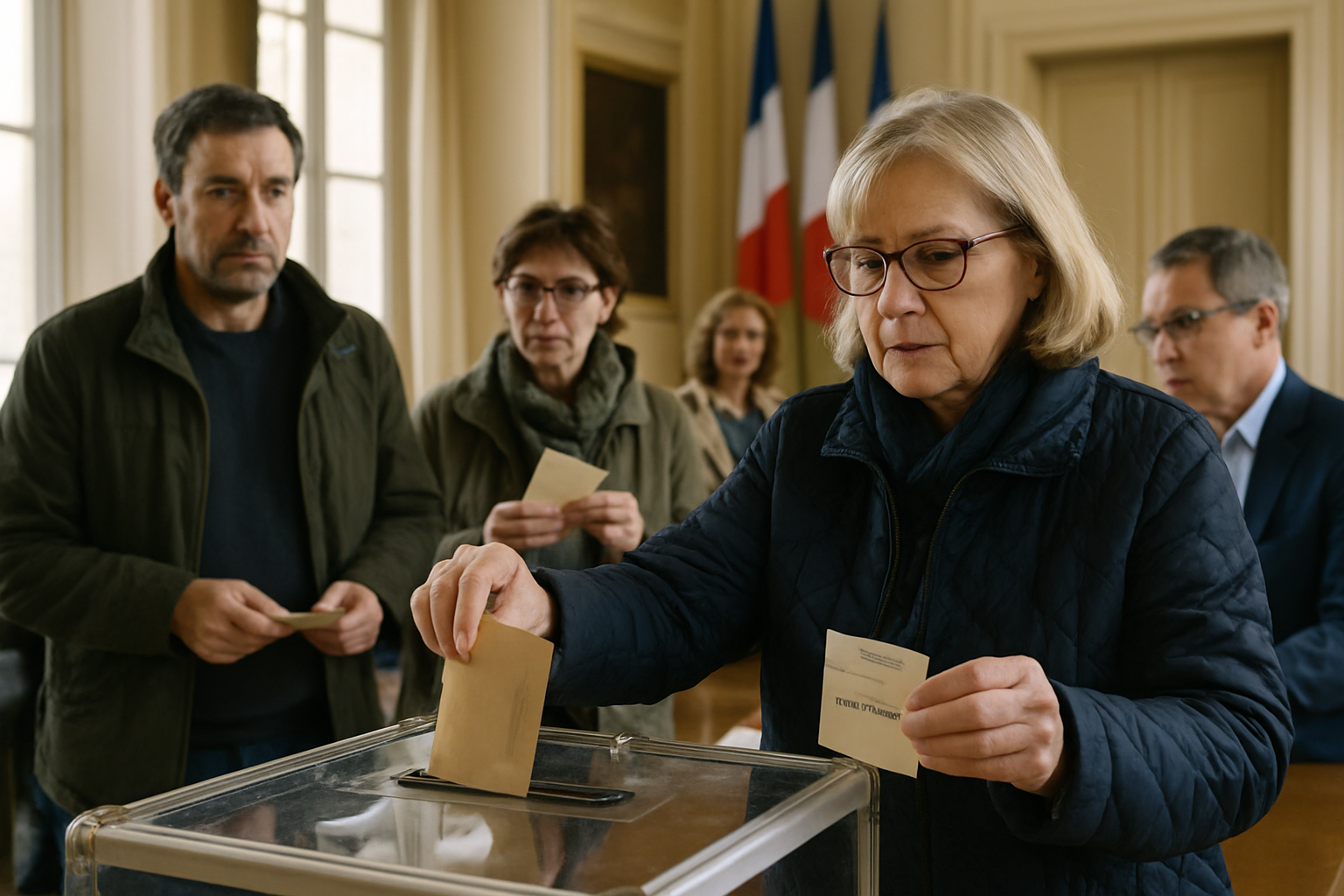
French municipal elections concluded with a complex political outcome that saw left-wing candidates retain control of France's three largest cities while Marine Le Pen's National Rally achieved significant gains without securing major urban victories, reshaping the political landscape ahead of the 2027 presidential race.
Emmanuel Grégoire, the Socialist candidate, emerged victorious in Paris with over 50% of the vote, defeating Les Républicains' Rachida Dati in the first direct left-right confrontation in the French capital in 25 years. The victory maintains a quarter-century streak of left-wing control over City Hall, despite intense conservative pressure.
In Marseille, incumbent mayor Benoît Payan successfully defended against an unprecedented challenge from National Rally's Franck Allisio, preventing what would have been a historic far-right breakthrough in France's second-largest city. Lyon saw Green incumbent Grégory Doucet narrowly retain his position, securing the environmental movement's continued influence in major urban governance.
National Rally's Mixed Urban Strategy
Marine Le Pen's National Rally pursued what political analysts have termed "authoritarian innovation" - a sophisticated evolution from rural populism to competitive urban campaigning. Despite failing to capture any major cities, the party demonstrated unprecedented competitiveness in traditionally progressive strongholds.
The most significant National Rally success came through ally Eric Ciotti, who defeated longtime Nice incumbent Christian Estrosi with 48.54% of the vote, delivering France's fifth-largest city to far-right control. However, the party's broader urban breakthrough strategy fell short of its ambitious targets in Marseille, Toulon, and other key municipalities.
"The National Rally has evolved from a rural protest movement to a sophisticated urban political machine, but municipal elections revealed the limits of this transformation"
— Renaud Foucart, Lancaster University Economist
Political Crisis Context
These elections unfolded under the shadow of unprecedented political violence following the February death of Quentin Deranque in Lyon. The 23-year-old far-right activist's killing during political clashes led to charges against seven suspects, including Jacques-Elie Favrot, a parliamentary assistant to La France Insoumise deputy Raphaël Arnault.
The tragedy deepened France's political fragmentation, with the Socialist Party declaring a "definitive break" with Jean-Luc Mélenchon's movement over democratic values concerns. The Interior Ministry's controversial reclassification of La France Insoumise from "left" to "extreme left" triggered Council of State legal challenges, adding institutional tensions to an already volatile campaign.
Surprising Political Gains and Celebrity Politics
Beyond the major cities, the elections produced several unexpected outcomes. Former rugby legend Serge Blanco successfully transitioned to politics, winning the mayoral race in Biarritz. At 72, Blanco campaigned on promises to speak to voters "from the heart" and treat them with "respect," demonstrating the appeal of celebrity candidates in local politics.
The elections also highlighted the ongoing appeal of charismatic leadership, as evidenced by various candidates who leveraged their public profiles to secure electoral success in municipalities across France.
Left-Wing Resilience Amid Fragmentation
Despite internal divisions, left-wing parties demonstrated remarkable resilience in urban strongholds. Socialists successfully defended key positions while maintaining distance from the more radical elements within the broader left coalition.
In the Paris region, Socialists recaptured several municipalities including Aubervilliers and Villepinte, while newcomers like Bassi Konaté won Sarcelles with over 55% of the vote, emphasizing multicultural coalition-building in former Socialist strongholds.
The results revealed a political landscape shaped more by local preferences and candidate appeal than national ideological currents. As one political analyst noted, these elections demonstrated "a mosaic of local preferences" rather than a clear national trajectory.
Democratic Resilience and International Implications
With 48.1% voter turnout, the elections proceeded smoothly despite heightened political tensions and security concerns. International observers praised France's institutional capacity to channel political stress through electoral rather than extra-legal means, providing a template for European democracies facing similar extremist pressures.
The successful conduct of free and fair elections during a period of significant political violence and administrative controversy demonstrated the strength of French democratic institutions. This resilience occurred within what observers have called the "most challenging period for continental democracy since World War II."
Implications for 2027 Presidential Race
These municipal results provide crucial insights into party organizational strength ahead of the 2027 presidential contest, where Emmanuel Macron is constitutionally barred from seeking a third term. The National Rally's competitive performance demonstrates broader appeal beyond its traditional rural base, despite failing to secure breakthrough victories.
Left-wing retention of major urban centers offers a foundation for presidential campaign building, but persistent fragmentation complicates traditional coalition strategies. The conservative Les Républicains face continued challenges in establishing relevance amid pressure from both centrist and far-right alternatives.
Minister Sébastien Lecornu acknowledged the elections' significance, noting in a letter to mayors that the "too weak" participation "obliges us" and "imposes one simple thing - to act concretely, as close to the ground as possible."
European Context and Future Challenges
France's municipal elections occurred within a broader European context of political fragmentation and democratic stress. Similar patterns of far-right gains and coalition instability have emerged across multiple EU member states, with 89% of Europeans demanding greater unity while political reality shows increasing fragmentation.
The elections established precedents for how European democratic institutions can manage political extremism through electoral processes while preserving institutional integrity. Success in conducting legitimate elections during periods of heightened tension provides models for other European nations facing comparable challenges.
As France prepares for the 2027 presidential race in an increasingly fragmented political landscape, these municipal elections revealed both the resilience of democratic institutions and the persistent challenges of governing in an era of political polarization. The results suggest that while extremist movements have gained sophisticated organizational capacity, traditional democratic forces retain significant strength in urban centers that remain crucial to France's political future.