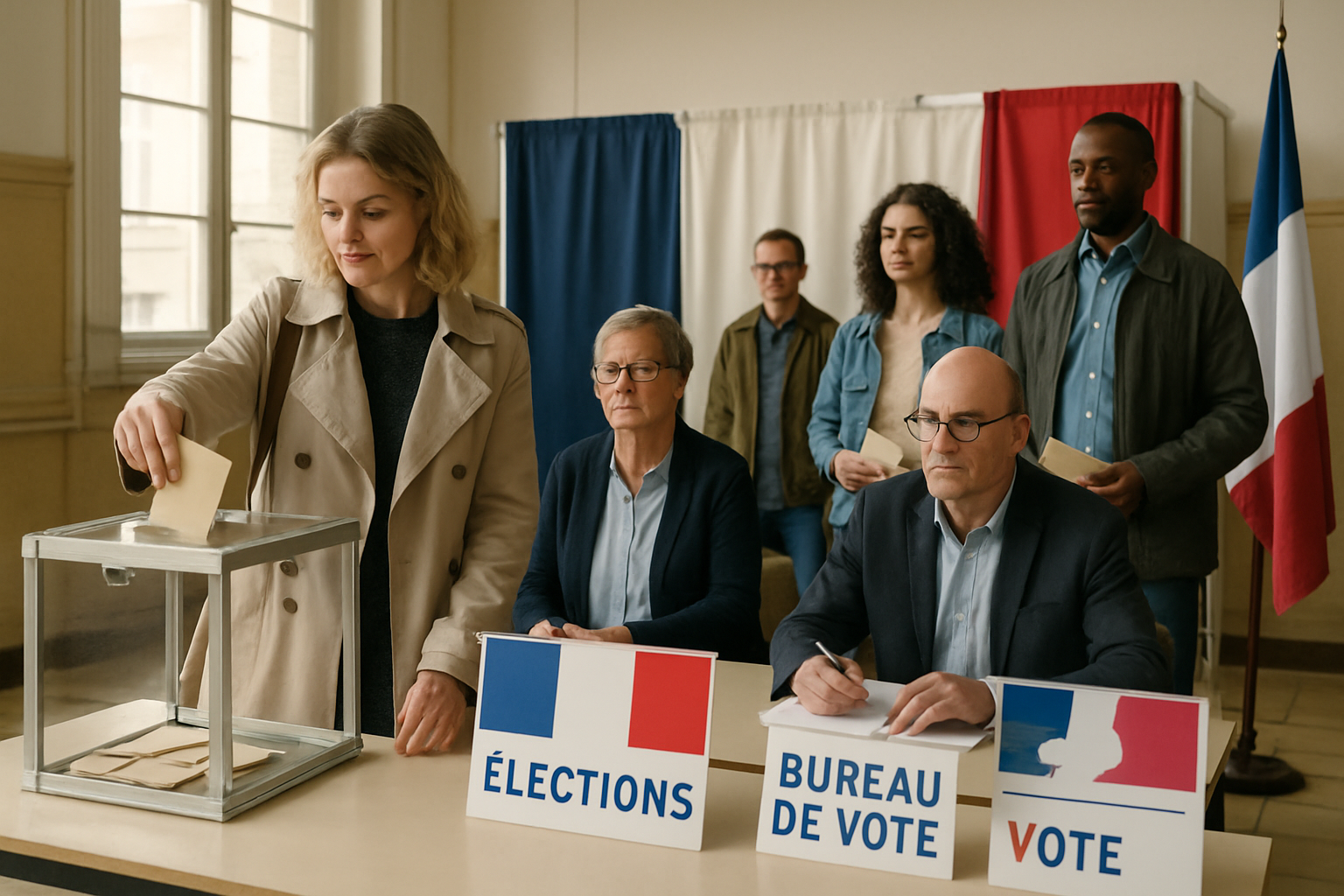
French voters turned out in moderate numbers for the first round of municipal elections on March 15, 2026, with turnout reaching 48.9% by 5 PM—a significant increase from the pandemic-affected 2020 elections but still below the 54.72% recorded in 2014.
Over 48 million eligible voters, including 358,000 European Union nationals, cast their ballots across nearly 35,000 municipalities in what is being closely watched as a barometer of political support ahead of next year's presidential election. The results, which began to be released at 8 PM, will provide crucial insights into the strength of various political movements, particularly the far-right National Rally and its ability to expand beyond its traditional rural strongholds.
Turnout Patterns and Historical Context
The 48.9% turnout figure at 5 PM represents a recovery from the historically low participation rates seen during the 2020 municipal elections, when the COVID-19 pandemic severely disrupted normal voting patterns. At the same time in 2020, only 38.77% of eligible voters had cast their ballots, making this year's increase particularly noteworthy.
However, the current turnout still falls short of the robust democratic participation seen in 2014, when 54.72% of voters had participated by the same hour. This suggests that while French citizens are returning to pre-pandemic voting behaviors, there remains a degree of electoral fatigue or disengagement that could have significant implications for the democratic process.
Political analysts note that municipal elections traditionally serve as important mid-term tests for national governments and opposition parties. At midday, voter turnout stood at around 19%, just one percentage point higher than the midday rate during the 2020 elections and down from 23% in 2014, indicating a gradual increase in participation throughout the day.
High Stakes in Major Cities
The elections have generated particular uncertainty in France's largest cities, where few incumbent mayors are assured of re-election. Paris, Lyon, and Marseille face especially competitive races, complicated by recent changes to electoral procedures that have altered the traditional dynamics of municipal politics.
The modified voting system in these major urban centers has created new strategic challenges for political parties and candidates, requiring different approaches to coalition-building and voter mobilization. These changes reflect broader reforms aimed at making local governance more representative and responsive to citizens' needs.
In many medium to large cities, a second round of voting is expected on March 22, as the fragmented political landscape makes it unlikely that any single candidate or list will achieve the absolute majority required for first-round victory.
National Rally's Urban Strategy
Perhaps the most closely watched aspect of these elections is the performance of Marine Le Pen's National Rally, which has been targeting approximately five cities for potential historic breakthroughs. This represents a significant strategic evolution for the far-right party, which has traditionally found its strongest support in rural areas and smaller towns.
The party's focus on urban expansion demonstrates its ambition to become a truly national political force capable of competing effectively in all types of constituencies. Success in these targeted cities would provide crucial organizational infrastructure and legitimacy ahead of the 2027 presidential election, where polls suggest the National Rally could potentially win.
This urban strategy reflects what political scientists have termed "authoritarian innovation"—the adoption of sophisticated electoral techniques by populist movements to expand their appeal beyond their traditional base. The results will indicate whether this approach has been successful in attracting urban voters concerned about security and economic issues.
Political Context and National Implications
The municipal elections take place against the backdrop of significant political upheaval in France. The country has experienced unprecedented political crisis following the February death of Quentin Deranque, a 23-year-old far-right activist, during violent clashes in Lyon. Seven suspects, including a parliamentary assistant from La France Insoumise, have been charged with intentional homicide in connection with his death.
This tragic incident has intensified political tensions and highlighted the dangerous escalation of confrontation between extremist groups on both ends of the political spectrum. The government has responded by implementing restrictions on university political meetings, while the case has become a rallying cry for the National Rally and has led to diplomatic tensions with Italy over comments by Prime Minister Giorgia Meloni.
The Interior Ministry's controversial decision to reclassify La France Insoumise from "left" to "extreme left" for electoral purposes has also created institutional tensions, with the party filing challenges with the Council of State over what it characterizes as administrative manipulation of democratic processes.
European and International Significance
The French municipal elections are being closely monitored across Europe as a potential template for how democratic institutions can manage political extremism and violence through electoral rather than extra-legal means. The success or failure of this approach could influence how other European nations address similar challenges.
International observers have noted the elections' significance in the context of broader European political developments, including Sweden's recent breakthrough in Liberal-Sweden Democrats cooperation and Germany's ongoing challenges with AfD gains in traditionally stable states.
The results will also provide insights into whether the fragmentation of the traditional left, including the Socialist Party's distancing from Jean-Luc Mélenchon's movement, has created opportunities for centrist or right-wing candidates to consolidate power at the local level.
Looking Ahead to 2027
With President Emmanuel Macron constitutionally barred from seeking a third term, the 2027 presidential race remains wide open. These municipal elections serve as crucial organizational tests for all major political movements, providing insights into their capacity to mobilize voters and build the grassroots infrastructure necessary for a successful national campaign.
The performance of various political formations in these local contests will influence their credibility and resources heading into the presidential campaign. Strong showings could attract additional financial support and political talent, while poor results might trigger internal reassessments and leadership changes.
Bruno Retailleau of Les Républicains has already announced his presidential candidacy, promising to "drastically reduce immigration" through direct referendums and criticizing "excesses of rule of law." The municipal results will test whether his hardline conservative message resonates with voters.
Democratic Resilience Under Test
Beyond the immediate political calculations, these elections represent a fundamental test of French democratic institutions' ability to channel political anger and frustration through peaceful, legal means during a period of heightened social tension.
The successful conduct of free and fair elections, with results accepted by all participants, would demonstrate the resilience of French democracy in the face of political violence and extremist challenges. Conversely, any irregularities, violence, or refusal to accept results could signal deeper institutional vulnerabilities.
The high level of police deployment and security measures implemented for these elections reflects the seriousness with which authorities are treating potential threats to the democratic process. The peaceful conduct of voting and vote-counting will be as important as the actual results in determining the elections' ultimate significance.
As France continues to grapple with questions of national identity, security, and democratic governance, the municipal elections of March 15-22, 2026, will provide crucial insights into the country's political trajectory and its capacity to maintain democratic stability in an increasingly polarized environment. The moderate turnout suggests neither complete disengagement nor overwhelming enthusiasm, but rather a democracy functioning under stress while citizens continue to participate in the essential work of self-governance.