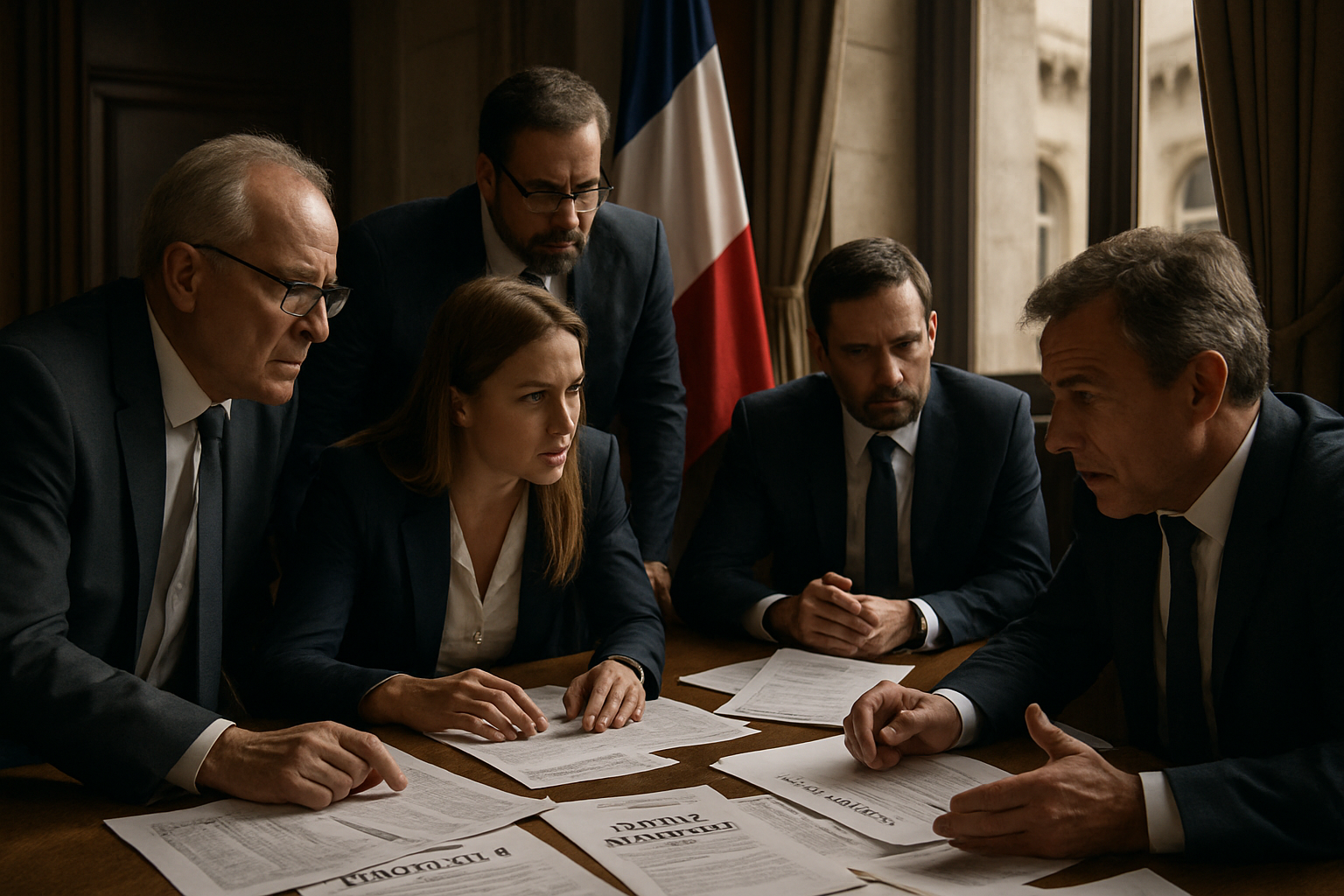
Strategic alliance-building has intensified across France's major cities as political parties navigate complex negotiations ahead of the March 22 second round of municipal elections, with traditional left-right divisions giving way to pragmatic coalition mathematics that will reshape the country's political landscape.
In a series of dramatic developments that unfolded throughout Monday, March 16, the aftermath of the first round has exposed deep fractures within France's political establishment while revealing new patterns of cooperation that could define the trajectory toward the 2027 presidential race.
Paris: Right United, Left Divided
The capital has witnessed the most significant political realignment, with former Justice and Culture Minister Rachida Dati's center-right list (25.46% in the first round) announcing a merger with Pierre-Yves Bournazel's centrist coalition (11.34%). This strategic fusion creates a formidable challenge to the left's dominance in Paris, where Socialist Emmanuel Grégoire currently leads with 37.98% of first-round votes.
However, the left has failed to consolidate its position. Vice-mayor Grégoire's united left list has explicitly rejected overtures from Sophia Chikirou, leader of the La France Insoumise (LFI) slate, deepening the fractures that have plagued the French left since the February Lyon violence that claimed the life of Quentin Deranque.
"The traditional withdrawal and endorsement strategies that have governed French electoral politics for decades face unprecedented complexity due to political fragmentation following the Lyon tragedy."
— Source familiar with Socialist Party strategy
Marseille: Four-Way Battle Emerges
France's second-largest city is heading toward a rare quadrangular contest after incumbent mayor Benoît Payan (various left) refused rapprochement with LFI candidates, filing his lists independently on Monday despite pressure for left-wing unity. The decision has prompted hundreds of protesters to demonstrate outside his campaign headquarters, reflecting the intensity of political divisions.
Payan's refusal to negotiate with Jean-Luc Mélenchon's movement comes amid ongoing controversy surrounding LFI parliamentary assistant Jacques-Elie Favrot, who faces charges related to the February Lyon violence. The Socialist mayor's stance represents a broader pattern of traditional left parties distancing themselves from LFI amid concerns about democratic values and political violence.
Strategic Alliances Beyond Paris
While the capital and Marseille showcase left-wing fragmentation, other major cities have demonstrated successful coalition-building across traditional divides:
Nantes: Pragmatic Left Unity
In this Socialist stronghold for 37 years, incumbent mayor Johanna Rolland successfully negotiated a fusion with LFI candidates to prevent a three-way split that could have threatened left-wing control. The agreement, announced Monday evening after prolonged negotiations, required the number two Socialist figure to "accept compromise with LFI" despite national tensions.
Nîmes: Right-Wing Consolidation
After 25 years of conservative governance, the right faces unprecedented challenges from National Rally vice-president Julien Sanchez and Communist candidate Vincent Bouget. Two feuding candidates from Les Républicains' majority announced list fusion on March 16, demonstrating the pragmatic alliance-building necessary to maintain power against extremist challenges.
Lyon and Toulouse: Broader Left Cooperation
Despite initial divisions, left-wing formations have successfully forged alliances in several major cities. In Lyon and Toulouse, traditional Socialist resistance to LFI cooperation has given way to electoral necessity, creating unified progressive fronts for the second round.
National Rally's Urban Strategy
Marine Le Pen's National Rally continues its strategic evolution from rural populism to sophisticated urban campaigning, what analysts describe as "authoritarian innovation." The party's targeting of five cities for historic municipal breakthroughs has already shown results, with competitive positions in traditionally progressive strongholds like Marseille.
This urban expansion strategy represents a critical test for the 2027 presidential race, potentially providing the governing experience and credibility that Le Pen's movement has long sought. Municipal victories would offer practical demonstration of far-right governance capabilities while normalizing the party's role in mainstream French politics.
The Lyon Violence Shadow
The February death of far-right activist Quentin Deranque during political confrontations in Lyon continues to reverberate through electoral calculations. With seven suspects charged, including LFI parliamentary assistant Jacques-Elie Favrot, the tragedy has provided National Rally with powerful campaign ammunition while isolating Mélenchon's movement from potential allies.
Socialist Party leaders have characterized the break with LFI as "definitive," citing concerns over democratic values and political violence. This fragmentation has complicated traditional left-wing electoral mathematics, potentially benefiting both conservative and far-right candidates across multiple cities.
2027 Presidential Implications
The municipal alliance patterns emerging this week provide critical insights into potential coalition-building for the 2027 presidential race. With Emmanuel Macron constitutionally barred from seeking a third term, these local negotiations offer the first major test of organizational strength and voter sentiment across the political spectrum.
The success or failure of pragmatic alliances versus ideological purity will influence strategic thinking for the presidential contest. National Rally's urban breakthrough potential, combined with left-wing fragmentation and right-wing consolidation efforts, suggests a dramatically altered political landscape for France's next presidential election.
Democratic Resilience Under Pressure
International observers are monitoring these elections as a bellwether for democratic resilience against rising extremism across Europe. France's ability to channel political tensions through electoral processes, despite the Lyon violence and ongoing polarization, provides a template for other democratic societies facing similar pressures.
The March 22 second round will determine not only municipal leadership across France but also establish precedents for managing political extremism through democratic institutions rather than extra-legal means. Success in conducting credible elections despite heightened tensions demonstrates the continuing strength of French democratic traditions.
Looking Ahead
As France prepares for the decisive second round of municipal voting, the alliance patterns established this week will provide the first major indication of political trajectories leading toward 2027. The pragmatic coalition-building witnessed in cities like Nantes and Nîmes contrasts sharply with the ideological divisions paralyzing Paris and Marseille.
Whether French voters reward political cooperation or punish perceived betrayals of principle will establish the framework for national political competition in the years ahead. The stakes extend far beyond local governance, encompassing France's political direction and its role in shaping European democracy's response to 21st-century challenges.
The outcome on March 22 will reveal whether France's democratic institutions can successfully adapt to unprecedented political fragmentation while maintaining effective governance and international leadership capabilities during a critical period for European and global stability.