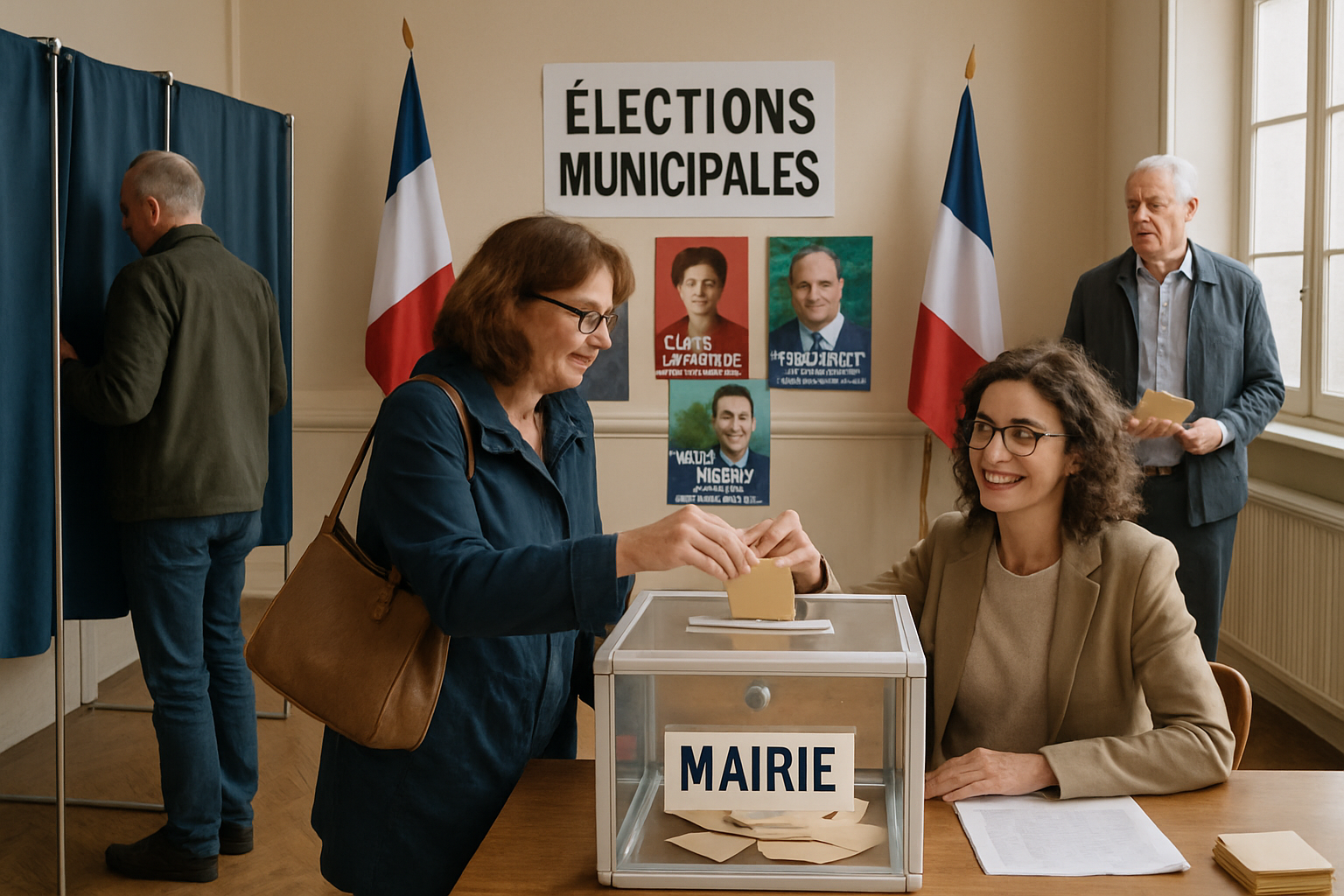
France's municipal elections have delivered a political earthquake, with Marine Le Pen's National Rally achieving historic urban breakthroughs while major cities prepare for decisive second-round battles that will reshape the country's political landscape ahead of the 2027 presidential race.
The first round of voting on March 15, 2026, saw the far-right National Rally make unprecedented gains in traditionally progressive strongholds, while Paris experienced its first direct left-right confrontation in a quarter-century. With turnout reaching approximately 49%, the results provide crucial insights into French political sentiment following months of crisis and polarization.
National Rally's Urban Strategy Pays Off
Marine Le Pen's party successfully evolved from rural populism to sophisticated urban campaigning, targeting five cities for historic municipal breakthroughs. This represents what political analysts describe as "authoritarian innovation" - the far-right's systematic attempt to mainstream extremist governance at the local level.
The most dramatic result came in Marseille, where incumbent left-wing mayor Benoît Payan finds himself in an unprecedented dead heat with National Rally's Franck Allisio. This marks a historic breakthrough for the far-right in France's second-largest city, traditionally a progressive stronghold.
"The mayor needs to rally the Marseillais to resist the brown wave,"
— Benoît Payan, calling for unity against far-right gains
In Toulon, National Rally candidate Laure Lavalette secured a commanding 42.05% of votes - the highest participation since 2001 - placing her more than 12 points ahead of center-right incumbent Josée Massi.
Paris: A Quarter-Century Political Shift
The capital witnessed its most significant political realignment since the late 20th century, with Socialist Emmanuel Grégoire maintaining a clear lead over Les Républicains' Rachida Dati. Grégoire secured 37.98% of votes compared to Dati's 25.46%, representing the first direct left-right confrontation in Paris in 25 years.
The results demonstrate the left's resilience in maintaining City Hall control while revealing conservative appeal amid France's current political climate. However, the presence of five candidates qualifying for the second round, including La France Insoumise's Sophia Chikirou (11.72%) and far-right candidate Sarah Knafo (10.40%), complicates traditional alliance patterns.
Major Cities Face Uncertain Outcomes
Lyon mayor Grégory Doucet narrowly led with 37% against former Olympique Lyonnais president Jean-Michel Aulas's 36.78%, setting up a tight second-round battle between the Green incumbent and the center-right challenger.
In Bordeaux, ecological mayor Pierre Hurmic secured 27.68% but faces a strong challenge from center-right candidate Thomas Cazenave (25.58%). Independent economist Philippe Dessertine's surprising 20.16% showing has complicated the electoral mathematics.
Political Context: Violence and Fragmentation
The elections occurred under the shadow of February's Lyon political violence, where 23-year-old far-right activist Quentin Deranque was killed during clashes. Seven suspects, including La France Insoumise parliamentary assistant Jacques-Elie Favrot, face intentional homicide charges. The tragedy intensified political tensions and provided the National Rally with law-and-order campaign ammunition.
The crisis contributed to significant left-wing fragmentation, with the Socialist Party distancing itself from Jean-Luc Mélenchon's movement following the Interior Ministry's controversial reclassification of La France Insoumise from "left" to "extreme left" - a decision currently being challenged at the Council of State.
Implications for 2027 Presidential Race
With Emmanuel Macron constitutionally barred from seeking a third term, these municipal results provide the first major insights into party organizational strength and voter sentiment. The National Rally's urban expansion suggests broader appeal beyond its traditional rural base, potentially complicating established left-right dynamics.
The results also highlight challenges for Bruno Retailleau's presidential ambitions, as Les Républicains failed to achieve the decisive urban victories needed to claim "premier party" status despite expectations.
European Significance
International observers monitored the elections as a bellwether for democratic resilience against far-right populism across Europe. The successful conduct of elections despite security concerns demonstrates French institutional strength, while the National Rally's gains parallel similar advances across the continent, from Germany's Baden-Württemberg to Spain's Aragón.
"These results reflect broader European fragmentation and polarization patterns, with implications extending beyond local governance to France's political direction and European role,"
— European Political Analyst
March 22 Second Round Stakes
The decisive second round will determine final outcomes in municipalities where no candidate achieved an absolute majority. Traditional strategic withdrawals and endorsements face unprecedented complexity due to political fragmentation across the spectrum.
National Rally municipal victories would provide the party with crucial governing experience and credibility ahead of the 2027 presidential race, where polls suggest potential success. The stakes extend far beyond local governance, potentially reshaping France's political trajectory and its role within European institutions.
As France prepares for the final vote, the March 15 results have established this electoral cycle as a defining moment for French democracy, testing the country's ability to manage political extremism through electoral means while preserving institutional integrity during a critical period of democratic transformation across Europe.