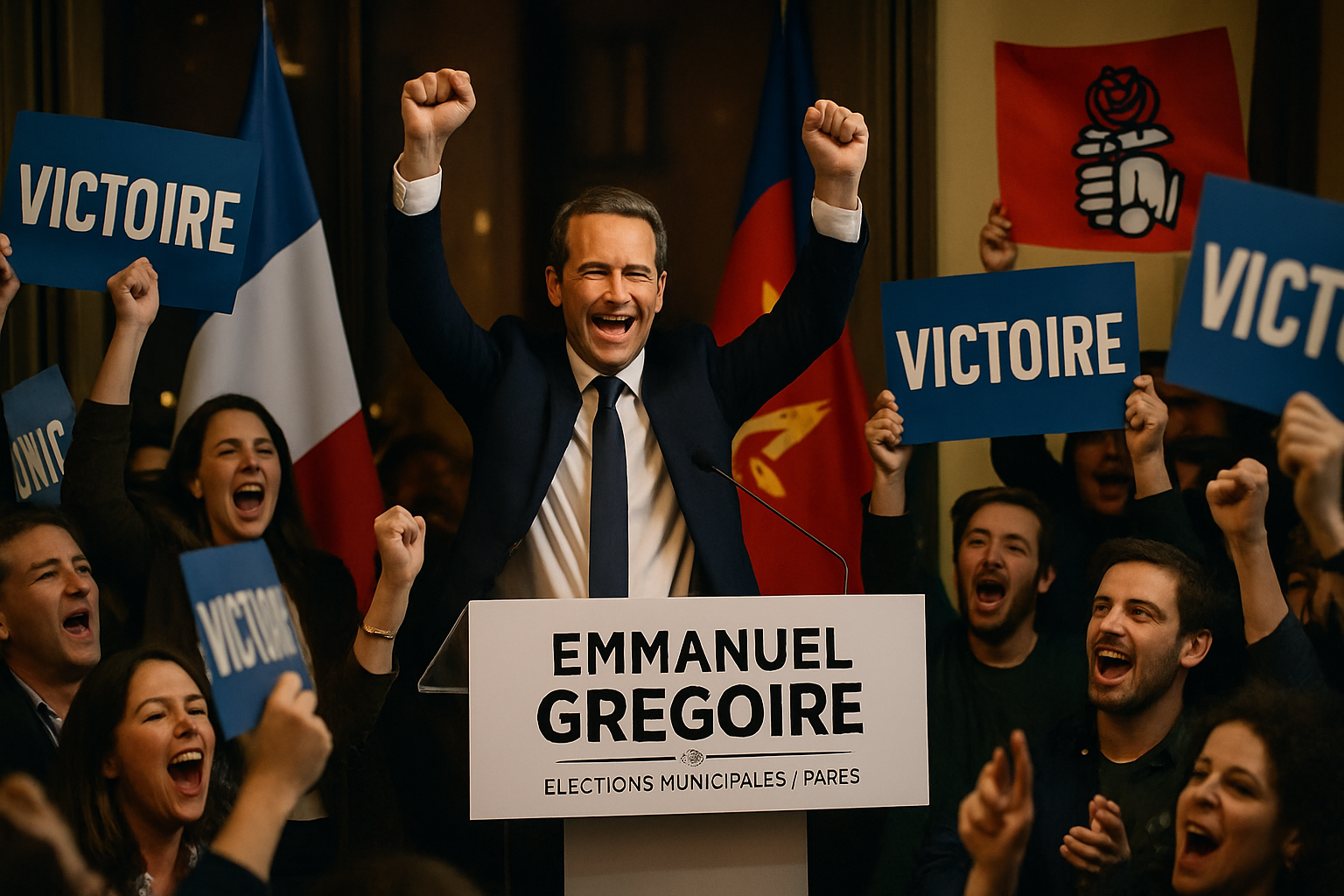
Socialist Emmanuel Grégoire was elected mayor of Paris on Sunday, March 22, 2026, defeating conservative challenger Rachida Dati in a second-round runoff that marked the first direct left-right confrontation in the French capital in 25 years, while left-wing incumbent Benoît Payan successfully retained control of Marseille against an unprecedented far-right challenge.
The decisive victories in France's largest cities represented a major setback for Marine Le Pen's National Rally (RN), which had targeted urban breakthroughs as part of what observers called "authoritarian innovation" - the party's strategic evolution from rural populism to sophisticated metropolitan campaigning. Despite achieving unprecedented competitiveness in traditionally progressive strongholds, the far-right failed to secure victories in any major urban centers.
Paris: Historic Left-Right Battle
Grégoire, the former deputy to outgoing mayor Anne Hidalgo, secured a commanding victory with 53.1% of the vote against Dati's 38.1%, according to exit polls. The Socialist candidate's triumph ensures continued left-wing control of the capital after a quarter-century of progressive governance.
"Paris is not, and will never be, a far-right city," Grégoire declared upon his victory, emphasizing the capital's resistance to extremist politics.
— Emmanuel Grégoire, Newly Elected Paris Mayor
The election represented the first time in 25 years that Paris voters faced a direct choice between left and right, reflecting broader national polarization ahead of the 2027 presidential race. Grégoire's victory was particularly significant given the political fragmentation that has characterized French politics following the February Lyon violence crisis, which saw the death of far-right activist Quentin Deranque and charges against several left-wing militants.
Marseille Resists Far-Right Surge
In France's second-largest city, incumbent mayor Benoît Payan comfortably defeated National Rally challenger Franck Allisio, maintaining left-wing control despite the far-right's historic breakthrough to the second round. The contest in Marseille had been viewed as one of the most significant tests of RN's urban expansion strategy, with the Mediterranean port city representing a key target for Marine Le Pen's party.
Payan's victory was particularly noteworthy given the National Rally's unprecedented competitiveness in a city that has traditionally been a progressive bastion. The left-wing coalition's success in holding Marseille demonstrated the effectiveness of pragmatic alliance-building, even as national-level cooperation between Socialists and La France Insoumise remains fractured.
Green Resilience in Lyon
Lyon mayor Grégory Doucet successfully secured reelection, maintaining Green control of France's third-largest city. Despite facing a strong challenge from Jean-Michel Aulas, Doucet's victory represented continued environmental movement influence in major French municipalities, though the contest was closer than many had anticipated.
The Lyon results were particularly significant given the city's role in the political crisis that has defined the 2026 electoral landscape. The February death of Quentin Deranque during political violence profoundly impacted the campaign, with charges against Jacques-Elie Favrot, a parliamentary assistant to La France Insoumise deputy Raphaël Arnault, contributing to left-wing fragmentation across France.
National Rally's Mixed Results
While the National Rally failed to capture any major cities, the party did achieve some notable successes in smaller municipalities. Marine Le Pen's strategy of sophisticated urban campaigning yielded competitive second-round performances in traditionally hostile territory, even if it fell short of the breakthrough victories the party had sought.
The far-right's failure to win in key target cities like Toulon and Nîmes, alongside losses in Marseille, represented a significant setback for a party that had positioned municipal governance as crucial preparation for the 2027 presidential race. These elections were viewed as essential for providing National Rally with governing experience and enhanced credibility.
Center-Right Struggles
Former Prime Minister Édouard Philippe emerged as one of the election's biggest winners, securing reelection in Le Havre with 47.71% of the vote. His victory cements Philippe's status as a potential presidential candidate in 2027, providing him with a strong municipal base and demonstrating his electoral appeal beyond traditional party lines.
However, Les Républicains faced mixed results elsewhere, with the party struggling to capitalize on the left's internal divisions. The performance suggests continued challenges for Bruno Retailleau's presidential ambitions, as the center-right failed to achieve the decisive urban victories that might have provided momentum for 2027.
Turnout and Democratic Resilience
Despite the political tensions that have characterized French politics since the Lyon violence crisis, the elections proceeded smoothly with 48.1% turnout - slightly below the first round's 48.9% but demonstrating continued citizen engagement in democratic processes. The successful conduct of free and fair elections despite security concerns and institutional controversies provided a template for democratic resilience under pressure.
The participation rate, while below historical norms, suggested neither widespread disengagement nor overwhelming enthusiasm, indicating that French democracy continues to function during periods of stress while maintaining citizen participation in self-governance.
Alliance Dynamics and Fragmentation
The elections revealed complex alliance patterns that will likely influence the 2027 presidential race. Successful pragmatic cooperation in some cities (such as Lyon and Toulouse) contrasted with persistent ideological divisions in others (particularly Paris and Marseille). The Socialist Party's "definitive break" with La France Insoumise over democratic values following the Lyon violence has fundamentally reshaped left-wing coalition dynamics.
Traditional strategic withdrawal and endorsement practices faced unprecedented complexity due to political fragmentation and the aftermath of the February crisis. The success or failure of various alliance strategies provides crucial insights into voter sentiment and coalition viability ahead of the presidential contest.
Implications for 2027 Presidential Race
The municipal results serve as the first major organizational test ahead of next year's wide-open presidential race, with Emmanuel Macron constitutionally barred from seeking a third term. The elections provided insights into party capacity, voter sentiment, and alliance viability that will influence strategic planning for the national contest.
National Rally's urban expansion, while falling short of breakthrough victories, demonstrated broader appeal beyond the party's traditional rural base. This geographic diversification could prove crucial in a presidential race where Marine Le Pen faces potential disqualification due to ongoing legal challenges related to EU Parliament fraud charges.
The left-wing victories in major cities offer building blocks for progressive coalition-building, but the continued fragmentation between Socialists and La France Insoumise complicates traditional alliance strategies. The success of pragmatic cooperation versus ideological purity will likely determine the left's competitiveness in 2027.
European Context and International Significance
The French elections were closely monitored internationally as a bellwether for democratic resilience against far-right populism across Europe. The successful conduct of elections despite security concerns, political violence, and institutional tensions provided precedents for other democratic societies facing similar challenges.
The results reflect broader European patterns of political fragmentation and polarization, occurring within what observers have called "the most challenging period for continental democracy since World War II." With 89% of Europeans demanding greater EU unity while political reality shows increasing fragmentation, France's institutional approach to managing extremist challenges through democratic mechanisms could establish important templates for European governance.
Looking Ahead
The March 22, 2026 municipal elections represented more than local governance contests - they served as a crucial test of French democracy's capacity to channel political tensions through institutional mechanisms while maintaining effective governance during a period of unprecedented pressure.
The results establish templates for 21st-century democratic navigation that extend beyond France's borders. Whether pragmatic cooperation prevails over ideological divisions, and whether democratic institutions successfully manage extremist challenges, will influence not only France's political trajectory but also broader questions about democratic governance under pressure.
As France moves toward the 2027 presidential race, the municipal election outcomes have clarified certain dynamics while raising new questions about alliance strategies, voter sentiment, and the resilience of democratic institutions in an era of increasing polarization and global uncertainty.