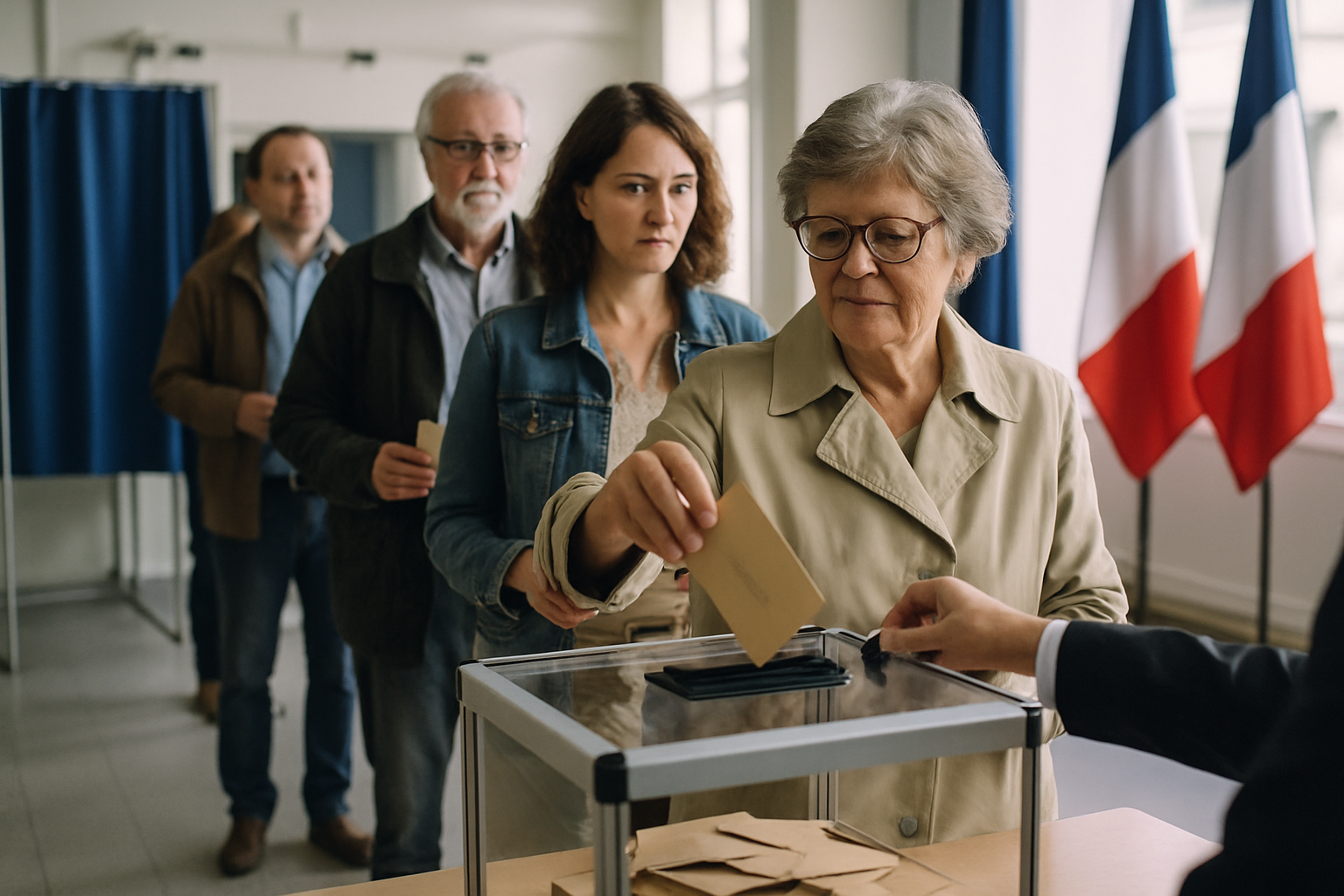
French voters concluded a tumultuous second round of municipal elections on March 22, 2026, with voter turnout reaching 48.1% at 5 PM, slightly below the 48.9% recorded at the same time during the first round a week earlier.
The elections, held across 1,526 communes throughout France, served as a critical test for the country's democratic institutions amid unprecedented political tensions following the February death of Quentin Deranque in Lyon and mounting pressure ahead of the 2027 presidential race.
Turnout Patterns and Electoral Context
Despite initial concerns about voter apathy following historically low participation in the first round, polling stations in major cities including Paris saw a slight uptick in participation compared to previous municipal elections in 2014 and 2020. The improved turnout reflected heightened political awareness among voters, particularly in urban centers where competitive races between traditional left-right candidates and far-right challengers drew increased attention.
Voting began at 8 AM local time across France, with most polling stations closing at 6 PM, though those in major cities including Bordeaux, Paris, Marseille, and Lyon remained open until 8 PM to accommodate higher voter volumes. The extended voting hours in these metropolitan areas underscored the significance of municipal races that have taken on outsized importance as a preview of national political dynamics.
Political Crisis Shadow
The elections unfolded under the shadow of France's most severe political crisis since the Fourth Republic. The February death of 23-year-old Quentin Deranque during violent clashes in Lyon fundamentally altered the campaign landscape, with seven suspects charged with intentional homicide, including Jacques-Elie Favrot, parliamentary assistant to La France Insoumise deputy Raphaël Arnault.
The Lyon violence created deep fissures within the French left, with the Socialist Party declaring a "definitive break" with Jean-Luc Mélenchon's movement over what party leaders characterized as concerns about democratic values. This fragmentation complicated traditional alliance-building strategies and left voters in many cities facing unprecedented political configurations.
Adding to institutional tensions, the Interior Ministry's controversial reclassification of La France Insoumise from "left" to "extreme left" for electoral purposes triggered legal challenges at the Council of State, with opposition parties denouncing what they characterized as administrative manipulation of democratic processes.
National Rally's Urban Strategy
Marine Le Pen's National Rally pursued what political observers have termed "authoritarian innovation" – a sophisticated evolution from rural populism to competitive urban campaigning. The party targeted five major cities for historic breakthrough victories, representing the most significant far-right municipal offensive in French political history.
In Marseille, France's second-largest city, the National Rally's Franck Allisio mounted an unprecedented challenge to incumbent left-wing mayor Benoît Payan, creating a dead heat that political analysts described as unthinkable just five years ago. The competitiveness of far-right candidates in traditionally progressive strongholds demonstrated the effectiveness of Le Pen's strategic transformation.
This municipal strategy occurs as Le Pen faces potential career-ending legal challenges, with a July 2026 Court of Appeal ruling expected on a potential five-year public office ban that could eliminate her from the 2027 presidential race. Success in municipal governance would provide crucial governing experience and credibility for the National Rally's national ambitions.
Paris Historic Confrontation
The capital witnessed its first direct left-right confrontation in 25 years, with Socialist Emmanuel Grégoire maintaining his lead from the first round against Les Républicains' Rachida Dati. The battle for Paris City Hall symbolized broader national polarization, as centrist politics faces increasing pressure from both left and right-wing populist movements.
President Emmanuel Macron's Renaissance party adopted a minimal strategy for these municipal elections, largely supporting established right-wing candidates rather than fielding comprehensive lists. This strategic retreat reflected both the challenges of governing from the center during polarized times and the recognition that municipal politics increasingly resist traditional party structures.
Alliance Dynamics and Fragmentation
The second round revealed complex alliance patterns that will influence national political calculations ahead of 2027. While some cities witnessed successful pragmatic cooperation – such as Socialist-Green coalitions in Lyon and Toulouse – others, particularly Paris and Marseille, demonstrated persistent ideological divisions that prevented left-wing unity.
Traditional strategic withdrawal and endorsement practices faced unprecedented complexity due to political fragmentation and the aftermath of Lyon violence. The inability to form coherent alliances against far-right candidates in some municipalities provided the National Rally with opportunities that would have been foreclosed under previous political configurations.
Democratic Resilience Under Pressure
Despite security concerns and political tensions, the elections proceeded smoothly, demonstrating the resilience of French democratic institutions. International observers monitored the process as a bellwether for democratic governance under pressure, particularly regarding how established democracies can channel political extremism through electoral rather than extra-legal means.
The successful conduct of free and fair elections during a period of heightened political violence and institutional controversy provides important precedents for other democratic societies facing similar challenges. France's ability to maintain electoral integrity while managing deep political divisions offers lessons for European democracy during what observers characterize as the most challenging period for continental democracy since World War II.
2027 Presidential Implications
The municipal results provide the first major organizational test ahead of what promises to be a wide-open presidential race, with Emmanuel Macron constitutionally barred from seeking a third term. The National Rally's urban expansion demonstrates broader electoral appeal beyond its traditional rural base, potentially reshaping the dynamics of presidential competition.
For the traditional left, municipal victories in major cities provide building blocks for national ambitions, but persistent fragmentation complicates coalition-building strategies. The conservative Les Républicains face challenges in maintaining relevance amid pressure from both centrist and far-right alternatives, with party leader Bruno Retailleau's presidential ambitions complicated by mixed municipal performance.
European Context and Broader Significance
The French municipal elections occur within a broader pattern of European democratic stress, with 89% of Europeans demanding greater EU unity according to recent polling, while political reality demonstrates increasing fragmentation and populist pressure across the continent. Recent developments in Sweden, where Liberal politicians have begun cooperation discussions with the far-right Sweden Democrats, and Germany's Baden-Württemberg, where the Alternative for Germany achieved breakthrough results, indicate continental trends extending far beyond France.
The stakes extend beyond municipal governance to fundamental questions about European democratic navigation in the 21st century. Whether pragmatic cooperation prevails over ideological divisions, and whether democratic institutions can effectively address citizen concerns while maintaining liberal values, will influence not only French political development but provide templates for democratic governance under pressure throughout Europe.
Looking Forward
As France absorbs the results of these consequential municipal elections, the country faces critical decisions about political coalition-building, institutional reform, and democratic renewal. The elections demonstrated both the resilience of French democratic institutions and the profound challenges facing traditional political structures.
The coming months will reveal whether the municipal results translate into sustainable political realignments or represent temporary adjustments within France's evolving democratic framework. With the 2027 presidential race approaching and European democracy facing unprecedented pressures, the French municipal elections of March 2026 may be remembered as a turning point in the country's modern political history.