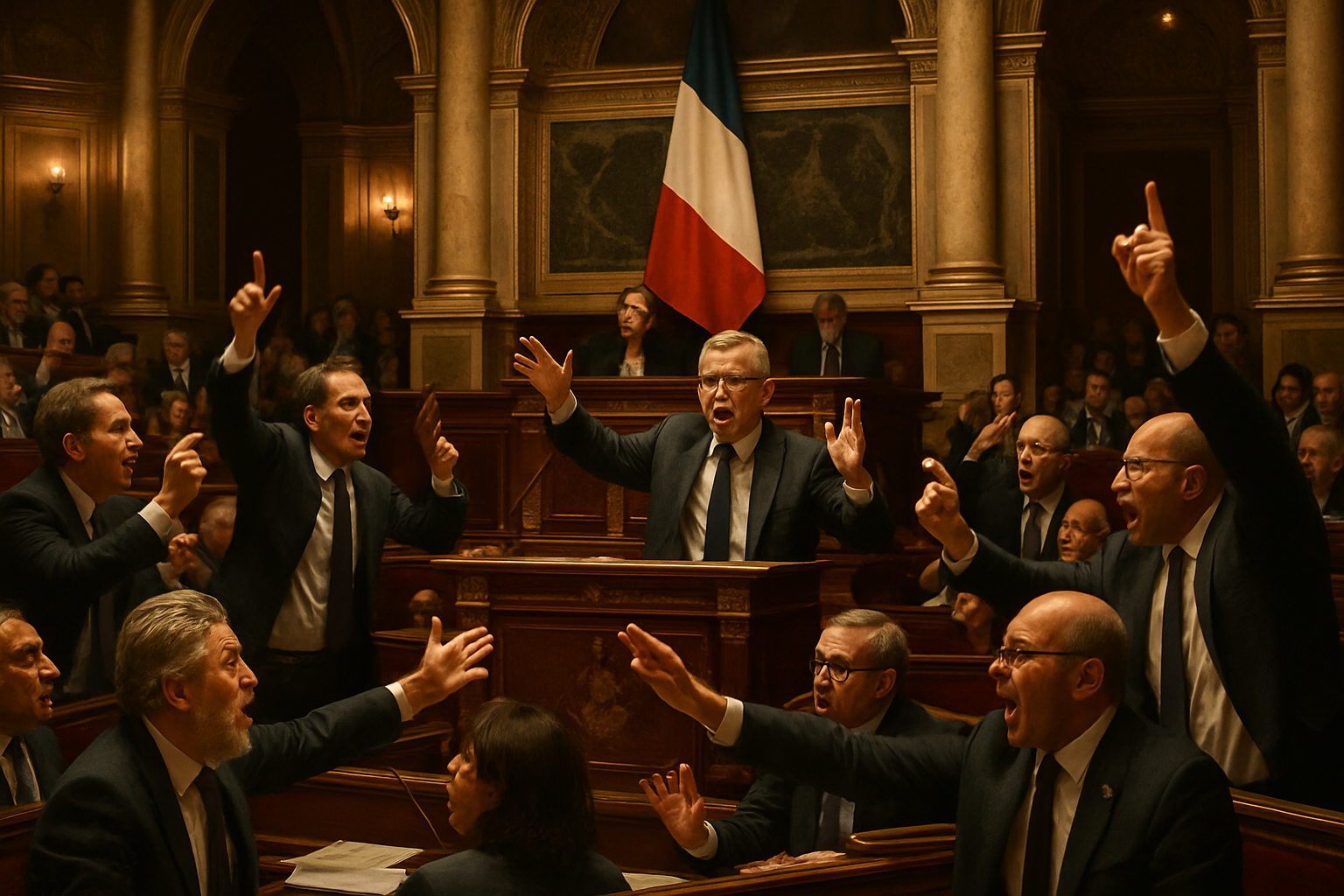
French municipal elections are entering their decisive second round phase amid unprecedented political maneuvering that reflects broader European democratic challenges, as alliance negotiations reveal the growing complexity of coalition politics across the continent.
The stakes extend far beyond local governance, with the March 22 second round serving as a crucial preview for the 2027 presidential race in a political landscape dramatically altered by the February Lyon violence and the ongoing fragmentation of traditional party alliances.
Alliance Mathematics and Strategic Calculations
In Paris, a historic political confrontation is unfolding as the capital experiences its first direct left-right battle in 25 years. Socialist Emmanuel Grégoire maintains a commanding lead with 37.98% from the first round, but faces a unified conservative challenge after Rachida Dati (Les Républicains) successfully merged with Pierre-Yves Bournazel's centrist faction.
The alliance dynamics reveal the pragmatic calculations reshaping French politics. Dati's fusion with Horizons/Renaissance candidates and the strategic withdrawal of far-right candidate Sarah Knafo demonstrate how traditional center-right forces are adapting to contemporary electoral realities.
However, significant tensions persist within the conservative camp. Pierre-Yves Bournazel's refusal to join Dati's list represents what political observers describe as a "camouflet" for the candidate positioning herself as the alternative to Socialist control of the capital.
Left-Wing Fragmentation Deepens
The municipal elections have exposed profound fissures within France's left-wing coalition. The Socialist Party's deliberate distancing from La France Insoumise (LFI) following the Lyon violence has created what analysts term a "definitive break" over democratic values and political methods.
This fragmentation is particularly evident in Marseille, where incumbent mayor Benoît Payan rejected LFI alliance overtures despite facing unprecedented competition from the National Rally's Franck Allisio, who achieved a historic breakthrough by polling neck-and-neck with the progressive incumbent.
The successful alliance negotiations in other major cities present a contrasting model. In Strasbourg, Green incumbent Jeanne Barseghian successfully negotiated a joint list with LFI after "long negotiations," demonstrating that pragmatic left-wing unity remains possible despite national tensions.
National Rally's Urban Evolution Strategy
Marine Le Pen's National Rally has achieved what political scientists describe as "authoritarian innovation" - successfully evolving from rural populism to sophisticated urban campaigning. The party's strategic targeting of five cities for historic municipal breakthroughs represents a fundamental shift in far-right political methodology.
In Marseille, the National Rally's competitive position in France's second-largest city marks an unprecedented breakthrough for the far-right in a traditional progressive stronghold. The dead heat between Payan and Allisio demonstrates the party's enhanced appeal beyond its traditional rural base.
The implications extend beyond municipal governance. National Rally municipal victories would provide crucial governing experience and enhanced credibility ahead of the 2027 presidential contest, where current polling suggests the party could be highly competitive.
"The National Rally's urban strategy represents the most significant evolution in far-right electoral methodology since the party's founding. Success in major cities would fundamentally alter France's political landscape."
— Political analyst describing the party's strategic transformation
Lyon Violence Aftermath Continues to Reverberate
The February death of Quentin Deranque in Lyon continues to profoundly shape French political calculations. Seven individuals face charges including Jacques-Elie Favrot, a parliamentary assistant to LFI deputy Raphaël Arnault, creating ongoing pressure on Jean-Luc Mélenchon's movement.
The incident has provided the National Rally with powerful law-and-order campaign ammunition while contributing to the isolation of LFI within the broader left-wing coalition. Socialist leaders have cited concerns about "democratic values" in justifying their reluctance to ally with Mélenchon's party.
Government restrictions on university political meetings and the controversial Interior Ministry reclassification of LFI from "left" to "extreme left" have triggered Council of State challenges over administrative manipulation of democratic processes.
European Context and Democratic Resilience
The French municipal elections are being closely monitored internationally as a bellwether for European democratic resilience against far-right populism. The developments parallel concerning trends across the continent, including Sweden's Liberal Party cooperation with the far-right Sweden Democrats and Germany's AfD breakthrough in Baden-Württemberg.
Recent polling shows that 89% of Europeans demand greater EU unity, yet political reality demonstrates increasing fragmentation and institutional friction across member states. The French elections represent a critical test of whether democratic processes can effectively channel political tensions through institutional mechanisms.
Coalition Governance Under Pressure
The challenges facing traditional coalition-building in France reflect broader European struggles with political fragmentation. In Spain, Popular Party negotiations with Vox in regions like Castilla y León and Extremadura demonstrate similar difficulties in managing far-right coalition partners while maintaining democratic principles.
The successful left-wing alliance in Nantes, where Socialist Johanna Rolland negotiated a fusion with LFI to prevent triangular competition, offers a template for pragmatic cooperation overcoming ideological differences when electoral necessities demand unity.
Implications for 2027 Presidential Race
With President Macron constitutionally barred from seeking a third term, the municipal election outcomes provide crucial insights into party organizational strength and voter sentiment ahead of the 2027 presidential contest.
The National Rally's urban breakthrough strategy, combined with left-wing fragmentation and traditional center-right struggles to maintain coherent coalitions, suggests a dramatically altered political landscape for the presidential race.
Bruno Retailleau's announcement of his Republican candidacy, promising immigration reduction through referendums, represents the traditional right's attempt to position itself against both far-right populism and Socialist urban control.
March 22 Second Round Stakes
The decisive second round voting will determine not only municipal leadership for the next six years but also establish precedents for managing political extremism through institutional frameworks rather than extra-legal means.
Success in conducting free and fair elections during this period of heightened tensions would provide a European template for other democratic societies facing similar challenges with political violence and extremist pressure.
Template for Democratic Governance
The French municipal elections occur during what UN Secretary-General António Guterres has characterized as "the greatest test of multilateral cooperation and crisis management in the modern era." The resolution of alliance negotiations and electoral outcomes will establish critical precedents for how European democratic institutions adapt to 21st-century pressures.
Whether France succeeds in channeling political tensions through electoral processes or witnesses further institutional breakdown will influence approaches across Europe for managing the intersection of political violence, extremist challenges, and democratic governance.
The stakes extend beyond France's borders to fundamental questions about European democracy's capacity to maintain institutional integrity while preserving effective governance during periods of unprecedented political stress and social transformation.