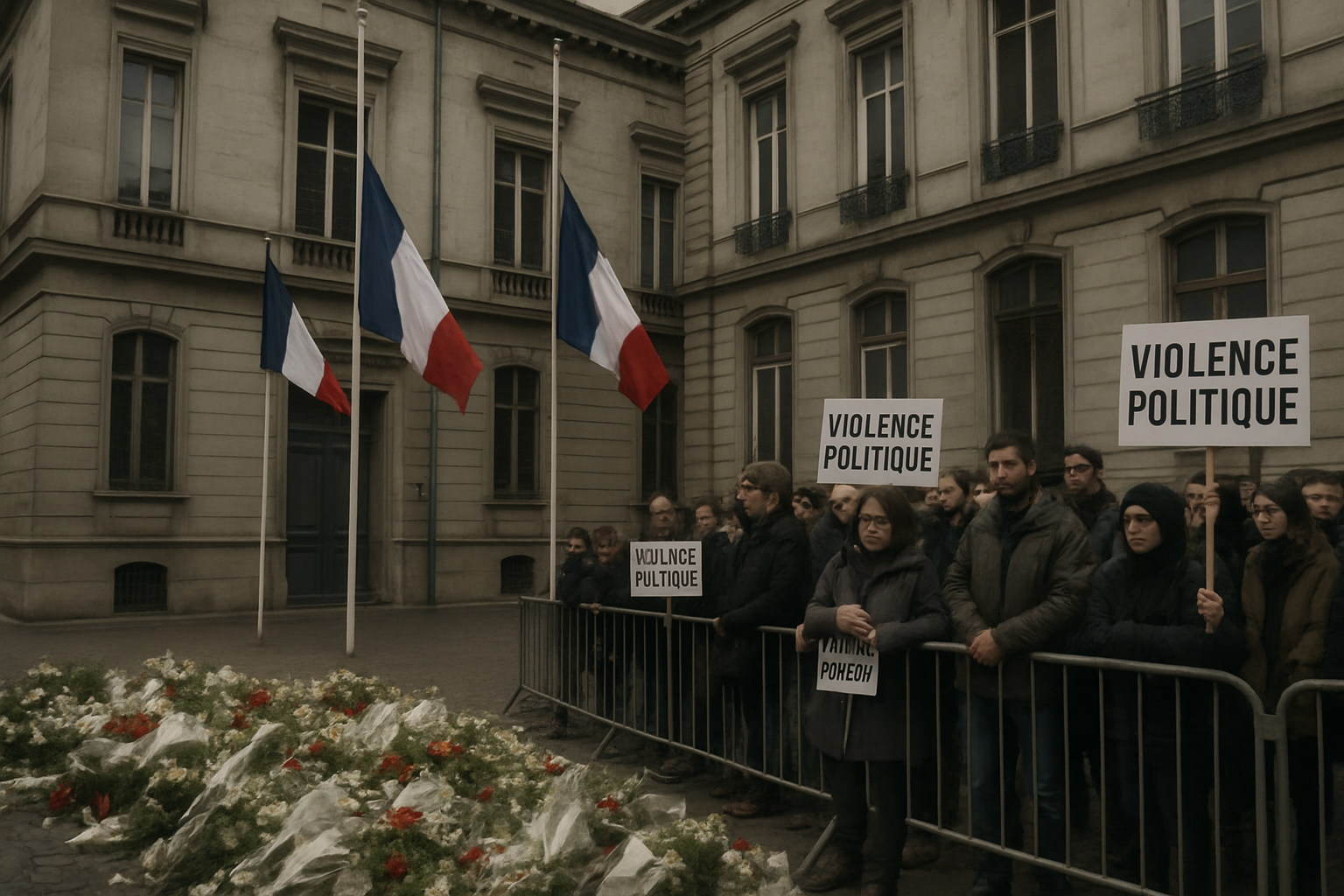
The fatal beating of a 23-year-old right-wing activist in Lyon has plunged France into a heated political debate about extremism and violence, with accusations flying between far-left and far-right groups just weeks before crucial municipal elections.
Quentin D., identified only by his first name and last initial, died from injuries sustained during violent clashes on Thursday evening following a conference by pro-Palestinian MEP Rima Hassan. The young man, described as being aligned with the nationalist far-right movement, was hospitalized after the confrontation and later succumbed to his injuries.
Political Leaders Respond to Crisis
The death has prompted swift reactions from across the political spectrum. Jean-Luc Mélenchon, leader of La France Insoumise (LFI), expressed "sidération" (shock), "empathy," and "compassion" during a campaign rally in Montpellier, emphasizing that his movement has "said dozens of times that [the 'insoumis' were] hostile and opposed to violence."
However, Justice Minister Gérald Darmanin placed blame squarely on what he termed the "ultra-left," stating on Sunday that this faction was behind the killing. His comments have further inflamed tensions between political groups already on edge ahead of the municipal elections.
"The ultra-left was behind the killing of a French youth aligned with the far right whose death has inflamed political tensions in the country."
— Gérald Darmanin, Justice Minister
President Emmanuel Macron has called for "calm and restraint" following the tragic incident, as authorities opened an investigation into suspected aggravated manslaughter. The president's appeal comes as France grapples with rising political polarization that has characterized much of the country's recent political landscape.
Context of Rising Political Tensions
The violence in Lyon occurred on the margins of a conference held by Rima Hassan, a pro-Palestinian European Parliament member, highlighting the intersection of international conflicts with domestic French politics. The clashes between far-right and far-left youth groups represent a troubling escalation of political confrontations that have become increasingly common in French cities.
This incident comes against a backdrop of significant political upheaval in France. The country has recently weathered a budget crisis that required the use of constitutional provisions to bypass parliament, and political fragmentation continues to challenge the stability of French institutions.
Impact on Lyon Municipal Campaign
The tragedy has specifically disrupted the municipal election campaign in Lyon, France's third-largest city, where political tensions were already running high. Local officials report that the incident has "tensed the political climate" and forced candidates to reconsider their campaign strategies in light of the violence.
The timing is particularly significant as municipal elections serve as important bellwethers for national political sentiment. Lyon, with its diverse political landscape and history of both left-wing and right-wing activism, has become a microcosm of France's broader political divisions.
Broader Questions About Political Violence
The killing has raised fundamental questions about the state of political discourse in France and the role of extremist groups on both sides of the political spectrum. Critics argue that increasingly polarized rhetoric from political leaders has contributed to a climate where violence becomes more likely.
The incident also highlights the challenges facing French authorities in managing political demonstrations and preventing clashes between opposing groups. Despite security measures, the confrontation escalated to deadly violence, raising questions about law enforcement preparedness and response protocols.
Historical Context of Political Violence
France has a complex history with political violence, from the student riots of 1968 to more recent confrontations involving various extremist groups. However, the death of Quentin represents a particularly stark reminder of how political disagreements can escalate to fatal violence in contemporary France.
The incident occurs as France continues to grapple with questions of national identity, immigration, and France's role in international conflicts – issues that have become flashpoints for political extremism across Europe.
Calls for De-escalation
Beyond the immediate political responses, civil society groups and moderate politicians have called for a broader de-escalation of political rhetoric and a return to peaceful democratic discourse. They argue that the death of Quentin should serve as a wake-up call about the dangers of political polarization.
The investigation into the circumstances surrounding Quentin's death continues, with authorities working to determine the exact sequence of events and identify those responsible for the violence. The case is being treated as aggravated manslaughter, reflecting the serious nature of the charges that may follow.
Looking Forward
As France mourns the loss of a young life to political violence, the country faces difficult questions about how to maintain democratic dialogue while preventing the kind of extremism that led to this tragedy. The upcoming municipal elections will serve as a test of whether French society can find ways to channel political disagreement through peaceful, democratic means.
The death of Quentin has become more than just a criminal matter – it has evolved into a symbol of the dangers facing French democracy when political discourse deteriorates into violence. How France responds to this challenge may determine the character of its political future for years to come.