France confronts a profound political transformation as the far-right National Rally achieves unprecedented urban breakthroughs in municipal elections while the nation simultaneously honors the legacy of former Prime Minister Lionel Jospin, who died at age 88, marking the end of an era in French Socialist politics.
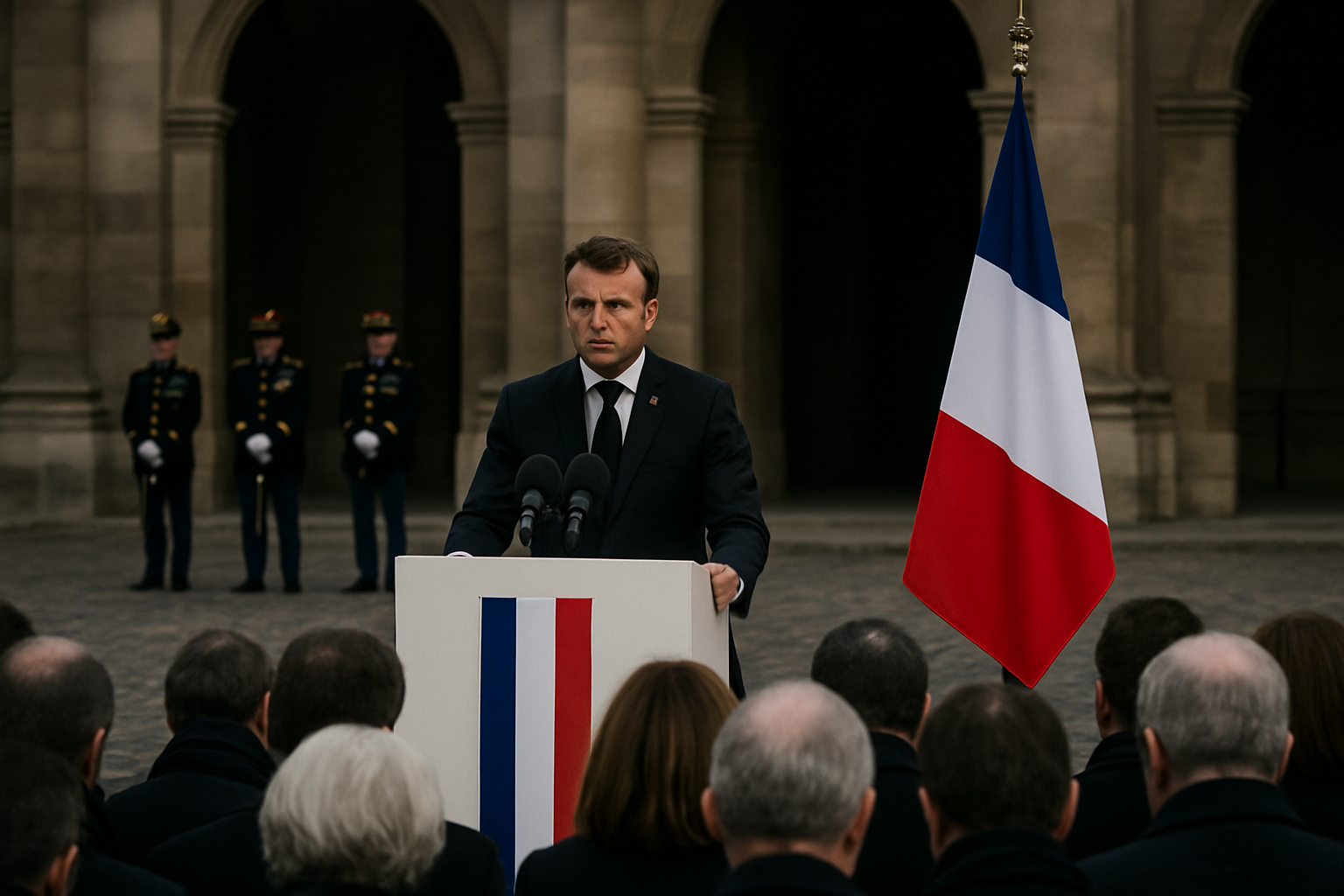
The convergence of these developments underscores the dramatic evolution of French politics, from the consensual governance of the late 1990s under Jospin to today's deeply polarized landscape where extreme parties compete for control of France's major cities. President Emmanuel Macron led a national tribute to the reformist statesman on Thursday at Les Invalides in Paris, praising Jospin as a transformative figure who "modernized the nation" during his tenure as the Fifth Republic's longest-serving Prime Minister from 1997 to 2002.
The End of an Era: Jospin's Lasting Impact
Lionel Jospin's death on Sunday, March 22, 2026, removes the last major figure from François Mitterrand's generation of Socialist leaders. His passing coincides with municipal election results that demonstrate how dramatically French politics has shifted since his era of "plural left" governance during the late 1990s economic boom.
Jospin's most enduring domestic achievement, the 35-hour work week implemented in 2000, revolutionized French labor relations and remains a cornerstone of the country's social model. His government also introduced civil partnerships for same-sex couples and presided over sustained economic growth during the euro transition, earning international recognition for advancing social democratic ideals while maintaining pragmatic leadership.
"Jospin represented consensual politics before the rise of populist movements and increased political polarization," noted political historian Gérard Le Gall, who served as Jospin's advisor at Matignon. "He embodied an intellectual approach to governance that combined Socialist values with practical leadership."
— Gérard Le Gall, Political Historian
However, Jospin's political career ended abruptly with his shocking first-round elimination in the 2002 presidential election, finishing third behind Jacques Chirac and Jean-Marie Le Pen. This result allowed the far-right to reach the second round for the first time, marking a turning point that contributed to the permanent fixture of extremist discourse in French politics—a phenomenon now manifesting in dramatic fashion through municipal elections.
National Rally's Historic Urban Breakthrough
The timing of Jospin's tribute ceremony proved symbolically significant as it coincided with the aftermath of municipal elections that saw Marine Le Pen's National Rally achieve its most significant urban gains in the party's history. In Liévin, a former Socialist bastion in Pas-de-Calais, 30-year-old Dany Paiva's victory for the far-right marked a stunning reversal in France's mining heartland.
The National Rally's success represents what political analysts term "authoritarian innovation"—the evolution from rural populism to sophisticated urban campaigning that enables far-right competitiveness in traditionally progressive strongholds. This strategic transformation has allowed Le Pen's movement to expand beyond its traditional base, potentially reshaping the electoral map for the 2027 presidential race.
The contrast between Jospin's era and today's political climate became particularly stark when examining the sources of political division. While the 2002 election that ended Jospin's career shocked France with Le Pen's breakthrough, today's normalized far-right presence in municipal governance represents a fundamental shift in the country's democratic landscape.
Socialist Party Fragmentation and Internal Strife
The municipal election results exposed deep fractures within the Socialist Party, paradoxically weakening party leader Olivier Faure despite performing better than expected. Internal critics now challenge his tactical zigzags and demand a comprehensive review of party strategy ahead of 2027, particularly regarding relationships with La France Insoumise (LFI).
These internal tensions reflect broader challenges facing the French left since February's Lyon violence, where the death of 23-year-old Quentin Deranque created lasting political reverberations. The incident, which led to charges against seven suspects including LFI parliamentary assistant Jacques-Elie Favrot, deepened the Socialist Party's estrangement from Jean-Luc Mélenchon's movement.
The Interior Ministry's controversial reclassification of La France Insoumise from "left" to "extreme left" for electoral purposes triggered Council of State challenges and highlighted concerns about administrative neutrality during sensitive electoral periods. This bureaucratic maneuvering added another layer of complexity to an already fragmented left-wing coalition.
Municipal Elections as Presidential Preview
The municipal results provide crucial organizational insights ahead of the 2027 presidential race, where Emmanuel Macron will be constitutionally barred from seeking a third term. The elections demonstrated both the National Rally's expanding appeal and the resilience of traditional left-wing control in major urban centers, though fragmentation complicates future coalition strategies.
In Toulouse, described as a case study in political realignment, the defeat of left-wing candidates resulted from "strong mobilization of all components of the local bourgeoisie" combined with the abandonment of left-wing unity discipline by part of the Socialist electorate. The orchestration of "anti-insoumise panic" reflected broader national political drift, according to analysis from Mediapart.
The strategic calculations reveal how local pragmatism can overcome national ideological divisions when stakes are sufficiently high, yet also demonstrate the limits of such cooperation in highly polarized environments.
Democratic Resilience Under Pressure
Despite unprecedented challenges, French democratic institutions demonstrated fundamental resilience by conducting credible elections while managing political tensions through electoral rather than extra-legal means. International observers praised France's institutional capacity during what many consider "the most challenging period for continental democracy since World War II."
The successful conduct of free and fair elections despite security concerns, political violence, and administrative controversies provides a template for other democratic societies facing similar extremist pressures. The 48.1% turnout in the second round, while below historical norms, suggested continued democratic engagement despite widespread political fatigue.
However, the elections also revealed concerning trends in democratic discourse. The Lyon memorial rallies for Deranque documented Nazi salutes and racist chants, leading the Rhône prefecture to announce legal action against extremist displays. These incidents highlighted how political violence can poison democratic debate and provide ammunition for radical movements.
European Implications and International Context
The French political developments carry significance beyond national borders, occurring within a broader pattern of European democratic stress. The municipal elections coincided with coalition crises across multiple EU member states, far-right gains in traditionally stable regions, and growing concerns about foreign interference in electoral processes.
While 89% of Europeans demand greater EU unity according to Eurobarometer polling, political reality shows increasing fragmentation and sovereignty assertions. France's institutional strength during this crisis provides precedents for other democracies facing extremist pressures while attempting to preserve liberal democratic values.
The successful channeling of political tensions through democratic institutions, despite the Lyon violence and subsequent polarization, offers hope for democratic resilience. However, the normalization of far-right governance at the municipal level raises questions about longer-term democratic stability.
Looking Ahead: The 2027 Presidential Stakes
As France honors Lionel Jospin's legacy of pragmatic reform and democratic governance, the country faces fundamental questions about its political future. The municipal elections demonstrated that while traditional left-wing parties retain control of major cities, the far-right has achieved unprecedented territorial expansion and organizational strength.
The 2027 presidential race will likely be shaped by these municipal dynamics, with candidates needing to address the underlying concerns—inequality, immigration, national sovereignty—that fuel political extremism while maintaining institutional frameworks that have underpinned French democracy.
Jospin's reformist legacy serves as both inspiration and cautionary tale: his government's achievements in work-life balance, social inclusion, and European integration provide a model for addressing citizen concerns through democratic means. Yet his 2002 elimination also demonstrates how quickly political consensus can fragment under pressure from extremist movements.
The convergence of Jospin's tribute and the municipal election aftermath symbolizes France's democratic crossroads. Whether the country can channel political energy toward constructive governance while resisting authoritarian innovation will determine not only France's trajectory but also provide crucial precedents for European democracy in the 21st century.