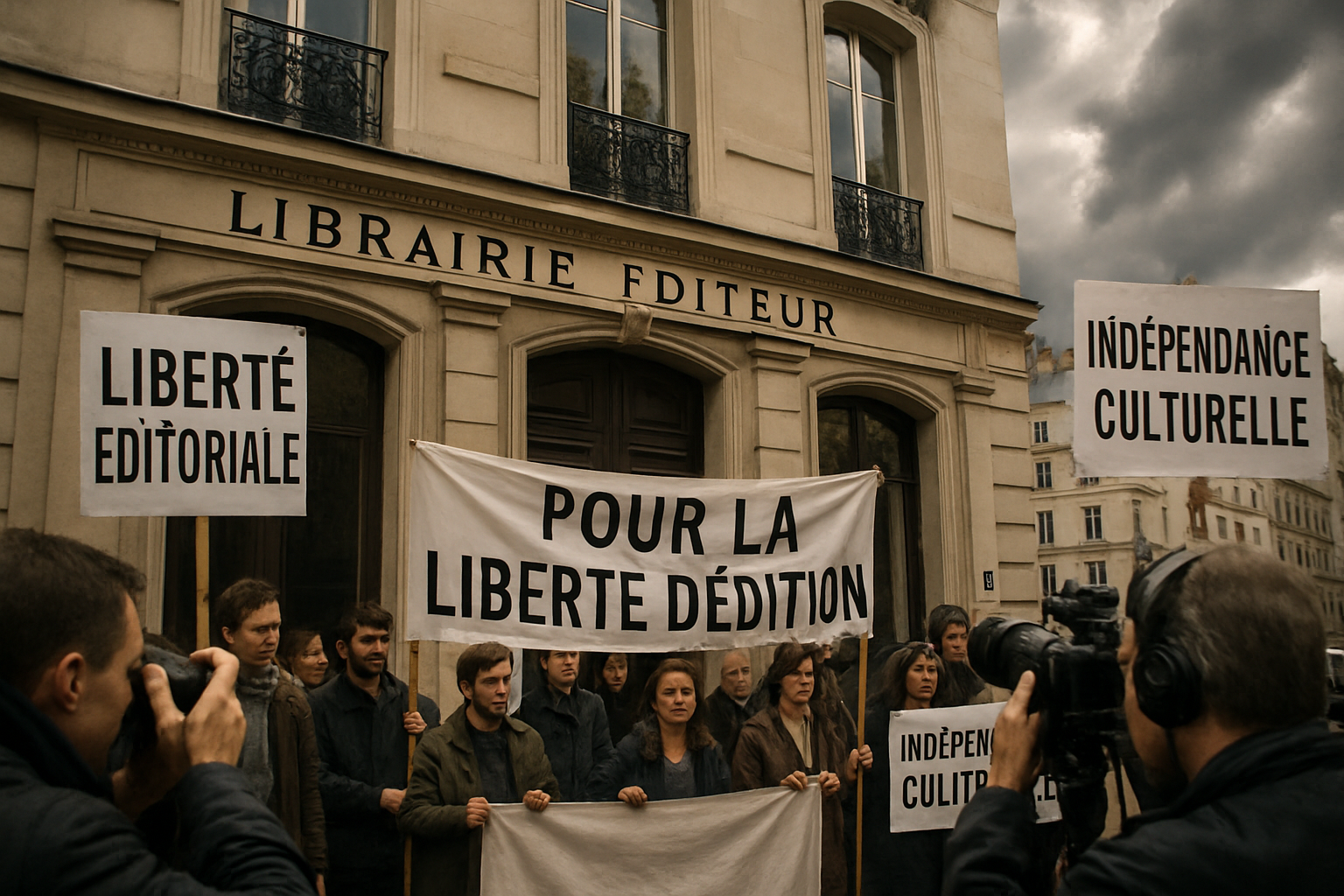
France's publishing establishment faces an unprecedented crisis as over 200 leading publishers unite in condemning what they describe as a "cultural and ideological war" following the controversial dismissal of Olivier Nora from prestigious publishing house Grasset, while the Paris Book Festival proceeds amid mounting tensions over editorial independence.
In a powerful tribune published in Le Monde, a coalition of France's most influential literary figures—including Antoine Gallimard, Françoise Nyssen, and Denis Olivennes—expressed grave concerns over Nora's dismissal and what they characterize as a "dangerous attack on editorial diversity." The unprecedented show of solidarity represents one of the most significant challenges to corporate control over French publishing in decades.
The Grasset Crisis Deepens
The controversy centers on the sudden departure of Olivier Nora, who had served as editor-in-chief at Grasset for over two decades. According to sources familiar with the situation, Nora's dismissal followed disagreements with media mogul Vincent Bolloré over editorial decisions and book publication policies. The move has sent shockwaves through France's tightly knit literary community, where editorial independence is considered sacrosanct.
The publishers' tribune warns of systematic pressure on editorial freedom across France's publishing landscape. "We are witnessing a coordinated assault on the fundamental principles that have made French literature and publishing a beacon of intellectual freedom," the statement declares. The signatories represent a cross-section of France's publishing elite, from major commercial houses to prestigious literary imprints.
"This is not merely about one editor or one publishing house. This represents a fundamental threat to the cultural diversity that defines French intellectual life."
— Antoine Gallimard, Publisher
Political Ramifications
The publishing crisis has attracted attention from across the political spectrum. Socialist leader Olivier Faure accused Bolloré of attempting to "lobotomize publishing," while former Prime Minister Bernard Cazeneuve characterized the moves as part of an "offensive of reactionary ideology." These political interventions underscore the broader implications of what began as an internal industry dispute.
Journalist David Dufresne has called for resistance against what he termed a "far-right billionaire's war" on cultural independence. This rhetoric reflects growing concerns about media concentration and the potential for wealthy individuals to exert disproportionate influence over France's cultural institutions.
The Author Exodus
The controversy has already led to significant consequences for Grasset. Nearly 150 prominent French authors have departed the publishing house following Nora's dismissal, representing what industry observers describe as an unprecedented exodus of literary talent. This mass departure highlights the deep connections between editors and authors in France's publishing ecosystem, where personal relationships often span decades.
The financial implications are substantial. Authors who have left Grasset are choosing potential financial sacrifice over what they view as compromised editorial integrity. This principled stance sends a powerful message about the limits of corporate control over artistic expression and the value that creators place on maintaining authentic editorial relationships.
Paris Book Festival Continues Amid Tensions
Despite the industry turmoil, the annual Paris Book Festival has proceeded as planned, though the atmosphere is notably different from previous years. This year's festival honors Iceland, featuring Icelandic author Jón Kalman Stefánsson and his latest novel "Celestial Bodies at the Edge of the World," which explores a little-known dark chapter in Icelandic history.
Stefánsson's presence at the festival provides an interesting counterpoint to the domestic publishing crisis. His work represents the kind of international literary exchange that French publishers have traditionally championed—precisely the type of cultural openness that industry leaders fear is under threat.

Broader Media Landscape Concerns
The Grasset controversy cannot be separated from broader concerns about media concentration in France. Vincent Bolloré's expanding media empire includes television, radio, and publishing properties, creating what critics describe as an unprecedented concentration of cultural influence in the hands of a single individual with clear political preferences.
This pattern of editorial conflicts across Bolloré's media holdings has raised questions about the independence of French cultural institutions. The publishing crisis reflects broader tensions about the role of wealthy individuals in shaping public discourse and cultural production in democratic societies.
Industry Response and Future Implications
The unified response from France's publishing community represents a remarkable show of solidarity in an industry often characterized by fierce competition. The fact that major publishers have come together to defend editorial principles suggests the depth of concern about current trends.
Industry analysts predict that the Grasset crisis could serve as a catalyst for broader discussions about publishing independence and the need for protective mechanisms to preserve editorial freedom. Some are calling for regulatory measures to prevent excessive concentration of media ownership, while others advocate for industry self-regulation through professional associations.
"The strength of our collective response demonstrates that the French publishing community will not accept the subordination of editorial judgment to commercial or political interests."
— Françoise Nyssen, Former Culture Minister and Publisher
International Context
France's publishing crisis occurs against a backdrop of global concerns about media independence and cultural diversity. Similar tensions have emerged in other countries where media consolidation has raised questions about editorial freedom and the preservation of diverse voices in public discourse.
The French response may serve as a template for other literary communities facing similar pressures. The willingness of authors to sacrifice financial opportunities in defense of editorial principles demonstrates the continued relevance of cultural values in an increasingly commercial media landscape.
Looking Forward
As the Paris Book Festival continues to celebrate international literary exchange, the broader publishing community faces difficult questions about its future direction. The crisis has exposed fundamental tensions between commercial interests and cultural values that have long simmered beneath the surface of France's literary establishment.
The resolution of this controversy will likely have lasting implications for French publishing and may influence how other democratic societies address similar challenges to cultural independence. The unprecedented unity shown by publishers, authors, and political figures suggests that this moment represents more than a typical industry dispute—it may mark a defining moment for the future of French intellectual and cultural life.
The outcome of this cultural war will determine whether France can maintain its reputation as a beacon of editorial independence and intellectual freedom, or whether commercial and political pressures will fundamentally reshape one of the world's most prestigious publishing landscapes.