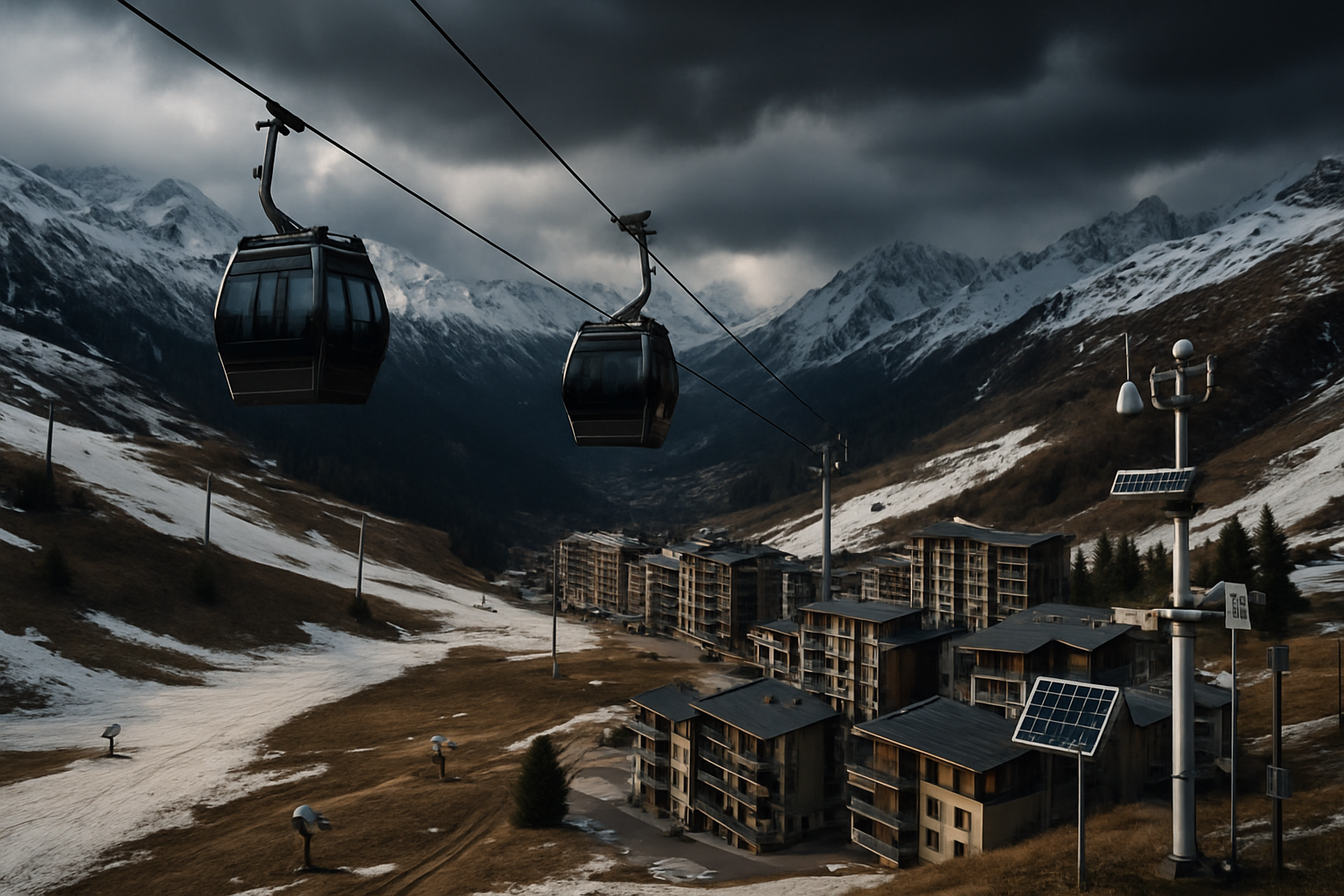
This winter's heavy snowfall in the Alps and Pyrenees has given a welcome but temporary boost to France's ski resorts, providing only a short reprieve as global warming threatens mid and low-altitude sites with permanent closure, forcing the industry toward radical diversification strategies that require massive investment and fundamental cultural transformation.
The current season's favorable conditions mask a deeper crisis facing French alpine tourism, as climate scientists warn that rising global temperatures are fundamentally altering the viability of traditional winter sports across Europe. France's ski industry, which generates billions in annual revenue and supports hundreds of thousands of jobs, now confronts an existential challenge that extends far beyond seasonal variations in snowfall.
The Climate Reality Behind the Snow
Despite this winter's improved conditions, meteorological data reveals the severity of the long-term challenge. Global temperatures have exceeded the critical 1.5°C pre-industrial threshold for 21 consecutive months through March 2026, marking the longest sustained warming streak in recorded human history. This unprecedented warming pattern is fundamentally altering atmospheric systems and weather patterns across Europe.
Climate experts studying alpine conditions across Europe report alarming trends. In Slovenia's Julian Alps, temperatures have warmed by an average of 2.5°C over the past 50 years, with lower elevation sites like Kranjska Gora experiencing roughly one-third decline in snowfall over four decades. "Under moderate climate scenarios, much of the Slovenian Alps could see average snow cover duration shrink by one to two months by century's end," warns climatologist Gregor Vertačnik of the Environment Agency.
The situation in France mirrors these broader European trends. Mid-elevation resorts, typically operating between 1,200-1,800 meters, face particular vulnerability as warming temperatures push the reliable snow line ever higher. Low-altitude sites below 1,500 meters are experiencing the most dramatic changes, with many already struggling to maintain viable skiing seasons.
Economic Pressures and Funding Challenges
The industry's adaptation challenges are compounded by significant financial pressures. Resort operators face mounting costs for artificial snow-making systems, which consume enormous quantities of water and energy while providing only partial solutions to natural snow deficits. The infrastructure required for comprehensive snow-making can cost millions of euros per resort, straining budgets already pressured by irregular seasons and changing visitor patterns.
European tourism data reveals the scale of economic transformation required. Countries implementing comprehensive climate adaptation strategies, such as Austria's shoulder season tourism expansion which now accounts for 28.1% of annual stays, demonstrate that diversification requires sustained investment over multiple years. Croatia's development of 62 tourist medical clinics representing Europe's most extensive seasonal healthcare network illustrates the level of infrastructure innovation required.
Small and medium-sized resorts face particular challenges accessing the capital necessary for transformation. Unlike major international destinations with diversified revenue streams, many French alpine communities depend almost entirely on winter tourism for economic survival. The transition period, during which resorts must simultaneously maintain traditional winter operations while developing alternative offerings, creates severe cash flow challenges.
Diversification: Beyond Winter Sports
Successful adaptation examples from across Europe provide templates for French resorts confronting this transition. The emerging concept of four-season mountain tourism requires fundamental reimagining of alpine destinations, moving beyond traditional winter sports toward year-round activities that leverage mountain environments while reducing dependence on snow.
Summer activities are becoming increasingly important revenue generators. Mountain biking, hiking, alpine wellness retreats, and adventure sports can operate independently of snow conditions while attracting different demographic segments. Some resorts are investing in alpine slides, zip lines, and mountain coasters that function across multiple seasons.
"The resorts that survive will be those that can successfully transform their identity from winter-only destinations to year-round mountain experiences. This isn't just about adding summer activities—it's about completely rethinking what an alpine destination can offer."
— Tourism Industry Analyst
Conference and business tourism represent another diversification avenue. Mountain locations offer unique venues for corporate retreats, conferences, and specialized events. The infrastructure already exists in many resorts—hotels, meeting facilities, and transportation networks—requiring adaptation rather than complete reconstruction.
Cultural tourism is emerging as a significant opportunity. Alpine regions possess rich cultural heritage, traditional crafts, local cuisine, and historical significance that can attract visitors year-round. France's mountain regions contain UNESCO World Heritage sites, traditional architecture, and agricultural practices that appeal to culturally-minded travelers seeking authentic experiences.
The Cultural Transformation Challenge
Perhaps the most significant obstacle to successful diversification lies not in financial or technical challenges, but in the profound cultural transformation required within alpine communities. Ski resort culture, developed over decades, centers entirely around winter sports. The transition to four-season tourism requires fundamental shifts in community identity, workforce skills, and operational mindset.
Local populations must adapt from seasonal winter employment patterns to year-round tourism operations. This transformation affects everything from staffing and training to community services and infrastructure maintenance. Traditional ski instructors must develop expertise in mountain guiding, cycling instruction, or hospitality management.
The challenge extends beyond individual skill development to encompass entire community economics. Alpine towns structured around winter peaks must recalibrate for different seasonal patterns, potentially multiple peak periods throughout the year rather than concentrated winter activity.
Technology and Innovation Solutions
Advanced technology is playing an increasingly important role in both adaptation strategies and enhanced visitor experiences. Smart snow-making systems using artificial intelligence can optimize water and energy consumption while maximizing coverage efficiency. Weather prediction systems enable more precise resource allocation and operational planning.
Digital integration is transforming visitor experiences across seasons. Mobile applications provide real-time information about trail conditions, weather updates, and activity availability. Virtual reality experiences can supplement or replace traditional activities during challenging conditions. Augmented reality hiking tours add educational and entertainment value to summer activities.
Sustainable energy systems are becoming standard components of modern resort operations. Solar installations, geothermal heating, and wind power reduce operational costs while appealing to environmentally conscious visitors. Energy-efficient snow-making systems and building innovations help manage the increased costs associated with artificial snow production.
Regional and International Cooperation
Successful adaptation requires coordinated approaches extending beyond individual resort boundaries. Regional tourism marketing, shared infrastructure development, and collaborative activity programming can maximize limited resources while creating more attractive destination portfolios for visitors.
European examples demonstrate the effectiveness of cooperative strategies. Austria's European Marathon Classics program coordinates eight-country marathon events, creating multi-destination experiences that benefit entire regions rather than individual locations. Similar approaches could link French alpine destinations through hiking circuits, cycling routes, or cultural tourism trails.
International knowledge sharing is accelerating adaptation strategies. Resort operators increasingly participate in global conferences, best practice exchanges, and technology-sharing initiatives. Successful diversification models from ski regions in North America, Scandinavia, and Eastern Europe provide tested frameworks for French operators to adapt to local conditions.
Environmental Stewardship and Sustainability
The climate crisis forcing adaptation also creates opportunities for enhanced environmental leadership. Alpine resorts are uniquely positioned to demonstrate sustainable tourism practices while serving as educational platforms for climate awareness.
Many resorts are implementing comprehensive sustainability programs covering waste reduction, energy efficiency, water conservation, and local sourcing. These initiatives appeal to the growing segment of environmentally conscious travelers while reducing operational costs and environmental impact.
Conservation partnerships allow resorts to contribute to regional environmental protection while creating additional visitor attractions. Involvement in wildlife monitoring, habitat restoration, and environmental education programs can differentiate destinations while supporting broader conservation goals.
The Path Forward: Adaptation Imperatives
The transformation required by French ski resorts represents a broader shift occurring across the global tourism industry as climate change reshapes destination viability. Success depends on several critical factors: adequate financial resources for diversification investments, community commitment to cultural transformation, regional cooperation frameworks, and sustained political support for adaptation initiatives.
Government policy will play a crucial role in supporting this transition. Financial incentives, regulatory frameworks supporting diversification, and infrastructure investments can accelerate adaptation while protecting vulnerable mountain communities. European Union climate adaptation funding provides potential resources, but accessing these funds requires comprehensive planning and coordination.
The timeframe for successful transformation is compressed by accelerating climate change impacts. Resorts must begin diversification immediately while maintaining current operations, creating complex operational and financial challenges that require careful management and strategic planning.
Global Context and Future Implications
The challenges facing French ski resorts reflect broader patterns affecting mountain tourism worldwide. Alpine regions across Europe, North America, and other mountain systems confront similar climate-driven transformations. The lessons learned from French adaptation efforts will influence global mountain tourism development for decades.
Current climate projections suggest that adaptations beginning today represent only initial steps in a longer transformation process. By 2050, climate conditions may require even more fundamental changes to mountain tourism operations. Early adaptation investments create foundations for future flexibility and resilience.
The success or failure of French ski resort diversification will influence broader tourism industry approaches to climate adaptation. Mountain destinations serve as testing grounds for sustainable tourism models that balance economic viability with environmental responsibility and community wellbeing.
As global temperatures continue their unprecedented warming streak, the French alpine tourism industry stands at a critical crossroads. The current winter's favorable snow conditions provide valuable time for strategic planning and investment, but the long-term success depends on embracing fundamental transformation. Resorts that successfully navigate this transition will emerge as models for sustainable mountain tourism, while those that resist change face potential obsolescence in a rapidly warming world.
The stakes extend beyond individual business survival to encompass the economic and cultural sustainability of entire alpine regions. The transformation of French ski resorts from winter-only destinations to year-round mountain experiences represents both an enormous challenge and a unique opportunity to pioneer new models of climate-adapted tourism that could inspire destinations worldwide.