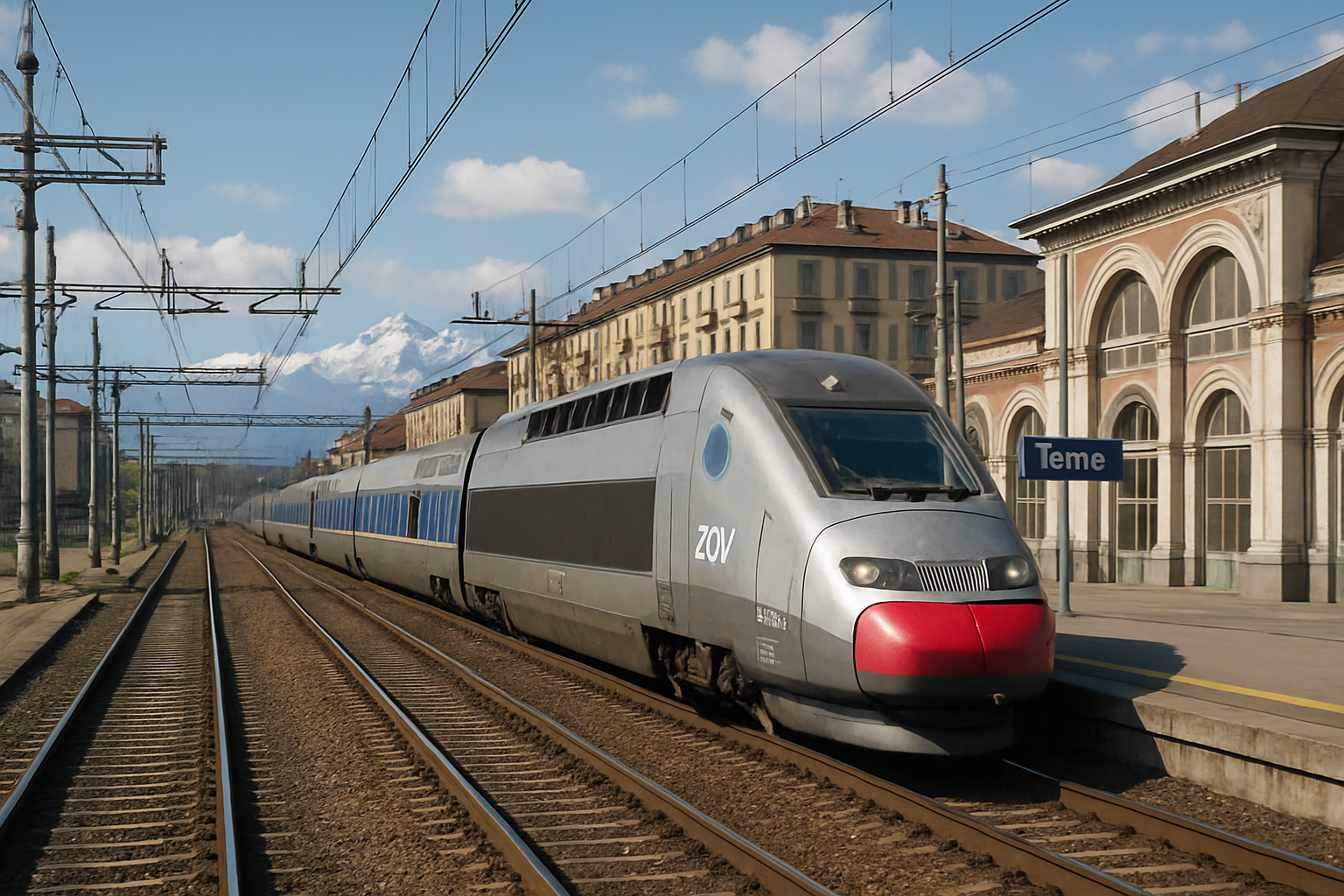
France's national railway operator SNCF has secured permission from Italian competition authorities to operate high-speed rail services on key Italian routes, marking a significant expansion in cross-border European rail competition and opening new connectivity between France and Italy's major cities.
The Italian Competition Authority (AGCM) has approved commitments presented by RFI, part of Italy's FS Group, to open the national rail network to the French operator. The decision enables SNCF to operate services on the Turin-Venice and Turin-Rome high-speed corridors, with plans for 18 daily departures from Turin extending to Naples and Venice.
Breaking Trenitalia's Market Dominance
Following the launch of these new services, SNCF will become the second major competitor to Italy's state-owned Trenitalia, after the private company Italo. This development represents a landmark shift in Italian high-speed rail, which has traditionally been dominated by domestic operators since the introduction of competition in 2012.
The Italian antitrust authority's decision comes after extensive negotiations regarding network access and operational concessions. SNCF has reportedly expressed that the concessions offered are "not sufficient," suggesting ongoing discussions may be needed to finalize the operational framework.
European Rail Market Liberalization
This expansion reflects broader trends in European railway liberalization, building on successful models in other countries where international operators have increased competition and improved services for passengers. The move aligns with European Union policies promoting cross-border rail connectivity and competition in the transportation sector.
"The opening of these lines will enable travelers to benefit from enhanced competition and potentially better services between major Italian cities."
— Italian Competition Authority spokesperson
The approval guarantees that double-decker train services along high-speed routes will continue for a 10-year period, providing stability for both operators and passengers planning long-term travel arrangements.
Strategic Route Selection
The Turin-Venice and Turin-Rome corridors represent some of Italy's most commercially viable high-speed routes, connecting the industrial north with the capital and major tourist destinations. Turin, as a major industrial center and gateway to France, provides an ideal launching point for SNCF's Italian operations.
The extension to Naples adds a crucial southern connection, potentially creating seamless travel opportunities from France through Italy's most populous and economically important regions. This network could eventually facilitate integrated European rail services spanning multiple countries.
Technical and Operational Challenges
Operating in Italy will require SNCF to navigate different technical standards, regulatory frameworks, and operational procedures than those used in France. The company will need to adapt its rolling stock and operational protocols to Italian infrastructure specifications while maintaining its service quality standards.
The 10-year operational guarantee provides sufficient time for SNCF to establish its presence, build customer loyalty, and achieve operational efficiency in the Italian market. This extended timeline reflects recognition of the substantial investment required to enter a new national rail market.
Impact on European Connectivity
This development occurs within the context of unprecedented global infrastructure investment, with transportation networks increasingly viewed as strategic assets for international competitiveness and regional integration. The approval supports broader European objectives of creating seamless cross-border transportation while promoting sustainable mobility alternatives to air travel.
SNCF's entry into the Italian market may catalyze further liberalization across European rail networks, potentially leading to more integrated services spanning multiple countries and enhanced competition that benefits consumers through improved services and competitive pricing.
Looking Forward
The successful integration of SNCF into Italian high-speed rail operations will serve as a test case for future European railway liberalization initiatives. If successful, this model could be replicated across other European corridors, creating a more integrated and competitive continental rail network.
The development represents a significant step toward the European Union's vision of seamless, sustainable transportation across member states, demonstrating how competition and international cooperation can work together to improve passenger services while supporting environmental objectives through increased rail travel.
Implementation details, including service launch dates, pricing structures, and specific operational arrangements, are expected to be announced as SNCF and Italian authorities finalize the remaining technical and regulatory requirements for the new services.