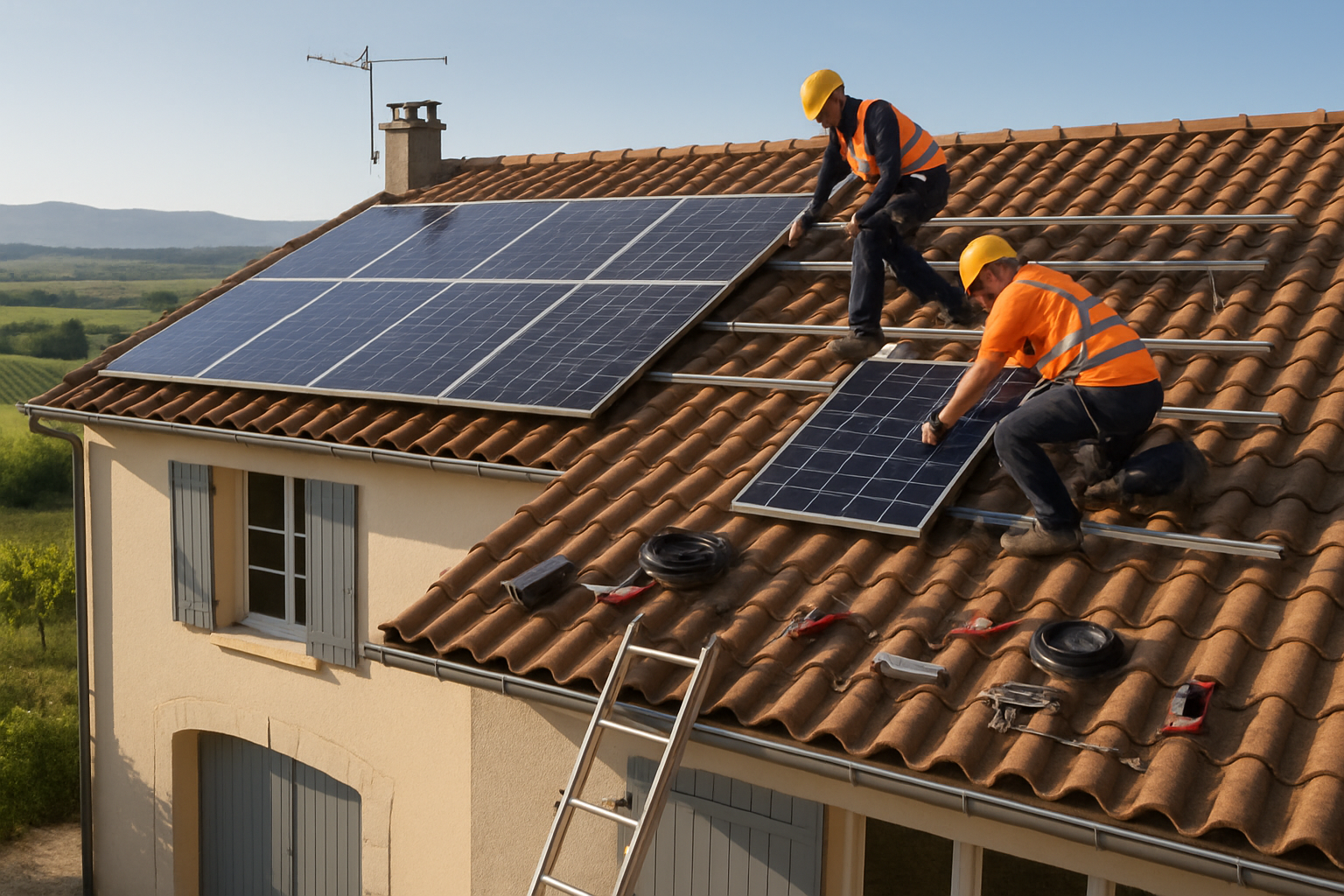
As French homeowners increasingly turn to renewable energy solutions to combat rising electricity costs and reduce their carbon footprint, solar panel installations are experiencing unprecedented growth across the country. This comprehensive guide outlines the five critical factors every homeowner must understand before installing solar panels on their French property.
France's commitment to achieving carbon neutrality by 2050 has created a supportive environment for residential solar installations, with government incentives and streamlined regulations making renewable energy more accessible than ever. However, successful installation requires careful planning and understanding of local requirements.
1. Legal Requirements and Permitting Process
Installing solar panels in France requires navigating specific legal requirements that vary depending on your property type and location. For most residential installations, a déclaration préalable de travaux (prior work declaration) must be submitted to your local mairie (town hall) at least one month before installation begins.
Properties located in protected historical zones (secteurs sauvegardés) or near classified monuments face additional restrictions. The Architectes des Bâtiments de France (ABF) must approve installations in these sensitive areas, often requiring panels that blend with traditional architecture.
"The regulatory landscape has significantly improved for homeowners over the past two years, with simplified procedures and faster approval times," notes Marie Dubois, renewable energy consultant at French Solar Solutions.
— Marie Dubois, Renewable Energy Consultant
Recent legislation has also introduced mandatory solar installations for new commercial buildings over 1,000 square meters, signaling France's serious commitment to renewable energy expansion.
2. Technical Specifications and Equipment Standards
French solar installations must comply with strict technical standards to ensure safety and performance. All equipment must carry CE marking and meet NF (Norme Française) standards. The most common residential systems range from 3kW to 9kW capacity, sufficient for typical French household energy consumption.
Key technical considerations include:
- Roof orientation and tilt angle optimization (south-facing roofs with 30-35° tilt are ideal)
- Structural load assessment to ensure roof can support panel weight
- Integration with existing electrical systems and smart meters
- Inverter selection and positioning for optimal energy conversion
Modern installations increasingly incorporate battery storage systems, allowing homeowners to store excess energy for evening use. The European energy crisis context, with natural gas prices surging 24% across the continent, has made energy independence through solar-plus-storage systems particularly attractive.
3. Financial Incentives and Economic Benefits
The French government offers several financial incentives to encourage residential solar adoption. The prime à l'autoconsommation provides upfront payments for self-consumption installations, ranging from €210 to €380 per kWp depending on system size.
Additionally, homeowners can benefit from:
- Reduced VAT rate of 10% for installations under 3kWp
- Feed-in tariffs for excess energy sold back to the grid
- Potential property value increases of 3-4% according to recent studies
- Long-term electricity bill reductions averaging 60-70%
With average installation costs ranging from €2,500 to €3,500 per kWp, most systems achieve payback periods of 8-12 years, followed by decades of free electricity generation.
4. Installation Process and Timeline
A typical residential solar installation follows a structured timeline spanning 2-4 months from initial consultation to system activation. The process begins with a detailed site assessment, including structural evaluation, electrical system review, and energy consumption analysis.
Professional installers must be certified under the QualiPV or QualiBat schemes, ensuring they meet French quality and safety standards. The installation itself typically takes 1-3 days, depending on system complexity and roof configuration.

Post-installation, the system undergoes inspection by Consuel (Committee for Conformity of Electrical Installations) before final connection to the national grid. This safety certification is mandatory for all grid-connected systems.
5. Maintenance and Long-term Considerations
French solar installations require minimal maintenance but benefit from regular monitoring to ensure optimal performance. Most manufacturers provide 20-25 year warranties on panels, with expected lifespans extending to 30-40 years.
Essential maintenance practices include:
- Annual professional inspections to check electrical connections and mounting systems
- Periodic cleaning to remove dust, leaves, and snow accumulation
- Monitoring system performance through smart apps and alerts
- Inverter replacement every 10-15 years (typically the only major maintenance cost)
The French renewable energy sector has demonstrated remarkable resilience despite global supply chain challenges. While China controls 60% of global solar panel production and 90% of critical material refining, European manufacturers are developing alternative supply chains to ensure continued growth.
Regional Variations and Climate Considerations
Solar potential varies significantly across France, with southern regions receiving 1,400-1,700 kWh/m² annually compared to 1,000-1,200 kWh/m² in northern areas. However, improved panel efficiency and declining costs have made installations economically viable throughout the country.
Climate change impacts, including more frequent extreme weather events, are increasingly factored into installation design. Modern systems include enhanced mounting systems to withstand stronger winds and improved drainage to handle increased precipitation.
Integration with Smart Home Technology
Contemporary French solar installations increasingly integrate with smart home systems, allowing real-time energy monitoring and automated load management. These systems can shift high-energy activities like water heating or electric vehicle charging to periods of peak solar production.
The rise of vehicle-to-grid technology means electric vehicles can serve as mobile batteries, storing solar energy during the day and providing power to homes during evening hours. This technology is expected to become mainstream within the next 5-7 years.
Future Outlook and Emerging Trends
France's solar capacity is projected to triple by 2030 as part of the national energy transition plan. Emerging trends include agrivoltaics (combining agriculture with solar installations), building-integrated photovoltaics (BIPV) that replace traditional building materials, and community solar projects serving multiple households.
"The next decade will see solar technology become as common as traditional roofing materials, fundamentally changing how French homes generate and consume energy."
— Dr. Laurent Petit, Energy Transition Institute
Recent geopolitical events, including energy supply disruptions from the Middle East affecting global oil markets, have reinforced the strategic importance of domestic renewable energy production. France's nuclear-solar hybrid approach positions the country as a leader in clean energy independence.
Making the Decision: Key Takeaways
Installing solar panels on French homes in 2026 represents both an environmental responsibility and a sound financial investment. Success requires understanding legal requirements, choosing quality equipment, leveraging available incentives, working with certified installers, and planning for long-term maintenance.
With supportive government policies, improving technology, and increasing economic benefits, solar installation has become an accessible option for most French homeowners. The combination of energy independence, reduced carbon footprint, and long-term savings makes solar panels an increasingly attractive proposition for residential properties across France.
As Europe continues its transition toward renewable energy dominance, early adopters of residential solar technology position themselves advantageously for a clean energy future while contributing to France's ambitious climate goals and energy security objectives.