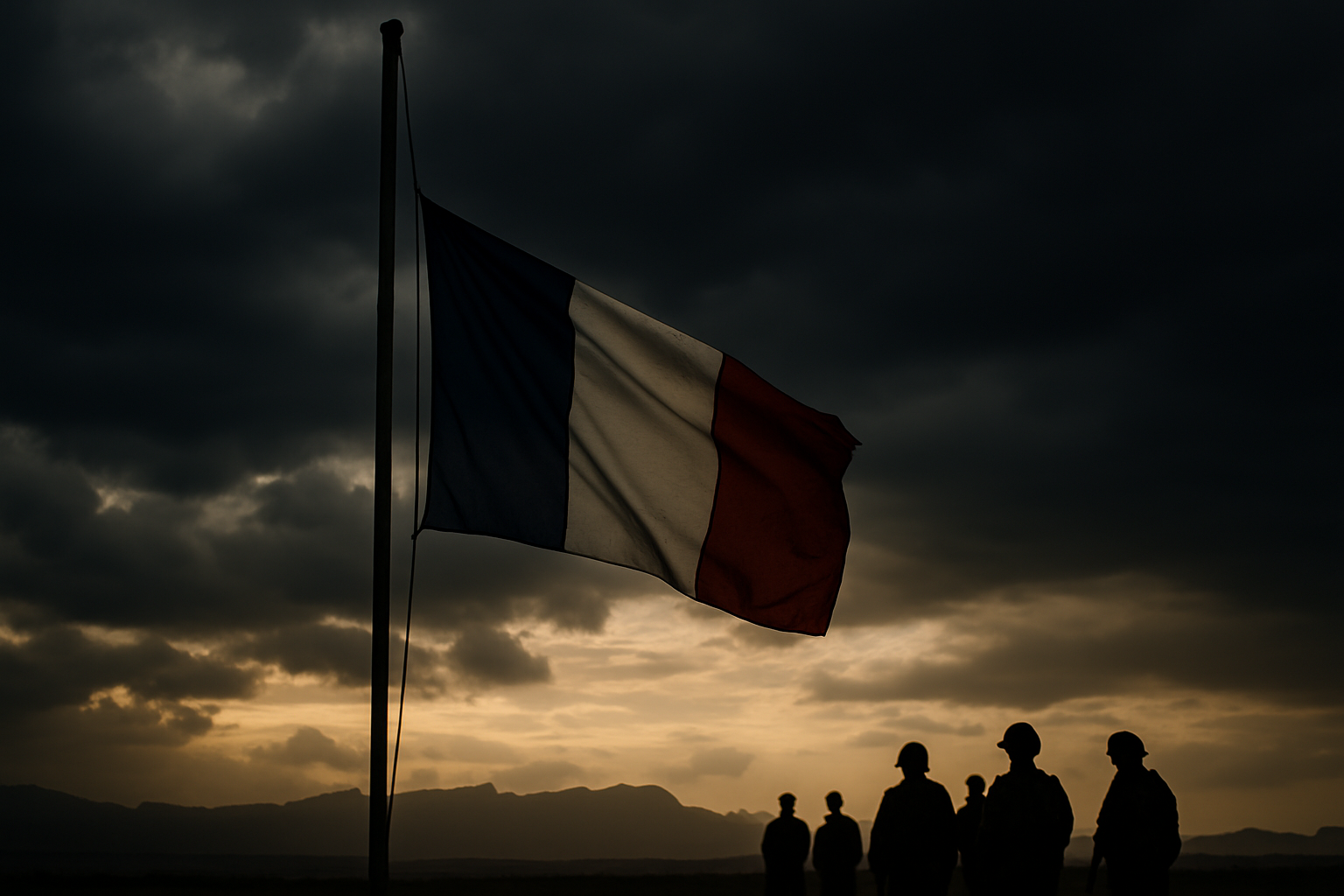
A French soldier has been killed and six others wounded in a drone attack in Iraqi Kurdistan, President Emmanuel Macron confirmed Friday morning, as the ongoing Middle East crisis claims more international military personnel in the region.
Sergeant First Class Arnaud Frion, a member of the 7th Mountain Infantry Battalion (7e BCA), was killed during a drone strike near Erbil in the Kurdistan Region of Iraq, according to French military sources. The attack targeted French forces engaged in counterterrorism training operations with Iraqi partners.
Attack Details and Response
"Several of our soldiers have been wounded," President Macron stated in a message posted on social media platform X. According to the French Joint Staff, the drone strike occurred in the Erbil region where French soldiers were participating in "counterterrorism training actions with Iraqi partners."
The incident represents another escalation in the broader Middle East conflict that has been raging since March 1, when Iran's Supreme Leader Ali Khamenei was killed in coordinated US-Israeli strikes. The attack on French forces appears to be part of Iran's "Operation True Promise 4" campaign, launched by the Islamic Revolutionary Guard Corps (IRGC) with the declaration that "no red lines remain."
French military officials described the assault as "unacceptable" and part of systematic targeting of Western military assets across the region. The attack comes as France has been increasingly involved in regional security operations, including its recent deployment of naval assets to protect Cyprus following Iranian attacks on European territory.
Context of Regional Crisis
The French casualties occur against the backdrop of the most dangerous international crisis since the Cold War. The ongoing conflict, which began with the collapse of nuclear negotiations between Iran and the United States, has now expanded far beyond bilateral tensions to encompass a regional war affecting multiple nations.
Since March 1, Iranian forces have conducted systematic attacks against Western military installations across the Middle East and Europe as part of their retaliation for "Operation Epic Fury" – the largest US-Israeli coordinated military operation since the 2003 Iraq invasion. The campaign has resulted in casualties across multiple countries:
- UAE: 1 civilian killed in Abu Dhabi from missile debris
- Kuwait: 32 foreign nationals injured in airport drone strikes
- Qatar: 8 injured while intercepting 65 missiles and 12 drones
- Cyprus: RAF Akrotiri attacked – first European territory struck since WWII
- United States: 3 service members killed, 5 wounded confirmed
The French soldier's death marks the latest in this series of international military casualties that have transformed what began as US-Iranian tensions into a broader regional conflict.
French Military Presence in Iraq
France has maintained a significant military presence in Iraq as part of the international coalition against ISIS and broader counterterrorism efforts in the region. French forces have been conducting training operations with Iraqi Kurdish Peshmerga forces and Iraqi Security Forces, focusing on capacity building and counterterrorism techniques.
The French mission in Iraqi Kurdistan has been part of broader European engagement in regional security, particularly as France has taken an increasingly active role in Middle Eastern affairs. This includes the recent deployment of the aircraft carrier Charles de Gaulle from the Baltic Sea to the Mediterranean and the positioning of naval assets to protect Cyprus following Iranian attacks.
"This attack represents a dangerous escalation targeting our forces who are contributing to regional stability and the fight against terrorism."
— French Defense Ministry Spokesperson
Broader European Security Implications
The attack on French forces comes as European nations have mobilized unprecedented military assets in response to the expanding crisis. Following Iranian drone strikes on RAF Akrotiri in Cyprus – the first attack on European sovereign territory since World War II – a four-nation coalition including France, Greece, the United Kingdom, and Spain has deployed naval and air assets to protect European territory.
This European response represents the most concrete expression of European strategic autonomy in decades, with rapid military coordination occurring independent of NATO frameworks. The success of this coordinated approach is being viewed as a template for future European defense cooperation in the face of extra-regional threats.
Global Aviation and Energy Crisis
The killing of the French soldier occurs amid an unprecedented global crisis that has seen over 18,000 flights cancelled worldwide – the most extensive aviation disruption since the COVID-19 pandemic. Eight Middle Eastern countries have simultaneously closed their airspace, including Iran, Iraq, Israel, UAE, Qatar, Syria, Kuwait, and Bahrain.
Energy markets have been equally disrupted, with oil prices surging past $80 per barrel as Iran has declared the Strait of Hormuz – through which 40% of global oil transits – "unsafe for shipping." Natural gas prices have increased 24% in Europe and 78% in the United States, creating a global energy security crisis.
Nuclear Diplomacy Breakdown
The current crisis stems from the complete collapse of nuclear negotiations between Iran and the United States, despite what had been described as a "broad agreement on guiding principles" – the most significant diplomatic progress since the 2018 collapse of the Joint Comprehensive Plan of Action (JCPOA).
The fundamental disagreement that proved insurmountable centered on scope: Iran insisted on nuclear-only discussions while excluding ballistic missiles and regional proxy relationships as "red lines," while the United States demanded a comprehensive agreement including missiles, armed groups, and human rights issues.
Iran continues to enrich uranium at 60% purity levels approaching weapons-grade capability, with over 400 kilograms of enriched material that experts say could be sufficient for multiple weapons if weaponized.
International Response and Evacuations
The escalating crisis has prompted the largest international evacuation effort since the Arab Spring of 2011. Multiple countries have ordered immediate evacuations of their citizens from the region:
- Australia: 115,000 nationals trapped in the region
- Germany: 30,000 tourists stranded
- Sweden and Serbia: Immediate evacuation orders from Iran citing "extremely uncertain" security
- United States: Authorized departure of non-essential embassy personnel from multiple countries
The European Union has activated its ESTIA evacuation plan for Cyprus for the first time in the bloc's history, coordinating the evacuation of over 2,000 European and third-country nationals.
Congressional and Parliamentary Scrutiny
The death of the French soldier comes as legislative bodies across Western nations intensify scrutiny of their governments' military commitments in the region. In the United States, Senator Richard Blumenthal has expressed being "more concerned than ever" about the potential deployment of ground troops, while the conflict has registered "almost unprecedented" unpopularity among the American public.
Financial markets have emerged as what analysts describe as "the ultimate constraint" on further escalation, with significant market disruptions including Pakistan's KSE-100 index suffering its largest single-day decline in history at -8.97%.
Nuclear Governance Crisis
The current crisis occurs against the backdrop of a broader breakdown in nuclear governance mechanisms. The New START treaty between the United States and Russia expired on February 5, creating the first period in over 50 years without nuclear constraints between the two powers. Combined with Chinese nuclear expansion and Iranian enrichment activities, UN Secretary-General António Guterres has described current nuclear risks as being at their "highest in decades."
Template-Setting Implications
UN Secretary-General Guterres has characterized the current crisis as the "greatest test of multilateral cooperation and crisis management in the modern era." The rapid transition from diplomatic breakthrough to military confrontation demonstrates what experts describe as the fragility of crisis management in the multipolar era.
The success or failure of containing this escalation is viewed as potentially template-setting for 21st-century conflict resolution approaches. Success in containment could provide a framework for future nuclear crisis resolution and strengthen diplomatic precedents, while failure may accelerate military solutions, reshape Middle Eastern geopolitics for decades, encourage nuclear proliferation globally, and undermine diplomatic credibility worldwide.
Looking Ahead
The death of Sergeant First Class Frion represents not just a tragic loss of life but a significant escalation in what has become the most dangerous international crisis since the end of the Cold War. As French and other European forces find themselves increasingly targeted in what began as US-Iranian tensions, the conflict's expansion beyond bilateral relations to encompass regional war raises fundamental questions about international stability mechanisms.
The coming days and weeks will be crucial in determining whether the international community can contain this escalation or whether it will continue to expand, with implications extending far beyond the Middle East to affect global energy security, nuclear governance, and the fundamental principles of the post-World War II international order.
As France mourns its fallen soldier and tends to its wounded, the nation, along with its European allies, faces the challenge of responding to this aggression while working to prevent further escalation of a crisis that threatens to reshape international relations for decades to come.