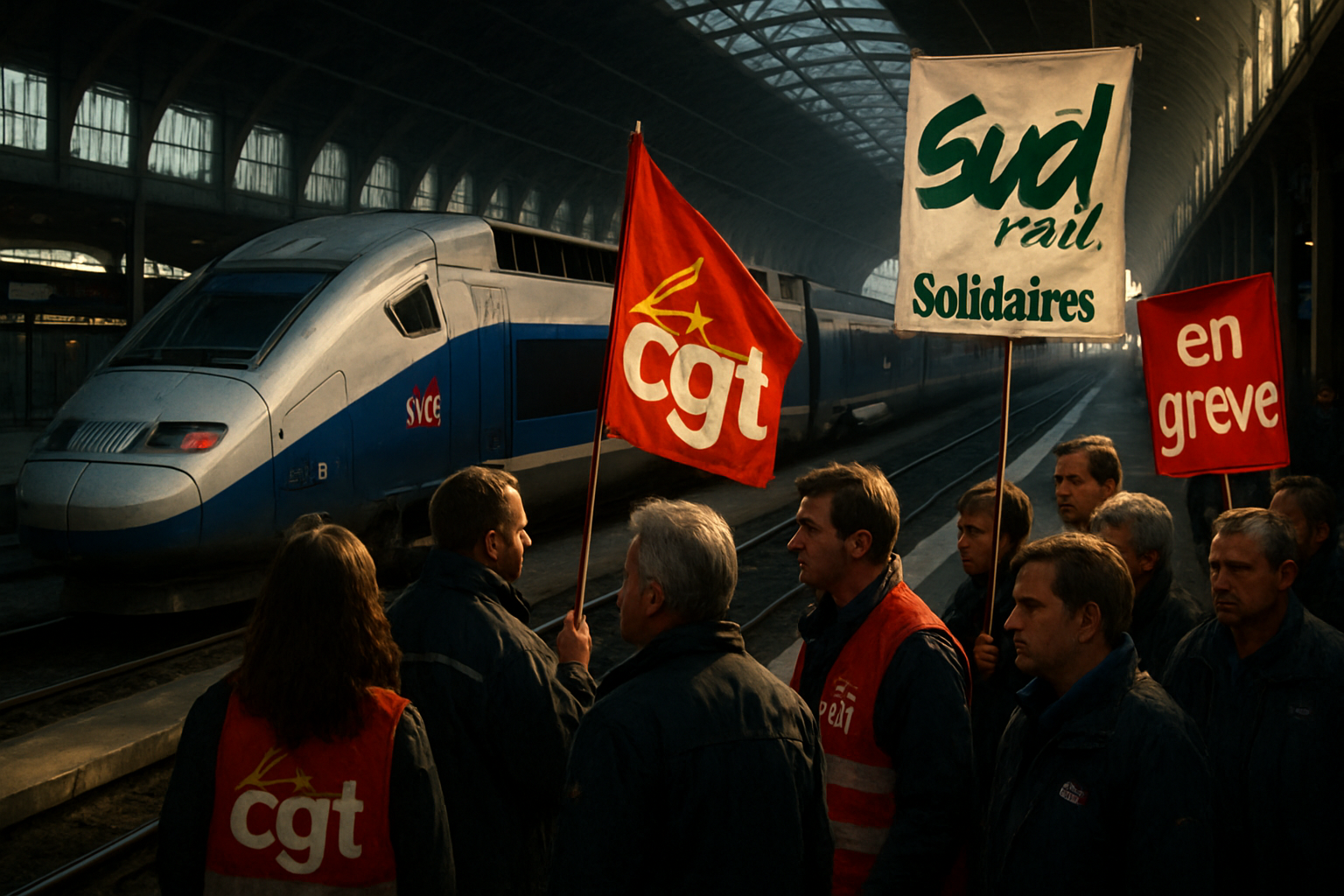
French transportation workers are mobilizing for significant strike action in April 2026, targeting high-speed TGV services and transportation networks connecting Paris to eastern France, as labor unrest continues to sweep across Europe following months of deteriorating working conditions and economic pressures.
The planned strikes, organized by major French transport unions, represent the latest escalation in what experts are calling a fundamental shift away from traditional European social partnership models toward increasingly confrontational labor relations. The action threatens to disrupt one of Europe's most critical transportation corridors during the peak spring travel season.
Strike Details and Affected Services
According to union sources, the April strikes will specifically target TGV high-speed rail services connecting Paris to eastern France, potentially affecting hundreds of thousands of passengers. The timing coincides with disruptions already occurring between Paris and eastern regions, where technical incidents have previously caused complete traffic interruptions.
The strikes are part of a coordinated effort by French transportation workers demanding improved working conditions, better compensation packages, and enhanced job security amid ongoing economic uncertainty. These demands mirror similar actions across Europe, where transport workers have increasingly leveraged their strategic importance to pressure governments and employers.
European Context: A Continental Labor Crisis
The French strikes occur within a broader context of European transportation labor unrest that has intensified throughout 2026. From Germany's Ver.di union affecting over 100,000 transport workers to Belgium's rotating provincial strikes achieving significant service cancellations, the continent has witnessed an unprecedented wave of coordinated industrial action.
This represents a marked departure from the traditional European social partnership model, where labor disputes were typically resolved through negotiation rather than confrontation. The shift has been particularly pronounced in Germany, where the long-standing consensus-based approach has given way to aggressive strike tactics demanding salary increases exceeding 20%.
"We're witnessing a fundamental transformation in European labor relations, with workers increasingly willing to accept short-term economic costs to demand long-term systemic changes."
— European Labor Relations Expert
Strategic Coordination and Union Tactics
The French transportation strikes demonstrate the sophisticated coordination that has emerged among European transportation unions. Workers are sharing tactical approaches and timing actions for maximum collective impact, moving beyond traditional national labor actions toward international cooperation.
This strategic evolution reflects lessons learned from successful global labor coordination, including Latin American general strikes that achieved significant policy concessions. Union leaders have adopted more sophisticated economic pressure strategies, targeting critical transportation hubs and timing disruptions to coincide with peak travel periods.
Economic and Political Implications
Transportation strikes carry substantial economic implications that extend far beyond passenger inconvenience. The interconnected nature of European transport networks means that national strikes create continental disruption effects, affecting supply chains, tourism revenues, and business operations across multiple countries simultaneously.
The timing of the French strikes is particularly significant, occurring during what should be a crucial recovery period for the European tourism and transportation sectors. The action tests government capacity to balance fiscal constraints with labor demands while maintaining essential services.
Infrastructure Vulnerabilities Exposed
The ongoing transportation disruptions have exposed critical vulnerabilities in Europe's interconnected transport infrastructure. The French network's strategic importance connecting Paris to eastern regions makes any significant disruption particularly damaging to both domestic and international connectivity.
These vulnerabilities have been compounded by extreme weather events throughout 2026, including the February Atlantic storm succession that caused massive infrastructure damage across Portugal, Spain, and France. The combination of labor disputes and climate pressures has created unprecedented challenges for transportation authorities.
Government and Industry Response
French authorities are expected to implement contingency protocols similar to those deployed during previous major strikes, including alternative transportation arrangements and enhanced passenger assistance programs. However, the scale and coordination of current European labor actions present challenges that traditional crisis management approaches may struggle to address.
The transportation industry is accelerating development of enhanced contingency planning, route diversification strategies, and flexible booking policies in response to the increased frequency and sophistication of strike actions. These adaptations reflect recognition that labor leverage has fundamentally shifted in the post-pandemic environment.
Historical Context and Future Implications
The current wave of French transportation strikes builds on a pattern of escalating European labor actions that began in early 2026. Previous incidents include the February Lufthansa pilot strikes over pension contributions, extensive German transport worker actions, and coordinated Belgian public service disruptions.
This pattern suggests that traditional European labor relations frameworks are undergoing fundamental transformation. The success or failure of current strike actions will likely influence future union strategies and government responses across the continent, potentially establishing new templates for labor-management relations in critical infrastructure sectors.
Passenger Rights and Compensation
Under European Union regulations, passengers affected by strike-related delays and cancellations are entitled to compensation and care provisions. Airlines and rail operators must provide alternative transportation, accommodation, and financial compensation depending on the circumstances and duration of disruptions.
Travel experts recommend that passengers contact transportation providers directly for rebooking options and consider alternative routes, including other European rail networks that may not be affected by the French strikes. The interconnected nature of European transport means that disruption in one country often creates opportunities for alternative routing through neighboring networks.
Long-term Transportation Resilience
The recurring pattern of transportation strikes across Europe highlights the urgent need for enhanced crisis management frameworks and long-term resilience planning. Infrastructure designed for historical patterns of labor relations and operational demands is proving inadequate for current volatility.
European policymakers are increasingly recognizing that "building back better" approaches must account for permanent changes in labor relations, climate pressures, and operational environments. The current crisis may accelerate development of more robust transportation networks capable of maintaining essential connectivity despite various disruption factors.
As April approaches, the French transportation strikes represent another critical test of European institutional capacity to manage complex, interconnected challenges while preserving essential services and democratic governance. The outcomes will likely influence transportation policy and labor relations across the continent for years to come.