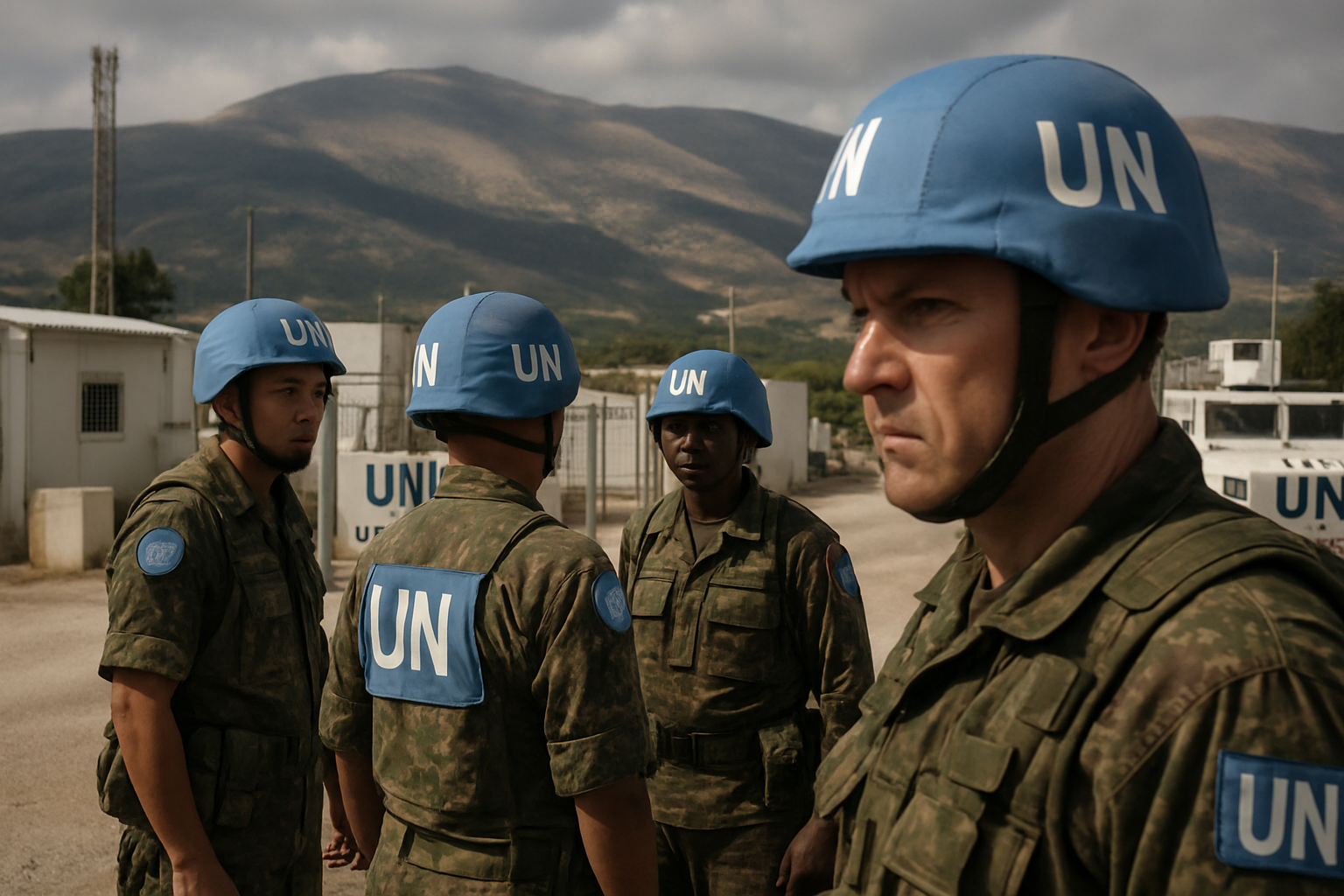
A French UN peacekeeping soldier was killed and three others wounded in an attack in southern Lebanon on Saturday, prompting French President Emmanuel Macron to hold Hezbollah responsible for what he called a deliberate assault on international peacekeeping forces.
Staff Sergeant Florian Montorio from the French paratrooper engineering regiment in Montauban was killed during what UNIFIL officials described as a road clearance operation in southern Lebanon. Two of the three wounded peacekeepers sustained serious injuries, according to French military sources.
President Macron declared that "everything suggests" Hezbollah was responsible for the attack on the United Nations Interim Force in Lebanon (UNIFIL), marking the most serious incident involving international peacekeepers since the collapse of the November 2024 ceasefire between Israel and Hezbollah in March 2026.
Systematic Attacks on UN Peacekeepers
The killing of Staff Sergeant Montorio represents part of a broader pattern of attacks targeting UN peacekeeping forces amid the escalating regional conflict. UNIFIL spokesperson Kandice Ardiel described the situation as "precarious and volatile," noting that the attack was characterized as "deliberate" rather than accidental engagement.
This incident follows the deaths of three Indonesian UNIFIL peacekeepers within a 24-hour period in March, including two killed in a vehicle explosion near Bani Hayyan and a third killed in a projectile explosion at an observation post in Adchit al-Qusayr village. These represent the first UN casualties since the current escalation began.
"The situation is precarious and volatile, affecting both peacekeepers and civilians who are being forced to evacuate southern Lebanon areas."
— Kandice Ardiel, UNIFIL Spokesperson
Breakdown of November 2024 Ceasefire
The attack occurs against the backdrop of the complete collapse of the November 2024 US-French brokered ceasefire between Israel and Hezbollah. That agreement, which held for over a year, required Israeli forces and Hezbollah to withdraw from southern Lebanon with Lebanese army and UN peacekeepers establishing a buffer zone.
The ceasefire began to unravel in March 2026 following the death of Iranian Supreme Leader Ali Khamenei on March 1. Hezbollah faced what officials described as an "impossible choice" between maintaining the ceasefire and responding to Iranian pressure for retaliation. The organization ultimately chose what they termed "Iranian solidarity over Lebanese sovereignty," declaring that "resistance is the only option."
Humanitarian Crisis Reaches Unprecedented Scale
The renewed conflict has created a massive humanitarian catastrophe in Lebanon. Over 1.2 million Lebanese civilians – representing 25% of the country's population – have been displaced since March 2026. Emergency shelters across the country are overwhelmed, with thousands forced to sleep on the streets of Beirut.
The systematic targeting of medical personnel has become a particularly alarming feature of the current conflict. Since March 2, 26 paramedics have been killed and 51 wounded in what appears to be deliberate attacks on emergency responders. The deadliest single incident occurred at the Burj Qalaouiyah healthcare center in the Bint Jbeil district, where 12 medical workers – including doctors, nurses, and paramedics – were killed in what human rights organizations have characterized as potential violations of the Geneva Conventions.
Hezbollah's Denial and Strategic Calculations
Despite President Macron's accusations, Hezbollah has categorically denied involvement in the attack on French peacekeepers. The Iran-backed organization, estimated to have 20,000 fighters, has conducted over 40 operations targeting northern Israeli military sites, including some reaching as far as Haifa.
Hezbollah has declared "direct confrontations" with Israeli forces in southern Lebanon, marking a significant operational escalation from their previous restraint strategy. This strategic shift represents the organization's decision to fully integrate Lebanon into the broader Iran-Israel confrontation that has engulfed the region since Khamenei's death.
International Response and Diplomatic Efforts
The attack on French peacekeepers has prompted strong international condemnation and calls for urgent diplomatic intervention. UN Secretary-General António Guterres called the regional situation "the greatest test of multilateral cooperation in the modern era," while French officials have demanded an urgent UN Security Council meeting.
President Macron has offered to host direct Israel-Lebanon talks in Paris – the first such diplomatic initiative since the ceasefire collapse. Italy is pressing for changes to UNIFIL's rules of engagement, while Sweden has provided 65 million kronor in humanitarian aid to support displaced Lebanese civilians.
The attack has highlighted the broader fragility of international peacekeeping operations in an era of proxy conflicts and great power competition. With over 10,000 peacekeepers from various countries deployed in UNIFIL, the mission faces unprecedented challenges in maintaining its mandate to confirm Israeli withdrawal and restore peace and security to the region.
Global Implications of Regional Escalation
The Lebanon crisis is unfolding within the context of the most serious Middle East conflict since the end of the Cold War. The regional war has already caused massive global disruptions, including the cancellation of over 18,000 flights worldwide, oil prices surpassing $100 per barrel for the first time since 2014, and threats to the Strait of Hormuz affecting 40% of global oil transit.
The World Health Organization has issued a $30.3 million emergency appeal to support healthcare systems across five countries, describing medical infrastructure as being "under severe strain." The International Energy Agency has announced its largest strategic reserve release in 50 years – 400 million barrels – to help stabilize global energy markets.
Template-Setting Crisis for 21st Century Peacekeeping
The deliberate targeting of UN peacekeepers represents a fundamental challenge to the international peacekeeping framework established after World War II. Success or failure in holding the perpetrators accountable will establish critical precedents for international law enforcement and multilateral conflict resolution approaches globally.
The crisis tests whether international forces can operate effectively when non-state actors deliberately target UN personnel. It represents what diplomatic observers are calling a "template-setting moment" for 21st-century peacekeeping operations, with implications extending far beyond the immediate Middle Eastern context.
As diplomatic efforts intensify to prevent broader regional warfare, the death of Staff Sergeant Florian Montorio serves as a stark reminder of the human cost when international mechanisms for maintaining peace come under systematic attack. The coming days will be crucial in determining whether diplomatic solutions can prevail over military escalation in what has become the most dangerous international crisis since the Cold War.