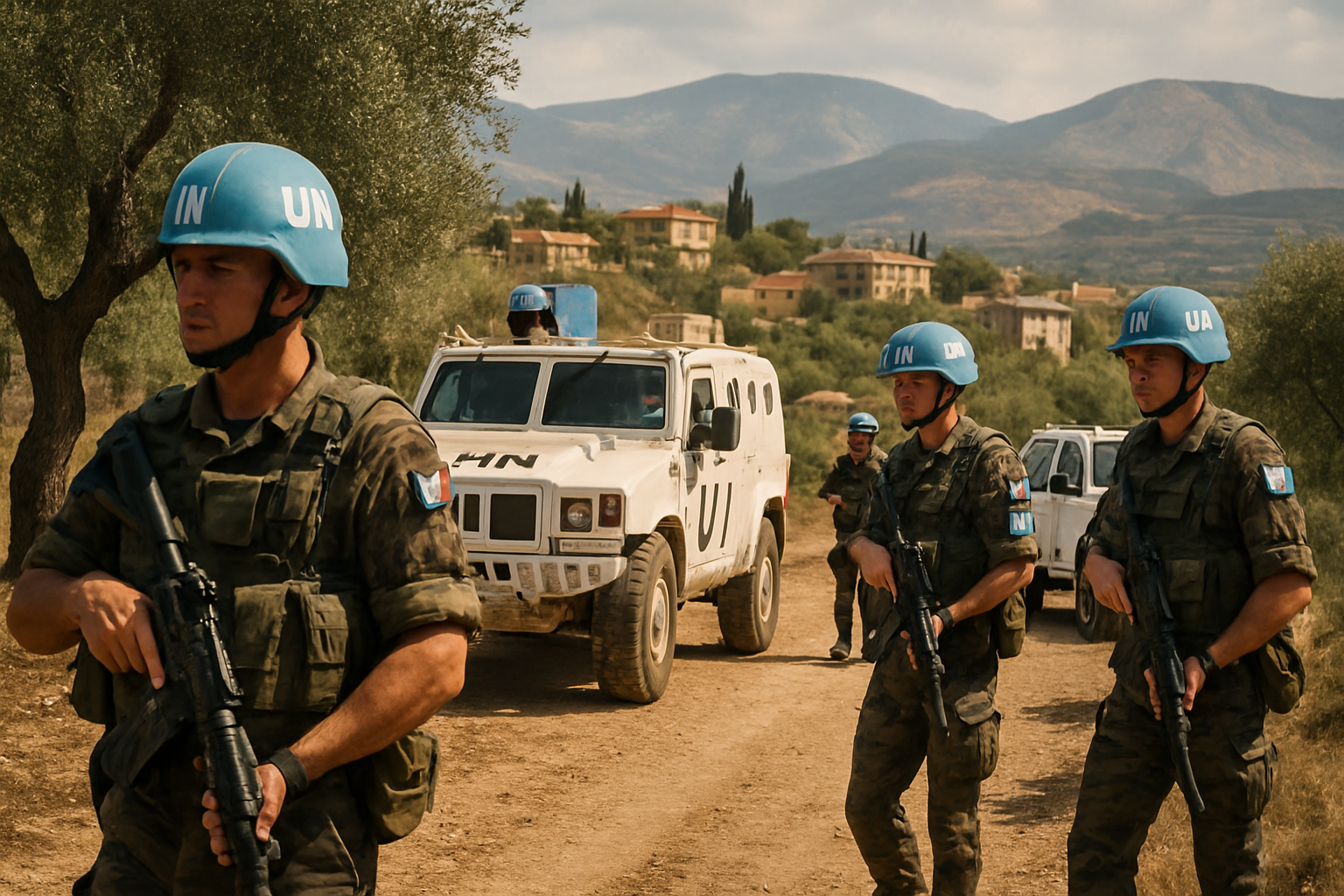
A French UN peacekeeper was killed and three others wounded in an attack in southern Lebanon on Saturday, President Emmanuel Macron announced, with France placing responsibility squarely on the Iran-backed militant group Hezbollah in what officials described as a deliberate assault on international peacekeeping forces.
The attack occurred while the French soldiers, part of the United Nations Interim Force in Lebanon (UNIFIL), were conducting road clearance operations in the volatile border region. Initial assessments by UNIFIL indicated the fire came from non-state actors, allegedly Hezbollah, marking a dangerous escalation in attacks on international peacekeeping personnel.
President Macron confirmed the death of Staff Sergeant Florian Montorio from the paratrooper engineering regiment of Montauban in a statement on social media platform X. "Everything suggests that the responsibility for this attack lies with Hezbollah," Macron declared, demanding that Lebanese authorities "immediately arrest the perpetrators and assume their responsibilities alongside UNIFIL."
Escalating Threats to UN Peacekeepers
The incident represents the latest in a series of increasingly brazen attacks on UN peacekeeping forces in Lebanon, where UNIFIL has maintained a presence since 1978 to monitor the Israel-Lebanon border and help maintain peace and security. The force, comprising approximately 10,000 peacekeepers from various contributing nations, has faced mounting pressure as regional tensions have intensified.
UNIFIL spokesperson Kandice Ardiel described the current security situation as "precarious and volatile," noting that the attack was being investigated as "a deliberate attack" rather than an accidental engagement. The deliberate nature of the assault has raised serious concerns among international observers about the systematic targeting of peacekeeping personnel.
This latest fatality follows previous incidents involving UN peacekeepers in the region, including attacks on Indonesian UNIFIL personnel that have claimed multiple lives in recent months. The targeting of international peacekeepers represents a significant violation of international law and threatens the foundation of UN peacekeeping operations globally.
France's Stern Response
The French government's attribution of responsibility to Hezbollah marks a significant diplomatic development, as France has historically maintained dialogue with various Lebanese political factions. Macron's direct accusation against the Iran-backed group signals a hardening of French policy toward Hezbollah's military activities.
In his statement, President Macron emphasized that "the nation bows respectfully and expresses its support for the families of our soldiers and for all our military personnel engaged in the peace mission in Lebanon." The French leader's emotional response underscored the gravity with which Paris views the attack on its peacekeeping personnel.
Lebanese President Joseph Aoun condemned the attack and ordered an immediate investigation, highlighting the Lebanese government's complex position in managing relations between various armed groups operating on its territory and international peacekeeping forces.
Regional Context and Ongoing Instability
The attack comes amid heightened regional tensions that have seen various ceasefire agreements tested and, in some cases, collapse entirely. The November 2024 US-French brokered ceasefire between Israel and Hezbollah, which had held for over a year, came under severe strain following broader regional developments.
The death of Iranian Supreme Leader Ali Khamenei in March 2026 created what sources describe as an "impossible choice" for Hezbollah between maintaining ceasefire commitments and responding to Iranian pressure for retaliation. The organization ultimately chose what analysts term "Iranian solidarity over Lebanese sovereignty," pulling Lebanon into a broader regional confrontation.
This geopolitical shift has had devastating consequences for Lebanese civilians, with over 800,000 people displaced and emergency shelters overwhelmed. The humanitarian crisis has been compounded by systematic targeting of medical personnel, with 26 paramedics killed and 51 wounded since March, according to health ministry data.
International Implications
The targeting of French peacekeepers carries significant implications for international peacekeeping operations worldwide. UN Secretary-General António Guterres has described the current regional situation as "the greatest test of multilateral cooperation in the modern era," with the effectiveness of international intervention mechanisms being severely tested.
The incident highlights the vulnerability of UN peacekeeping forces operating in complex conflict environments where multiple armed actors pursue competing objectives. The deliberate nature of the attack on clearly identified international peacekeeping personnel raises questions about the respect for international humanitarian law and the Geneva Conventions.
France's response is likely to influence broader European Union policy toward Hezbollah and could affect ongoing diplomatic efforts to manage regional tensions. The incident also underscores the challenges facing international mediators attempting to broker lasting peace agreements in the volatile Middle East environment.
Lebanon's Sovereignty Challenge
The attack on UN peacekeepers illuminates Lebanon's ongoing struggle to maintain sovereignty over its territory while managing the presence of various armed groups. The Lebanese government finds itself caught between its international obligations to support UN peacekeeping operations and the reality of armed non-state actors operating within its borders.
Prime Minister Nawaf Salam's administration faces the difficult task of investigating an attack perpetrated by a group that maintains significant political and military influence within Lebanese society. Hezbollah's dual nature as both a political party participating in government and an armed militia operating independently creates complex challenges for Lebanese sovereignty.
The incident also reflects the broader regional dynamics where proxy groups operate with varying degrees of autonomy from their state sponsors, complicating efforts to establish clear accountability for attacks on international forces.
Template-Setting Moment for Peacekeeping
The deliberate targeting of UN peacekeepers represents what international relations experts describe as a "template-setting moment" for 21st-century conflict resolution mechanisms. The incident tests whether international peacekeeping forces can operate effectively in environments where non-state actors deliberately target international personnel.
The attack's timing and deliberate nature suggest a strategic decision by Hezbollah to challenge the international peacekeeping framework, potentially as part of broader resistance to international intervention in regional conflicts. This challenge to the UN peacekeeping model has implications extending far beyond Lebanon's borders.
Success or failure in holding perpetrators accountable and maintaining international peacekeeping operations will establish important precedents for how the international community responds to attacks on UN personnel in conflict zones worldwide. The stakes include the credibility of international law enforcement and the viability of multilateral approaches to conflict resolution.
Path Forward
The French government's clear attribution of responsibility to Hezbollah creates both diplomatic pressure and potential pathways for accountability. France's demand for Lebanese authorities to arrest the perpetrators tests Lebanon's capacity to enforce law and order against powerful non-state actors within its territory.
The incident may also influence ongoing diplomatic efforts to address broader regional tensions, with France having previously offered to host direct Israel-Lebanon talks in Paris. The targeting of French peacekeepers could either galvanize international support for diplomatic solutions or further complicate efforts to achieve lasting agreements.
The international community's response to this attack will likely determine whether UN peacekeeping operations can continue effectively in Lebanon and similar complex environments worldwide. The incident serves as a stark reminder of the human cost of regional conflicts and the risks faced by those working to maintain international peace and security.
As investigations continue into the attack that claimed Staff Sergeant Montorio's life, the incident stands as both a tragedy for his family and France, and a critical test of the international community's commitment to protecting those who serve in the cause of peace.