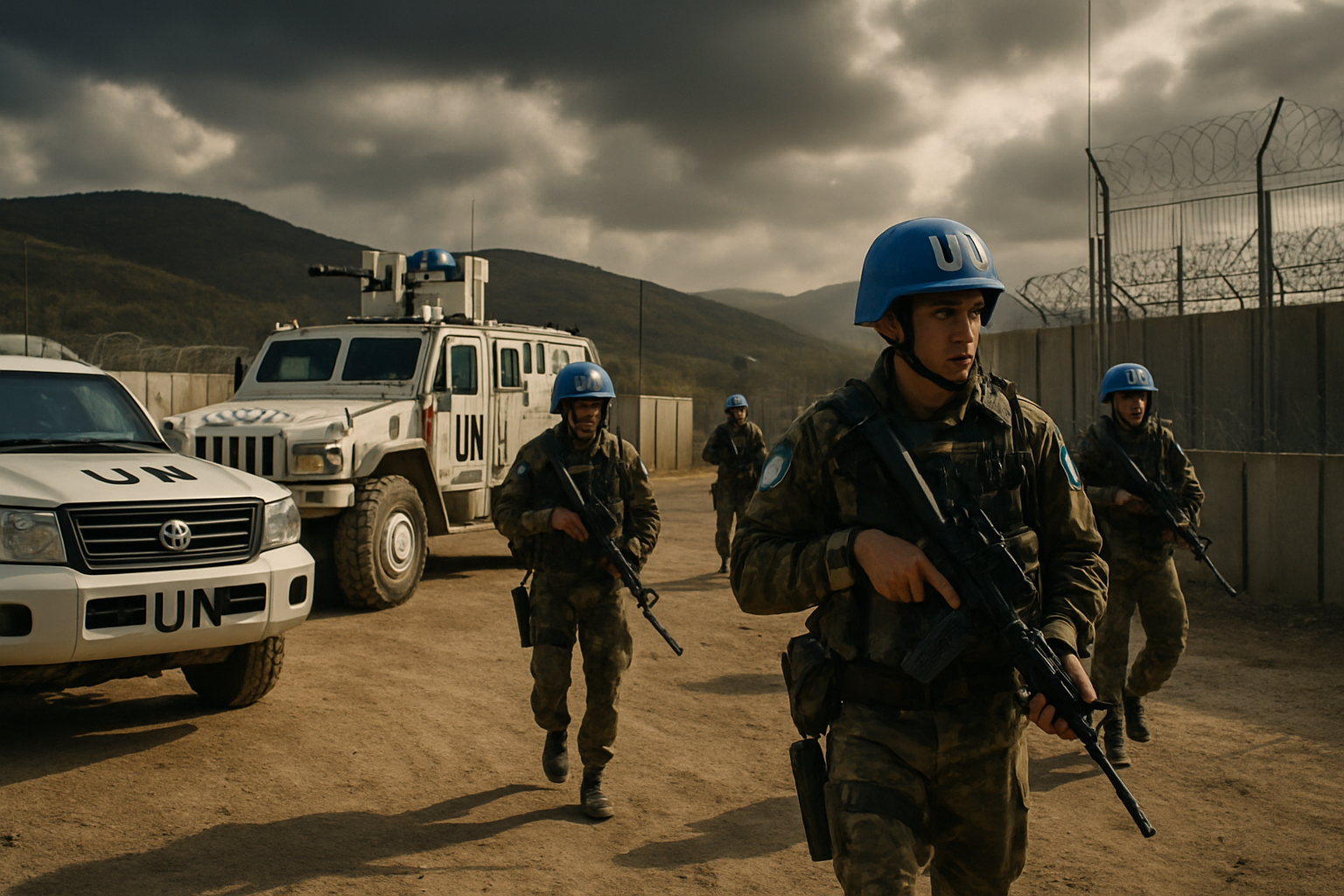
A French soldier serving with the United Nations peacekeeping force in Lebanon was killed and three others wounded in an attack in southern Lebanon on Saturday, prompting French President Emmanuel Macron and UNIFIL officials to directly blame Hezbollah for the deadly assault.
Sergeant Major Florian Montorio of the 17th Parachute Engineer Regiment in Montauban was killed during what officials described as a deliberate attack against UNIFIL forces in southern Lebanon. Three other French personnel were wounded and evacuated from the scene.
The incident marks a significant escalation in violence against UN peacekeepers in the region, coming just days after Israel and Lebanon announced a fragile 10-day ceasefire. French President Macron took to social media to directly accuse Hezbollah of responsibility for the attack.
UNIFIL and French Response
"All indications suggest that Hezbollah is responsible for this attack," Macron declared in a post on X, demanding that Lebanese authorities immediately arrest those responsible. "France demands that Lebanese authorities immediately arrest those responsible and assume responsibility alongside UNIFIL."
UNIFIL deputy spokesperson Tilak Pokharel provided additional details about the attack, explaining that initial assessments indicated the fire came from non-state actors, allegedly Hezbollah. The attack occurred during road clearance operations being conducted by the peacekeeping force.
"The nation bows in respect and expresses its support to the families of our soldiers and to all our military personnel committed to peace in Lebanon."
— Emmanuel Macron, President of France
UNIFIL spokesperson Kandice Ardiel described the current situation as "precarious and volatile," highlighting the increasingly dangerous environment facing international peacekeepers in southern Lebanon.
Hezbollah Denies Involvement
Despite the accusations from France and UNIFIL, Hezbollah has categorically denied any involvement in the attack. The organization issued a statement rejecting "any connection to the incident" and urged "caution in making judgments" pending the results of an investigation by the Lebanese army.
This denial comes amid broader regional tensions following the complete collapse of the November 2024 US-French brokered ceasefire between Israel and Hezbollah in March 2026. The organization has been facing what officials describe as an "impossible choice" between maintaining peace and responding to pressure from Iranian allies.
Context of Regional Crisis
The attack on French peacekeepers occurs within the broader context of the most serious Middle East crisis since the Cold War, triggered by the death of Iranian Supreme Leader Ali Khamenei in March 2026. The crisis has led to the breakdown of multiple ceasefire agreements and escalated into a regional conflict affecting millions of civilians.
Lebanon is currently experiencing an unprecedented humanitarian catastrophe, with over 1.2 million people displaced—representing 25% of the country's population. Since March 2026, systematic targeting of medical personnel has resulted in 26 paramedics killed and 51 wounded, including a devastating attack on the Burj Qalaouiyah healthcare center that killed 12 medical workers.
The November 2024 ceasefire agreement, which had held for over a year, completely collapsed when Hezbollah chose what officials term "Iranian solidarity over Lebanese sovereignty" following the death of Khamenei. This decision pulled Lebanon into the broader Iran-Israel confrontation, fundamentally altering the security landscape.
Pattern of Attacks on Peacekeepers
Saturday's attack is part of a concerning pattern of violence against UN peacekeepers in the region. Previous incidents have included attacks on UNIFIL bases near Mais al-Jabal, where peacekeepers were wounded, and separate incidents that resulted in the deaths of Indonesian UNIFIL personnel.
These attacks represent the first major breaches of peacekeeping arrangements since the original ceasefire implementation in November 2024. The systematic targeting of international peacekeeping forces poses significant challenges to the UN's mission in southern Lebanon, which was established to maintain peace and security along the border.
International Response and Diplomatic Efforts
Lebanese President Joseph Aoun condemned the attack during a phone call with President Macron, ordering an immediate investigation into the incident. Aoun instructed relevant authorities to investigate the circumstances surrounding the French soldier's death.
The international community has expressed growing concern about the deteriorating security situation in Lebanon. The attack comes as diplomatic efforts are underway to establish more permanent peace arrangements, including recent direct talks between Israeli and Lebanese officials in Washington—the first such negotiations in over three decades.
However, a critical loophole in recent peace efforts has emerged, as Israeli Prime Minister Netanyahu explicitly excluded Lebanon from the Pakistan-mediated "Islamabad Accord" ceasefire between the US and Iran. This exclusion has created dangerous gaps in the regional peace framework.
Global Implications
The death of Sergeant Major Montorio highlights the broader challenges facing international peacekeeping operations in an era of proxy conflicts and regional competition. UN Secretary-General António Guterres has described the current Middle East crisis as "the greatest test of multilateral cooperation in the modern era."
The crisis has had global implications, with over 18,000 flights cancelled worldwide, oil prices surging above $100 per barrel, and threats to the Strait of Hormuz affecting 40% of global oil transit. The International Energy Agency has implemented its largest strategic reserve release in 50 years, releasing 400 million barrels to stabilize markets.
Ongoing Security Challenges
The attack on French peacekeepers underscores the template-setting nature of the current crisis for 21st-century conflict resolution. Success or failure in maintaining peace in Lebanon will establish precedents for diplomatic versus military solutions in an increasingly multipolar world.
Hezbollah, estimated to have 20,000 fighters, has conducted over 40 operations targeting Israeli positions and declared "direct confrontations" with Israeli forces in southern Lebanon. This represents a significant shift from the organization's previous strategy of restraint under the ceasefire agreement.
The current situation demonstrates the fragility of negotiated agreements when underlying political tensions remain unresolved. The challenge for international mediators is addressing immediate security concerns while preventing external pressure from undermining peace agreements.
As the international community grapples with this latest escalation, the death of Sergeant Major Montorio serves as a stark reminder of the human cost of regional conflicts and the risks faced by those committed to maintaining peace in one of the world's most volatile regions. The coming days will be crucial in determining whether diplomatic intervention can restore stability or if the region will continue on a trajectory toward broader warfare affecting millions more civilians.