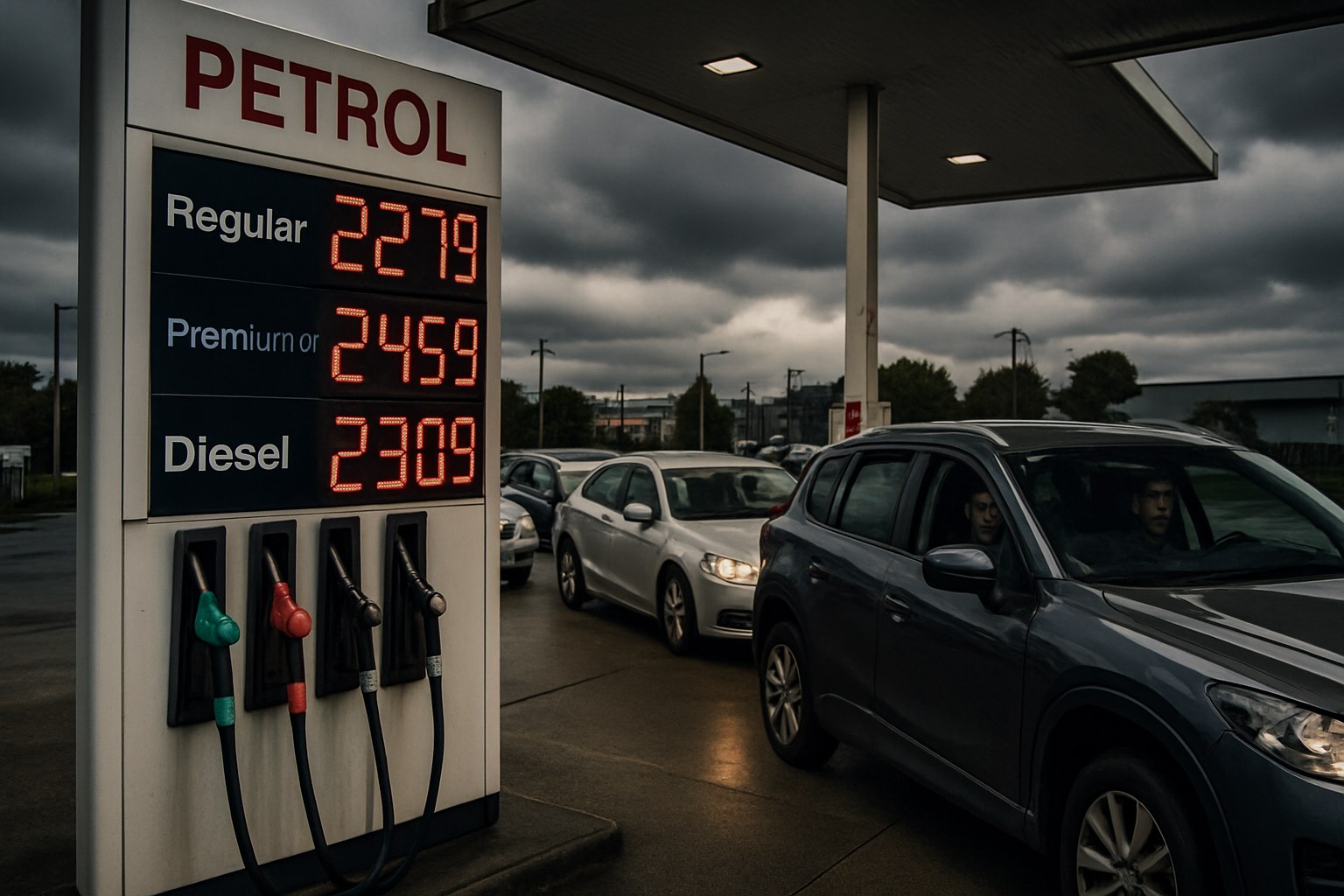
Australia and New Zealand are grappling with the most severe fuel price crisis in decades as global oil prices surge past $100 per barrel for the first time since 2022, triggering emergency government meetings and raising the specter of fuel rationing amid war-related supply disruptions.
The crisis has reached critical levels, with Australian petrol prices surging past $2.50 per liter nationally and some regions approaching the $3 threshold. In New Zealand, petrol has already breached the historic $3 per liter mark, prompting the government to consider "Muldoon-era" emergency measures including car-free days and petrol sale limits - the most significant intervention since the 1970s oil crisis.
Emergency Government Response
The Australian Competition and Consumer Commission (ACCC) held an emergency meeting today with representatives from the nation's biggest fuel suppliers, including Ampol, BP, and Chevron, following reports of price gouging and supply shortages across the country. The watchdog warned companies against exploiting consumers during the crisis, emphasizing that Australians are struggling under the strain of more expensive petrol or being unable to access it at all.
Deputy Prime Minister Richard Marles did not rule out the possibility of fuel rationing if the war continues longer than expected, marking a grim admission from the federal government about the severity of the situation.
"Since this crisis began we have heard from many consumers who are concerned and frustrated about pricing conduct."
— ACCC Representative
In New Zealand, the government has confirmed it is considering emergency measures not seen since the 1970s oil crisis, including car-free days and restrictions on petrol sales, as the nation's heavy import dependence makes it particularly vulnerable to global supply chain disruptions.
Global Energy Crisis Context
The fuel price surge is part of an unprecedented global energy crisis triggered by Iran's Revolutionary Guard declaring the Strait of Hormuz "unsafe for shipping," effectively blocking 40% of the world's seaborne oil transit through the critical 21-mile chokepoint. This action has created the most severe energy crisis since the 1970s oil shocks.
Oil prices have reached dramatic heights, with Brent crude peaking at $119.50 per barrel and West Texas Intermediate jumping a record 18.98% to $108.15. The International Energy Agency (IEA) has responded with the largest strategic petroleum reserve release in its 50-year history - 400 million barrels from 32 countries, more than double the 182.7 million barrels released during the 2022 Ukraine crisis.
Japan is releasing 80 million barrels starting March 16, marking the first such deployment since the 2011 Fukushima disaster. Germany has confirmed participation, with the United States expected to be the largest contributor. Energy Secretary Wright is even considering lifting Russian oil sanctions to help stabilize global supply.
Supply Chain Breakdown
The crisis has exposed dangerous vulnerabilities in global supply chains, with major shipping companies Maersk and MSC suspending all Persian Gulf operations. More than 150 oil and LNG tankers are stranded in the Persian Gulf, representing billions of dollars in cargo value.
Regional Queensland fuel stations have run completely dry, with areas like Robinvale (70km east of Mildura) depleted since Saturday evening. Goondiwindi Mayor Lawrence Springborg reports that major suppliers are favoring bulk distributors over independent stations, creating severe shortages in rural communities.
Consumer Impact and Panic Buying
Australian consumers are experiencing unprecedented price volatility, with reports of panic buying similar to early-stage COVID-19 behavior. Waitomo Group CEO Simon Parham confirmed a 15-20% demand surge over the past week, straining already compromised supply chains.
The crisis is creating a ripple effect across the economy, with the Reserve Bank of Australia warning that rising fuel costs are contributing to inflation pressures that could necessitate interest rate increases - creating what analysts describe as a potential "triple whammy" for Australian households already facing pressure at the bowser, checkout, and on their mortgages.
Dave Letele, a prominent New Zealand community advocate, has warned that a "wave of crime is coming" if citizens don't receive adequate support amid the soaring fuel prices, highlighting the social implications of the crisis.
Aviation and Transport Crisis
The fuel crisis has paralyzed global aviation, with over 18,000 flights cancelled worldwide - the most extensive disruption since COVID-19. Air New Zealand has cut more than 1,000 flights, affecting 44,000 passengers as jet fuel prices have surged from $85-90 to $150-200 per barrel, representing a 122% increase.
The aviation crisis has created a cascade effect, with eight countries simultaneously closing their airspace and Dubai International Airport - the world's busiest with 86 million passengers annually - completely shut down due to missile damage.
Energy Architecture Transformation
The crisis has exposed the dangerous over-dependence on strategic chokepoints in global energy infrastructure. Qatar's Energy Minister Saad Al Kaabi has warned that Gulf states may declare force majeure "within weeks" if oil approaches $150 per barrel, which he says could "bring down economies of the world."
Natural gas prices have exploded by 24% in Europe and 78% in the United States, reaching €47.32/MWh - the highest since February 2025. Qatar has halted LNG production at its Ras Laffan and Mesaid facilities, which account for approximately 20% of global LNG exports.
Historical Significance
Energy analyst Samuel Ciszuk describes this as "the most severe energy security crisis in decades, exposing single-chokepoint vulnerabilities." Portfolio strategist Damien Boey notes that the "situation is going longer than initially thought, with financial markets becoming the ultimate constraint on prolonged conflict."
The crisis stems from the complete collapse of US-Iran nuclear talks despite what was described as a "broad agreement on guiding principles" - the most progress since the JCPOA in 2018. The diplomatic breakdown led to Operation Epic Fury, the largest coordinated operation since 2003, and Iranian retaliation through Operation True Promise 4.
Looking Ahead
The recovery timeline remains uncertain as it depends on military operations and diplomatic resolution rather than predictable weather patterns. Traditional monetary policy tools have limited effectiveness against these structural geopolitical disruptions, requiring coordinated international responses addressing root causes.
This crisis represents a template-setting moment for 21st-century energy security planning, requiring fundamental transformation to reduce dependence on strategic chokepoints. The coming weeks will determine whether this becomes a contained regional crisis or expands into a broader Middle Eastern conflict with implications extending decades beyond current events.
For Australia and New Zealand, the crisis underscores the vulnerabilities of import-dependent energy systems and may accelerate discussions about energy security, strategic reserves, and alternative supply sources. As governments prepare emergency measures not seen since the 1970s, the fuel price crisis has become a defining challenge for both nations' economic resilience and social stability.