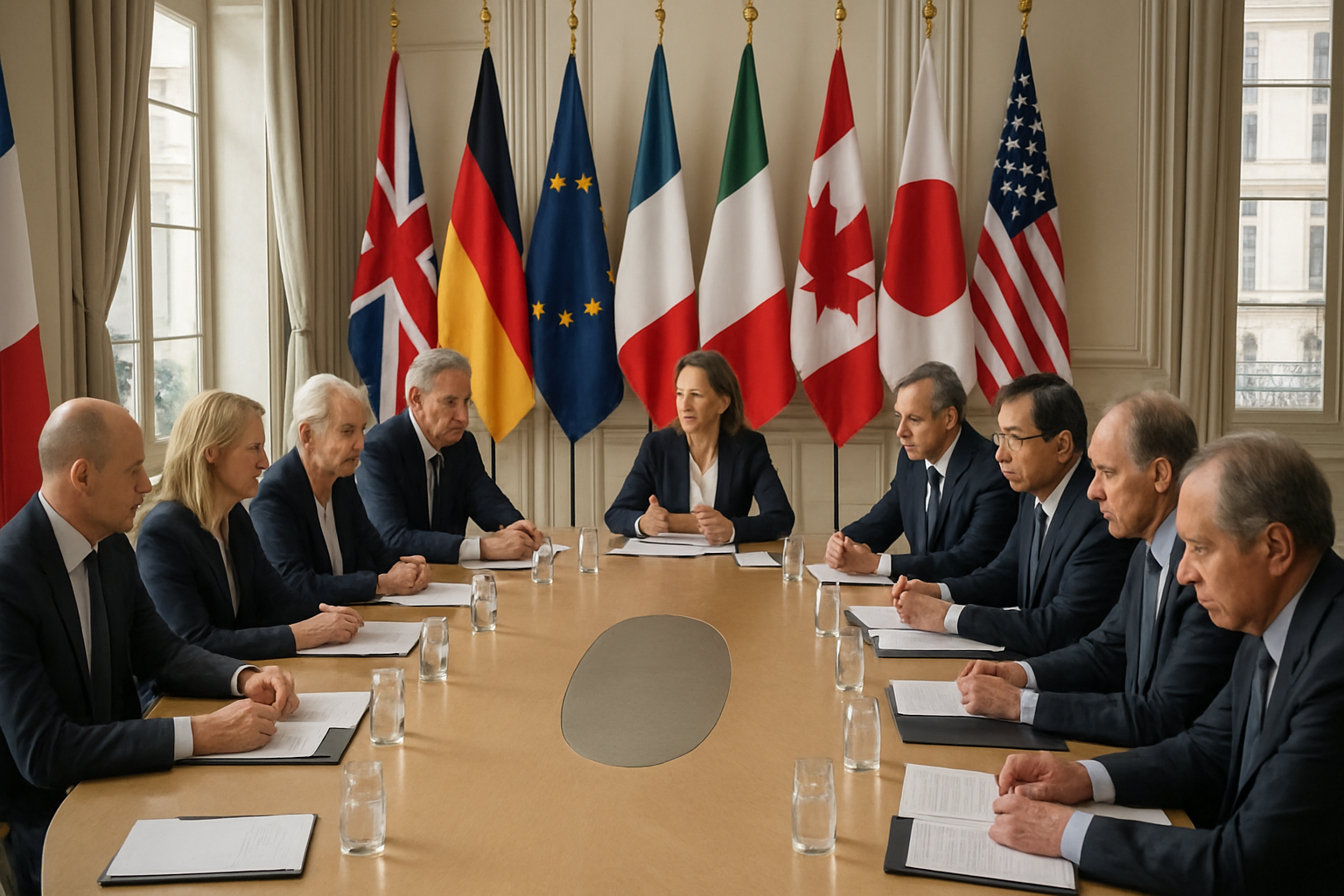
Foreign ministers from the G7 nations are convening in France for critical diplomatic discussions as the world faces multiple escalating crises, with particular focus on the deteriorating Middle East situation and ongoing Ukraine tensions that threaten global stability.
The emergency gathering comes at a pivotal moment in international relations, with allies seeking clarity on Washington's joint strategy with Israel against Iran, according to diplomatic sources. The meeting represents the most significant G7 diplomatic mobilization in recent years as ministers grapple with interconnected global challenges that have profound implications for international security and economic stability.
Middle East Crisis Dominates Agenda
The timing of the G7 meeting is particularly significant given the dramatic escalation of tensions in the Middle East over recent weeks. Historical context reveals that earlier diplomatic efforts, including breakthrough negotiations in Geneva that achieved "broad agreement on guiding principles" between the United States and Iran, ultimately collapsed due to fundamental scope disagreements.
The diplomatic breakdown has created a volatile situation where military solutions have increasingly replaced diplomatic engagement. Intelligence sources indicate that Iran's nuclear program has advanced considerably, with uranium enrichment reaching 60% purity - significantly beyond the 3.67% limit established in the original Joint Comprehensive Plan of Action (JCPOA) and approaching the 90% threshold considered weapons-grade.
"The situation represents the most dangerous international crisis since the end of the Cold War, with implications that extend far beyond the Middle East itself."
— Senior Diplomatic Source
The humanitarian toll of recent conflicts has been substantial, with civilian casualties mounting across the region. International evacuation operations have reached unprecedented scales, with some estimates suggesting over 500,000 citizens from various nations have required emergency repatriation from Middle Eastern countries - the largest such operation since the Arab Spring of 2011.
Global Economic Implications
The geopolitical tensions have created severe disruptions to global energy markets and supply chains. Oil prices have experienced historic volatility, with reports of prices surging past $100 per barrel for the first time since 2022, reaching peaks of $119.50 for Brent crude. The strategic Strait of Hormuz, through which approximately 40% of global seaborne oil transit passes, has become a critical chokepoint affecting worldwide energy security.
Aviation networks have suffered unprecedented disruptions, with industry analysts reporting over 18,000 flight cancellations worldwide - the most extensive aviation crisis since the COVID-19 pandemic. Major airports in the region, including Dubai International Airport (the world's busiest), have faced operational challenges that have stranded hundreds of thousands of passengers globally.
Financial markets have reflected the geopolitical uncertainty, with significant volatility observed across global exchanges. The Pakistan KSE-100 experienced its largest single-day decline in history at -8.97%, while South Korea's KOSPI index dropped 12%, triggering circuit breakers as the Korean won reached a 17-year low.
European Response and Coordination
European nations have activated unprecedented crisis management protocols. Cyprus implemented its ESTIA evacuation plan for the first time in the nation's history, coordinating the extraction of over 2,000 EU nationals from affected regions. This watershed moment in EU crisis management demonstrates enhanced European solidarity and coordination capabilities during international emergencies.
The European Union has faced complex decisions regarding naval deployments and diplomatic engagement. While some member states have been reluctant to commit military assets to potential conflict zones, others have argued for stronger collective security measures. The EU's foreign policy chief has suggested potential expansion of existing maritime operations, though this proposal faces resistance from several key member states.
Nuclear Governance Crisis
The current tensions unfold against the backdrop of a broader nuclear governance crisis. The New START treaty between the United States and Russia expired in February 2026, marking the first time in over 50 years that the two nations lack formal nuclear arms control constraints. This development, combined with China's nuclear expansion and the Middle East situation, has created what UN Secretary-General António Guterres describes as nuclear risks at their "highest levels in decades."
Intelligence assessments suggest that Iran possesses over 400 kilograms of enriched uranium, an amount that experts indicate could be sufficient for multiple weapons if further processed to weapons-grade levels. The collapse of diplomatic frameworks that previously managed these nuclear concerns has left the international community with limited options for peaceful resolution.
Ukraine Context and Allied Coordination
The G7 discussions also encompass the ongoing Ukraine situation, with allies needing to coordinate responses to what diplomatic sources describe as "erratic U.S. policy shifts" that have created uncertainty among partners. The interconnected nature of global crises means that developments in one theater directly impact alliance cohesion and strategic planning in others.
The challenge for G7 partners lies in maintaining unity while addressing multiple simultaneous crises that strain both diplomatic and military resources. Historical precedent suggests that such complex multi-theater challenges test alliance structures in unprecedented ways, requiring innovative approaches to burden-sharing and strategic coordination.
Humanitarian and Civilian Impact
The human cost of current tensions extends far beyond immediate conflict zones. International organizations report that civilian populations across multiple regions face displacement, economic hardship, and uncertainty. The Red Crescent has documented hundreds of civilian casualties in recent conflicts, while evacuation operations have separated families and disrupted lives across continents.
Educational institutions, healthcare systems, and essential services in affected regions have experienced severe disruptions. The broader economic impacts include fuel rationing affecting over 170 million people in some countries, while others face critical shortages of essential supplies due to supply chain disruptions.
Strategic Implications for International Order
The current crisis represents what experts describe as a "template-setting moment" for 21st-century international relations. The rapid transition from diplomatic engagement to military posturing demonstrates the fragility of crisis management mechanisms in an increasingly multipolar world order.
The outcome of current diplomatic efforts will likely establish precedents for how similar crises are addressed in the future. Success in containing current tensions could provide frameworks for managing nuclear proliferation concerns and regional conflicts through multilateral cooperation. Conversely, failure could accelerate trends toward military solutions and undermine the credibility of diplomatic institutions globally.
Long-term Global Implications
Energy security architecture requires fundamental transformation to reduce dependence on volatile geopolitical chokepoints. The current crisis has exposed dangerous over-reliance on strategic waterways and regional hubs, necessitating supply diversification and alternative route development that may take years or decades to implement fully.
International law enforcement mechanisms and territorial sovereignty principles are being tested simultaneously, with implications that extend well beyond current hotspots. The international community's response to current challenges will influence how future disputes over nuclear programs, territorial claims, and regional influence are addressed.
Looking Forward
As G7 foreign ministers deliberate in France, they face decisions that will reverberate through international relations for decades to come. The meeting represents the greatest test of multilateral cooperation and crisis management in the modern era, with stakes that include regional war prevention, global energy security, nuclear governance credibility, and the fundamental principles of the post-World War II international order.
The success or failure of current diplomatic efforts will determine whether the international community can develop effective frameworks for managing complex, interconnected crises or whether military solutions become the default approach to international disputes. The world watches as these critical discussions unfold, understanding that the outcomes may reshape the foundation of international stability for the 21st century.