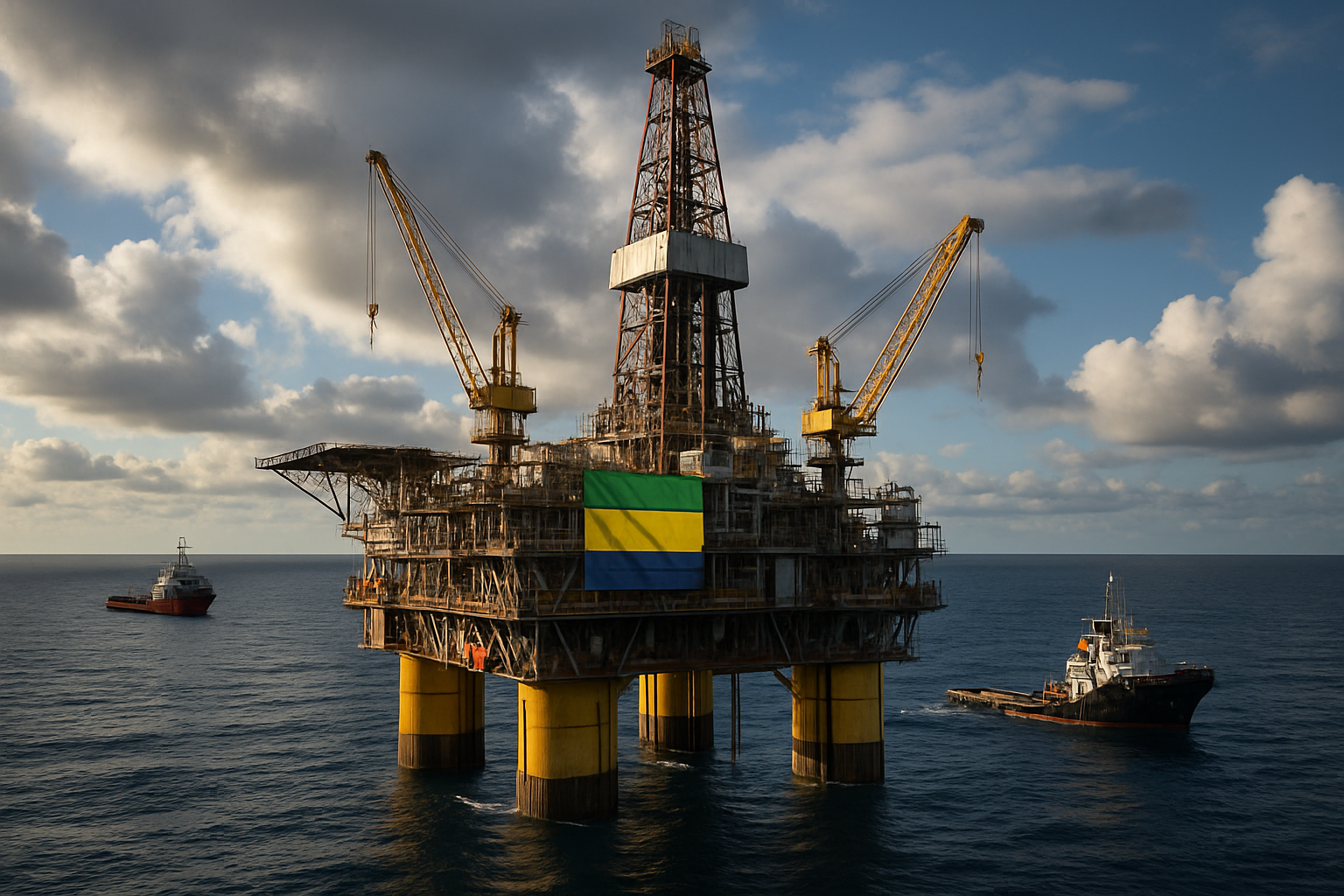
Gabon has achieved a pivotal moment in its economic transformation with Assala Energy's announcement of a major hydrocarbon discovery at the Magoga-1 offshore field, coinciding with the government's significant progress toward securing an International Monetary Fund agreement that signals renewed international confidence in the Central African nation's economic trajectory.
The dual developments represent a strategic convergence of energy sector success and fiscal reform progress under President Brice Oligui Nguema's administration, positioning Gabon for sustained economic growth while demonstrating the effectiveness of comprehensive structural reforms implemented since the military transition.
Assala Energy's Strategic Hydrocarbon Discovery
Assala Energy, the London-based petroleum exploration company, confirmed the discovery of significant hydrocarbon deposits during drilling operations at the Magoga-1 well in Gabon's offshore concession area. The company emphasized that comprehensive analyses are currently underway to determine the full commercial potential of the discovery, with detailed reservoir studies and production capacity assessments expected to be completed in the coming months.
The Magoga-1 discovery represents a critical milestone for Gabon's energy sector, particularly following the success of the Grand N'Gongui oil field discovery earlier this year, which marked the first major petroleum discovery under the Fifth Republic government. Industry experts project that successful development of the Magoga-1 field could contribute significantly to Gabon's daily production capacity, building on the country's existing infrastructure and technical expertise developed over decades of petroleum operations.
"This discovery demonstrates Gabon's continued potential as a strategic energy partner for international markets, particularly as global energy security concerns drive the need for reliable, diversified supply sources."
— Energy Industry Analyst
The timing of the discovery is particularly significant given current global energy market dynamics. With ongoing volatility in traditional supply routes and increasing international focus on energy security diversification, Gabon's proven reserves and stable operating environment position the country as an attractive destination for continued international energy investment.
IMF Partnership: Demonstrating Economic Transformation
Parallel to the energy sector success, Gabon's government has made substantial progress toward finalizing a comprehensive partnership agreement with the International Monetary Fund, marking a significant milestone in the country's post-transition economic stabilization efforts. The IMF engagement represents international recognition of the substantive economic reforms and fiscal management improvements implemented under the current administration.
Government sources indicate that the IMF framework focuses on sustainable economic diversification, improved fiscal transparency, and enhanced governance mechanisms designed to maximize the benefits of natural resource revenues while building resilient non-oil economic sectors. The agreement structure emphasizes long-term economic stability rather than short-term adjustment measures, reflecting confidence in Gabon's institutional capacity and reform commitment.
The approach aligns with broader African development trends emphasizing domestic resource mobilization combined with strategic international partnerships that support sustainable growth without compromising national sovereignty. Gabon's experience provides a template for resource-rich nations seeking to leverage natural endowments while building diversified economic foundations.
Regional Context and Strategic Positioning
These developments occur within a broader context of Central African economic integration and international energy cooperation. Gabon's strategic position within the African Continental Free Trade Area (AfCFTA) frameworks and regional energy cooperation initiatives enhances the significance of both the hydrocarbon discovery and IMF partnership progress.
The country's location along the Gulf of Guinea provides natural advantages for energy export infrastructure, with established shipping routes and port facilities supporting efficient market access. This geographic positioning, combined with stable institutions and experienced energy sector workforce, creates favorable conditions for sustained international investment and partnership development.
Recent infrastructure investments, including transportation modernization and digital connectivity improvements, further strengthen Gabon's competitive position as a reliable energy partner while supporting broader economic diversification objectives that reduce dependence on petroleum revenues alone.
Economic Diversification Strategy Implementation
The Oligui Nguema administration has emphasized comprehensive economic diversification strategies that leverage natural resource revenues to support broader development objectives. The Baniaka iron ore project, targeting 5 million tonnes of annual mineral production beginning in 2026, exemplifies this approach by creating new economic sectors while maintaining energy sector leadership.
Infrastructure development programs, including the Sogatra bus transportation modernization initiative and enhanced water partnership projects with international development organizations, demonstrate systematic approaches to improving essential services while creating employment opportunities beyond traditional extractive industries.
"Economic diversification requires sustained commitment to building multiple sectors simultaneously while maintaining excellence in established areas of comparative advantage."
— Gabon Government Economic Advisor
The integration of modern technology and environmental standards into new projects reflects international best practices and positions Gabon for sustainable long-term growth. Digital monitoring systems, renewable energy integration, and climate adaptation requirements are now standard components of major development initiatives rather than optional additions.
International Investment Climate and Market Response
Financial markets have responded positively to Gabon's dual achievements, with international energy companies expressing increased interest in exploration opportunities and development partnerships. The combination of new hydrocarbon discoveries and improved fiscal framework creates attractive conditions for sustained foreign direct investment.
The IMF partnership progress particularly enhances investor confidence by providing international validation of Gabon's economic management and reform implementation capabilities. This institutional credibility supports access to international capital markets and development finance on favorable terms, enabling larger-scale infrastructure and development projects.
Regional investment patterns show increasing interest in African energy projects that combine resource development with comprehensive governance frameworks and environmental protection standards. Gabon's approach serves as a model for balancing immediate economic benefits with long-term sustainability objectives.
Future Prospects and Development Trajectory
Looking ahead, the successful integration of hydrocarbon sector development with broader economic transformation strategies positions Gabon for sustained growth across multiple sectors. The IMF partnership framework provides structured support for continued reform implementation while the energy discoveries ensure revenue streams necessary for ambitious development programs.
Planned investments in education, healthcare, and digital infrastructure create foundations for knowledge-based economic sectors that complement traditional resource industries. The emphasis on regional integration and international cooperation opens opportunities for Gabon to serve as a hub for broader Central African development initiatives.
Environmental considerations remain central to development planning, with modern extraction and processing technologies designed to minimize ecological impact while maximizing economic benefits. This approach aligns with international climate commitments while ensuring responsible resource development that supports community well-being.
Strategic Implications for Regional Development
Gabon's success in combining energy sector achievement with comprehensive fiscal reform demonstrates the potential for African nations to leverage natural resources while building diversified, resilient economies. The model emphasizes sustained political commitment, international cooperation, and institutional capacity building as essential elements for successful transformation.
The country's experience provides valuable insights for other resource-rich nations seeking to optimize the development impact of natural endowments while avoiding the pitfalls of excessive dependence on single commodity revenues. The integration of modern governance standards with traditional economic activities creates templates applicable across diverse national circumstances.
As global energy markets continue evolving, Gabon's strategic positioning combines immediate commercial opportunities with long-term economic diversification objectives, creating sustainable foundations for prosperity that extend beyond current natural resource advantages while maximizing their development contribution through responsible, transparent management aligned with international best practices.