Gabon has announced an ambitious national campaign for the distribution of mosquito nets as part of an intensified response to malaria, marking a significant milestone in the country's public health strategy and reflecting a broader global movement toward prevention-first healthcare initiatives in 2026.
The comprehensive malaria prevention campaign represents a cornerstone of what health experts are calling the "Therapeutic Revolution of 2026," characterized by a fundamental shift from reactive treatment models to proactive, prevention-focused healthcare strategies that have demonstrated superior cost-effectiveness and improved population health outcomes worldwide.
Gabon's Strategic Response to Malaria Burden
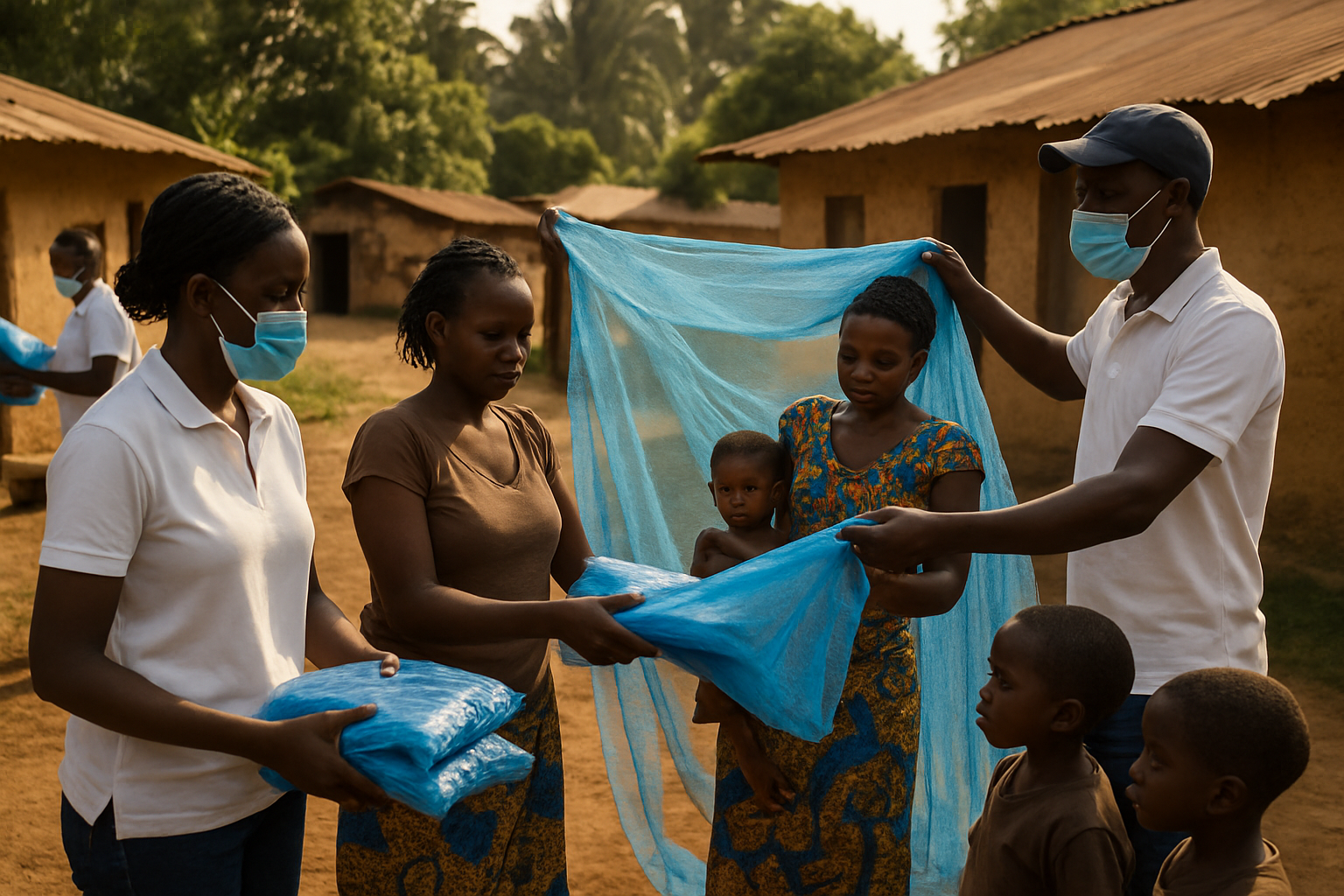
According to official announcements, the national mosquito net distribution campaign will target vulnerable populations across all regions of Gabon, with particular emphasis on protecting children and pregnant women who face the highest risk from malaria-related complications. The initiative builds upon previous successful malaria control efforts and incorporates lessons learned from neighboring countries that have achieved remarkable reductions in malaria transmission rates.
The timing of this campaign is particularly crucial as malaria remains a leading cause of morbidity and mortality in sub-Saharan Africa, with recent climate patterns potentially extending transmission seasons and creating new challenges for vector control efforts. Gabon's proactive approach aligns with regional trends toward comprehensive disease prevention strategies that address both immediate health threats and long-term environmental factors.
"This campaign represents our commitment to protecting every family in Gabon from the preventable tragedy of malaria deaths. Prevention is not only more humane but also more cost-effective than treating advanced cases."
— Gabon Ministry of Health Official
Global Context: The Prevention-First Healthcare Revolution
Gabon's malaria initiative is part of a broader transformation occurring across the global health landscape in 2026. Countries implementing comprehensive prevention programs have reported remarkable results, with some achieving up to 40% cost reductions through decreased crisis interventions while simultaneously achieving superior population health outcomes.
The Democratic Republic of Congo recently achieved a historic milestone by introducing new antimalarial vaccines into routine vaccination schedules, with Provincial Health Minister Dr. Daniel Kazadi launching programs in Kasaï-Oriental province targeting children aged 6-24 months. This represents a paradigm shift from reactive treatment to proactive prevention, demonstrating how African nations are transitioning from healthcare recipients to regional medical innovators.
Similarly, Uganda launched one of the largest coordinated malaria prevention efforts in recent history, distributing 4.5 million mosquito nets across 33 eastern region districts. Emmanuel Ainebyoona, Ministry of Health spokesperson, confirmed the comprehensive distribution targeting vulnerable populations while building local healthcare infrastructure, providing a model for developing nations leading global health innovation through strategic prevention programs.
International Cooperation and Knowledge Sharing
The success of these malaria prevention campaigns reflects an evolution in international cooperation models. Despite funding challenges facing traditional multilateral organizations, innovative bilateral partnerships and regional collaboration networks continue to drive medical innovation through peer-to-peer knowledge sharing.
Countries across Africa are contributing unique expertise to the global knowledge base, from advanced surveillance technologies to community engagement strategies that ensure cultural appropriateness and maximum participation. This distributed cooperation model allows for flexible, culturally responsive approaches while maintaining evidence-based medical standards.
The Caribbean Public Health Agency (CARPHA) has also launched prevention-focused initiatives, emphasizing early testing and lifestyle modifications that address the interconnected nature of human health and environmental sustainability. Their approach demonstrates how prevention-first strategies can be adapted across different geographical and epidemiological contexts.
Economic Benefits of Prevention-First Strategies
Economic analyses consistently demonstrate that prevention-focused strategies offer substantial benefits through enhanced community resilience, reduced emergency care demands, and improved population health metrics that justify initial investment costs. Countries implementing comprehensive prevention programs report measurable improvements extending beyond healthcare to educational achievement, workforce productivity, and social stability.
The multiplier effects of successful malaria prevention campaigns include reduced school absenteeism, improved maternal health outcomes, decreased healthcare facility burden, and enhanced economic productivity in affected communities. Medical tourism potential and reduced international referral dependency create additional economic opportunities for countries demonstrating effective prevention strategies.
Climate Change and Evolving Health Challenges
Public health campaigns in 2026 are occurring during unprecedented environmental challenges, with consecutive months of global temperatures exceeding critical thresholds. Climate change is fundamentally altering disease transmission patterns, creating optimal conditions for vector-borne diseases like malaria while extending traditional transmission seasons.
Prevention-first approaches are particularly valuable for managing these climate-related health challenges through proactive intervention versus reactive crisis management. Healthcare systems implementing comprehensive prevention strategies are better positioned to address both immediate medical needs and long-term environmental resilience requirements.
Technology and Human-Centered Care Integration
Successful public health initiatives in 2026 demonstrate sophisticated integration of advanced technology with human-centered care approaches. Gabon's campaign incorporates digital tracking systems for distribution monitoring while maintaining authentic community engagement through local health workers and traditional leadership structures.
This balanced approach avoids the "wellness paradox" where technological solutions create healthcare inequality rather than improving access and outcomes for diverse populations. The goal is ensuring that medical advances benefit all communities regardless of geographic or economic constraints while maintaining the clinical judgment and personal relationships fundamental to effective healthcare delivery.
Community Engagement and Cultural Sensitivity
The success of malaria prevention campaigns depends heavily on authentic community engagement and cultural appropriateness. Effective programs integrate local knowledge and traditional practices with modern public health science, recognizing that sustainable change requires community ownership and participation rather than external imposition of solutions.
Community health workers play a crucial role in these initiatives, serving as bridges between formal healthcare systems and local communities. Their involvement ensures that prevention messages are culturally appropriate and that distribution efforts reach the most vulnerable populations, including remote rural communities that might otherwise be overlooked.
Challenges and Success Factors
Despite the promising trends in prevention-first healthcare, significant challenges remain. Sustained political commitment beyond electoral cycles is essential for maintaining program effectiveness. Adequate resource allocation, comprehensive professional training, and continued international cooperation are critical success factors that determine whether initiatives achieve their intended impact.
The integration of traditional knowledge with modern medical insights requires careful balance, ensuring scientific rigor while respecting cultural values and community autonomy. Success also depends on addressing social determinants of health, including poverty, education access, and environmental factors that influence disease transmission patterns.
Looking Forward: A Model for Global Health Transformation
Gabon's national malaria prevention campaign represents a critical component of the global healthcare transformation occurring in 2026. The convergence of precision medicine advances, international cooperation models, and prevention-focused strategies provides a foundation for resilient healthcare systems capable of addressing 21st-century health challenges.
The success of these initiatives will determine whether the "Therapeutic Revolution of 2026" becomes a sustainable worldwide transformation or fragments under resource constraints. The stakes extend beyond immediate health outcomes to affect educational achievement, workforce productivity, social stability, and international competitiveness for decades ahead.
As countries continue to demonstrate that coordinated action can achieve transformative health improvements through technological innovation integrated with enduring healthcare principles—compassionate care, community engagement, and recognition of health as a universal right—the hope for accessible, effective, and equitable healthcare delivery worldwide becomes increasingly achievable.
The choice between prevention and crisis response will ultimately determine whether communities thrive or suffer in an increasingly complex health landscape shaped by climate change, global mobility, and unprecedented challenges to traditional healthcare delivery systems.