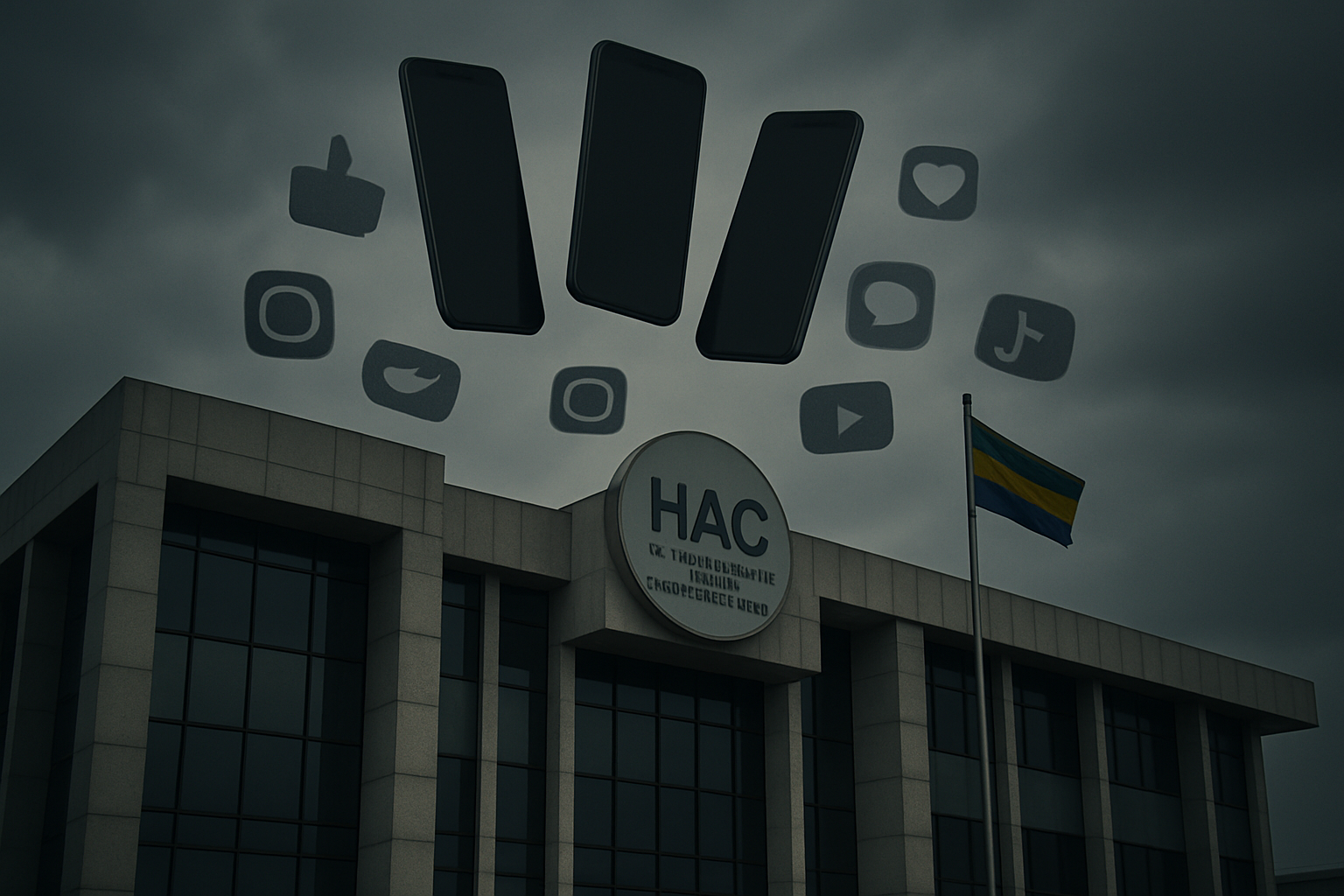
Gabon's telecommunications regulator has imposed an indefinite suspension on all social media platforms across the country, citing concerns over "inappropriate content" and threats to public order, in a move that has triggered fierce political opposition and international scrutiny over digital rights.
The Haute Autorité de la Communication (HAC) announced the sweeping ban on Tuesday, February 17, 2026, targeting platforms including Facebook, WhatsApp, TikTok, and other social media services. The decision affects millions of Gabonese citizens and has drawn sharp criticism from opposition parties who denounce it as an assault on democratic freedoms.
Regulatory Justification and Scope
According to HAC officials, the suspension follows "recurrent diffusion of inappropriate, defamatory, hateful, and injurious content" that allegedly threatens human dignity, social cohesion, and national security. The regulator specifically cited violations of Gabon's 2016 Communication Code, claiming that digital platforms and social networks are being "abusively used by certain activists to harm the honor and reputation of institutions, Gabonese citizens, and public personalities."
The ban encompasses all major social media platforms operating in the country, with telecommunications providers instructed to block access immediately. Unlike partial restrictions seen in other countries, Gabon's measure represents a complete shutdown of social media connectivity for an indefinite period.
Economic Impact on Digital Creators
The suspension has created immediate economic hardship for thousands of Gabonese content creators and digital entrepreneurs who depend on social media platforms for their livelihood. Online businesses, influencer marketing, graphic designers, and other digital economy participants face sudden revenue loss.
Many young Gabonese had transformed social media engagement into profitable activities through platforms like Facebook, WhatsApp, TikTok, and other networks. The suspension effectively eliminates these income streams overnight, representing a significant blow to youth employment and digital economic development.
"The creators of content who live thanks to social networks don't hesitate to react after this suspension," reported local media, highlighting the immediate economic consequences for digital entrepreneurs across the country.
Political Opposition Backlash
The social media ban has triggered immediate and intense political opposition from across Gabon's political spectrum. The opposition party Ensemble Pour le Gabon (EPG) has denounced the measure as "a serious attack on democracy," characterizing it as an unjustified restriction on fundamental rights.
The Front Démocratique Socialiste (FDS) condemned the suspension as "a serious and inadmissible retreat of public freedoms," arguing that the HAC's decision violates basic principles of democratic governance and free expression.
"This represents a serious and inadmissible retreat of public freedoms that undermines our democratic foundations."
— Front Démocratique Socialiste Statement
Opposition leaders argue that the broad suspension disproportionately impacts ordinary citizens' communication rights while potentially serving to limit political discourse and criticism of government policies.
Regional Digital Rights Context
Gabon's social media suspension occurs within a broader global context of increasing government restrictions on digital platforms. The move comes as multiple countries worldwide are implementing various forms of social media regulation, though most focus on age restrictions and content moderation rather than complete platform bans.
Recent memory includes similar actions by other nations seeking to control digital information flows. Russia has implemented sophisticated "degradation strategies" against platforms like WhatsApp and Telegram, while maintaining plausible deniability about complete blocking. However, Gabon's approach represents a more direct and comprehensive suspension affecting all social media access.
The timing is particularly significant as many democratic nations are grappling with balancing digital rights against concerns about misinformation, harmful content, and platform accountability. However, Gabon's broad suspension differs markedly from the targeted, child-protection focused measures being implemented in countries like Australia and several European nations.
Technical Implementation and Circumvention
The HAC has coordinated with telecommunications providers to implement the social media block at the infrastructure level. This technical approach makes circumvention more challenging for ordinary users, though some may attempt to access platforms through virtual private networks (VPNs) or other technical workarounds.
The indefinite nature of the suspension creates uncertainty for both users and international technology companies operating in Gabon. Unlike temporary restrictions implemented during specific events, the open-ended timeline suggests a more fundamental shift in Gabon's approach to digital communication governance.
International Implications
Gabon's decision raises broader questions about digital sovereignty and the balance between national communication regulation and international connectivity. The suspension affects not only domestic users but also international communication, business relationships, and cultural exchange that depend on social media platforms.
International observers are monitoring the situation for potential precedent-setting effects, particularly regarding how other African nations might respond to similar domestic pressures around social media regulation. The move also tests the response of major technology companies to complete platform suspensions in smaller markets.
Future Prospects and Resolution
The indefinite timeline for the social media suspension leaves resolution prospects uncertain. Political opposition parties are likely to continue pressuring for reversal of the decision, while civil society organizations may pursue legal challenges to the HAC's authority to implement such broad restrictions.
Economic pressure from affected digital businesses and international connectivity concerns may also influence government calculations about maintaining the suspension long-term. The broader impact on Gabon's international image and digital development goals could factor into eventual policy reconsideration.
As the situation develops, Gabon's social media suspension serves as a stark reminder of the fragility of digital rights and the ongoing global tension between governmental authority and digital freedom. The outcome will likely influence broader regional approaches to social media governance and digital rights protection across West Africa.