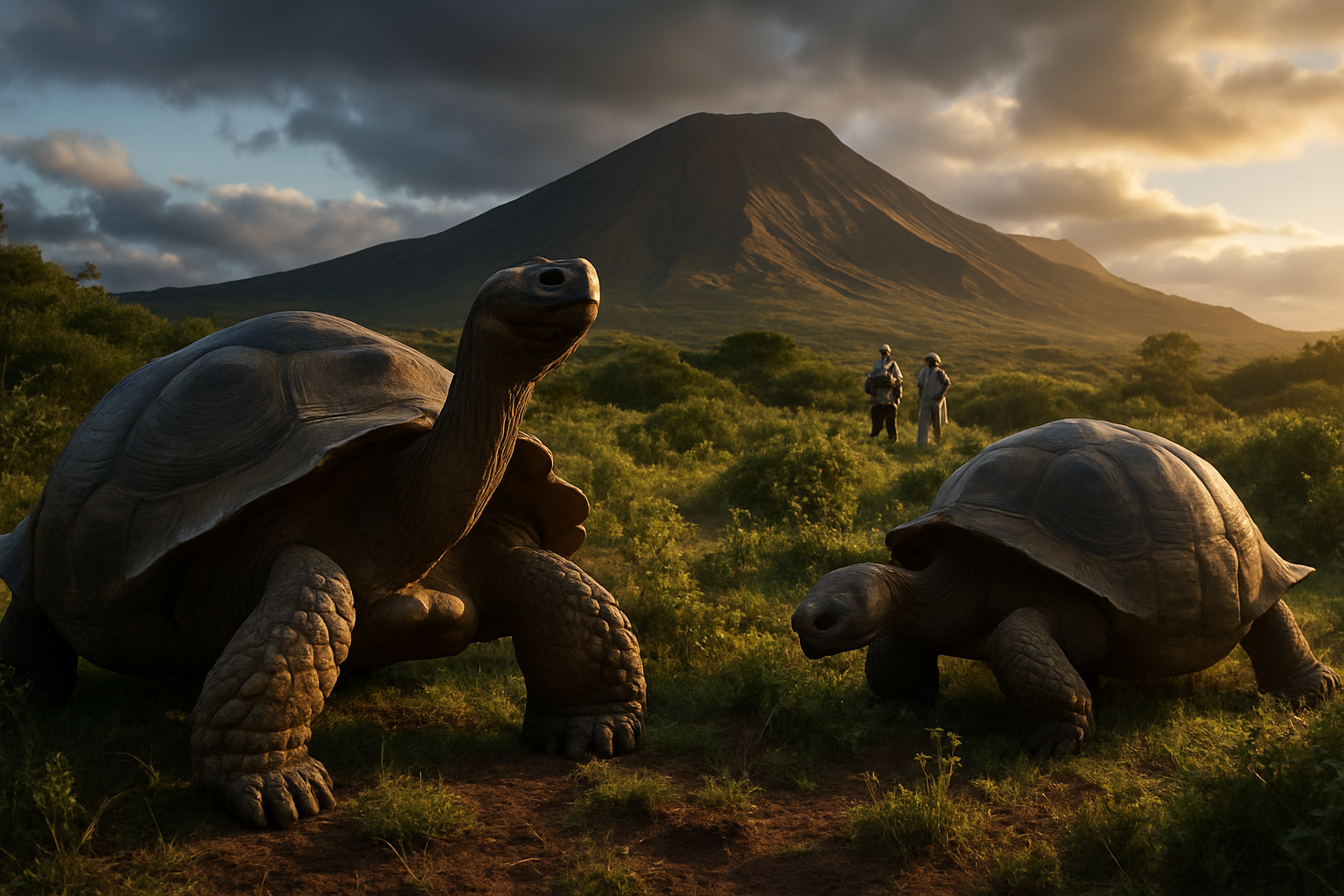
More than 150 giant tortoises have been successfully reintroduced to Floreana Island in Ecuador's famed Galápagos archipelago, marking a historic conservation achievement after the species vanished from the island more than a century ago due to relentless human exploitation and environmental destruction.
The monumental reintroduction effort, announced by Ecuador's environment ministry on Friday, represents one of the most significant wildlife restoration successes in modern conservation history. Floreana Island, once home to an estimated 20,000 giant tortoises, witnessed the complete extinction of these ancient creatures through a devastating combination of whaling activities, catastrophic fires, and systematic human exploitation that stripped the island of its native wildlife.
A Journey Through Volcanic Terrain
The remarkable operation required scientists and forestry officials to transport 158 tortoises in specially designed containers across seven kilometers of challenging volcanic terrain and inaccessible zones to reach the designated release site. This arduous journey through some of the Galápagos' most remote and rugged landscape demonstrated the extraordinary commitment required for species restoration in one of the world's most pristine ecosystems.
Environmental protection teams carefully monitored each step of the process, ensuring the tortoises' successful adaptation to their ancestral habitat. The specialized transport operation reflects years of meticulous planning and represents the culmination of decades of conservation science dedicated to reversing one of the archipelago's most tragic ecological losses.
"This reintroduction represents not just the return of a species, but the restoration of an entire ecosystem that has been missing its keystone species for over a century."
— Ecuador Ministry of Environment
Context of Global Conservation Renaissance
This breakthrough occurs during what conservation scientists are calling an unprecedented global conservation renaissance in February 2026. The Galápagos success builds on a remarkable surge of wildlife protection initiatives spanning continents, from Zimbabwe's world-first lion DNA forensic prosecution to Thailand's innovative elephant contraception programs addressing human-wildlife conflict.
The timing is particularly significant as January 2026 was confirmed as the hottest month in recorded history, marking the 18th consecutive month that global temperatures exceeded 1.5°C above pre-industrial levels. This sustained warming period, which overrides natural climate variability including La Niña cooling effects, creates additional urgency for conservation efforts worldwide.
Ecosystem Restoration Beyond Species Recovery
The return of giant tortoises to Floreana represents far more than a single species recovery. These magnificent creatures serve as ecosystem engineers, their grazing patterns and seed dispersal activities fundamentally shaping the island's vegetation communities. Their absence for over 150 years created cascading ecological effects that altered the entire island's biodiversity structure.
Modern conservation science recognizes that successful species reintroduction requires comprehensive ecosystem thinking. The Galápagos program integrates cutting-edge genetic analysis, satellite monitoring, and environmental DNA tracking with traditional ecological knowledge from local communities who have stewarded these islands for generations.
Innovation in Conservation Science
The Floreana reintroduction exemplifies the sophisticated technology-tradition synthesis driving contemporary conservation successes. Advanced genetic screening ensured optimal breeding populations, while satellite tracking enables real-time monitoring of tortoise movements and habitat utilization patterns. Environmental DNA sampling provides unprecedented accuracy in mapping species recovery across diverse island landscapes.
This technological sophistication supports rather than replaces community-based conservation approaches that have proven essential for long-term protection success. Local communities play crucial roles in monitoring, protecting, and maintaining the restored ecosystem, ensuring sustainable conservation outcomes that benefit both wildlife and human livelihoods.
Economic and Tourism Implications
The successful tortoise reintroduction positions Ecuador as a global leader in conservation innovation, with significant implications for the Galápagos' crucial eco-tourism sector. The islands attract hundreds of thousands of visitors annually, generating substantial revenue that supports conservation programs and local communities throughout the archipelago.
This achievement demonstrates how environmental protection functions as an economic development strategy rather than a regulatory burden. Countries implementing comprehensive conservation programs consistently show greater economic resilience, attract sustainable investment, and develop high-value eco-tourism sectors that provide long-term employment opportunities.
International Conservation Leadership
Ecuador's success provides templates for scaling wildlife reintroduction efforts globally. The comprehensive approach combining scientific rigor, community engagement, international cooperation, and adaptive management creates replicable models for addressing similar conservation challenges worldwide.
The Galápagos program builds on broader Latin American conservation leadership, including recent successes such as Chile's first wildlife crossing bridges on Chiloé Island and comprehensive biodiversity strategies across the region. These initiatives demonstrate how developing nations are emerging as conservation innovators rather than passive aid recipients.
Challenges and Future Prospects
Despite this remarkable success, significant challenges remain for maintaining healthy tortoise populations on Floreana. Climate change creates additional stressors through altered precipitation patterns and rising temperatures that affect vegetation communities essential for tortoise survival. Ongoing monitoring and adaptive management will prove crucial for long-term success.
The program requires sustained international cooperation, enhanced funding mechanisms, and continued technical capacity building to ensure permanent conservation success. However, the diversity of conservation approaches provides resilience against single-solution dependencies, creating multiple pathways for addressing environmental challenges through local innovation supported by global expertise.
A Model for Planetary Conservation
The return of giant tortoises to Floreana Island represents more than regional conservation success—it provides hope and practical templates for reversing biodiversity loss during Earth's sixth mass extinction event. As environmental challenges accelerate globally, the Galápagos achievement demonstrates that coordinated scientific effort, community engagement, and international cooperation can restore even severely degraded ecosystems.
This conservation triumph occurs at a critical juncture when the window for effective environmental action continues narrowing rapidly. The tools, knowledge, and cooperation frameworks exist for comprehensive wildlife protection, but success depends on rapid scaling through enhanced international collaboration and sustained political commitment recognizing conservation as essential infrastructure for human prosperity and planetary sustainability.
The sight of giant tortoises once again roaming Floreana's volcanic landscapes after 150 years of absence stands as a powerful symbol of human capacity for ecological restoration. In an era of accelerating environmental challenges, Ecuador's achievement provides tangible evidence that determined conservation action can bring species back from the brink and restore the natural heritage that sustains both wildlife and human communities across our planet.