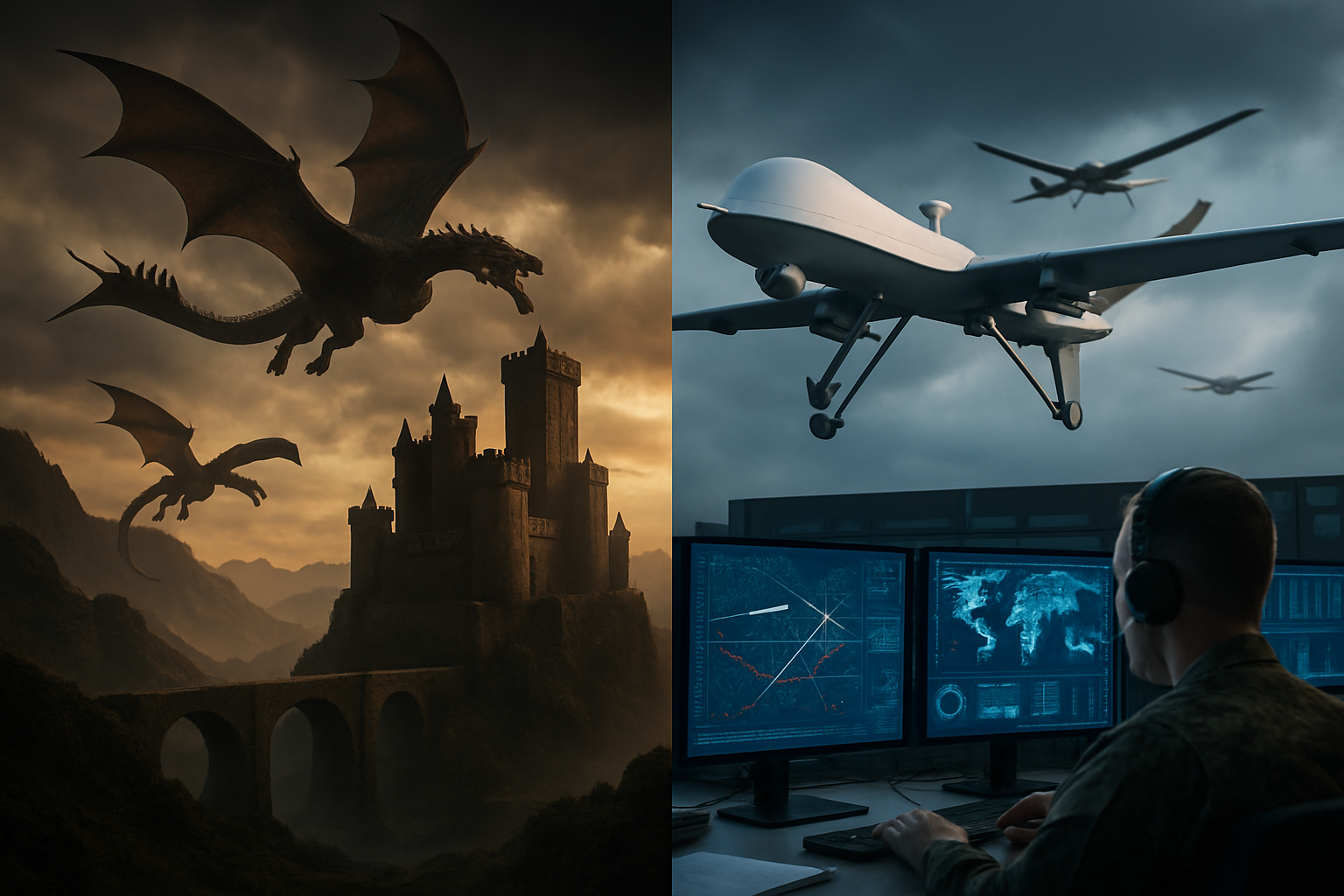
The entertainment and artificial intelligence sectors reached a pivotal moment in March 2026, as Warner Bros announced production of a full-length Game of Thrones prequel film while Anthropic CEO Dario Amodei firmly rejected Pentagon demands for unrestricted military access to Claude AI systems, crystallizing fundamental questions about technology's role in society.
The convergence of these developments underscores a critical inflection point where creative industries embrace AI-enhanced storytelling while military applications of the same technologies face unprecedented ethical scrutiny from the companies that created them.
Warner Bros Expands Westeros Universe
Warner Bros has initiated development of a comprehensive Game of Thrones prequel feature film, according to multiple industry sources including The Hollywood Reporter and Page Six Hollywood. The project represents the studio's most ambitious expansion of the beloved fantasy franchise since the original HBO series concluded in 2019.
Acclaimed screenwriter Bo Willmon, known for his work on "House of Cards" and "Andor," will craft the screenplay for what sources describe as a "large-scale feature film" designed to capture the epic scope that made the original series a global phenomenon. The project remains in early development, with director and cast yet to be determined.
The timing of this announcement coincides with renewed interest in fantasy content across streaming platforms and theatrical releases. Industry analysts suggest Warner Bros is positioning the prequel to capitalize on both nostalgic audiences and new viewers drawn to the rich world-building that characterized George R.R. Martin's creation.
"This represents Warner Bros' commitment to expanding the Game of Thrones universe through cinematic storytelling that honors the depth and complexity audiences expect from Westeros."
— Industry Source, The Hollywood Reporter
Anthropic's Ethical Stand Against Military AI
In a parallel development that highlights the growing tension between AI innovation and military applications, Anthropic CEO Dario Amodei has definitively rejected Pentagon demands for unrestricted military access to the company's Claude AI system. The confrontation reached a climax when Defense Secretary Pete Hegseth's Friday ultimatum expired without compliance from the AI safety-focused company.
The Pentagon's demands centered on removing safety safeguards that prevent Claude AI from being used for mass domestic surveillance and autonomous weapons targeting. Anthropic's refusal, despite risking over $200 million in government contracts, represents one of the most significant corporate ethical stands in the AI industry's brief but turbulent history.
Amodei's statement that his company "cannot in good conscience accede" to military deployment without safety restrictions has established Anthropic as the leading voice for AI ethics in an industry increasingly pressured to prioritize commercial and military partnerships over safety considerations.
The Military-Civilian AI Divide
The contrast between Anthropic's position and competitors like OpenAI, which has embraced Pentagon partnerships, reveals a fundamental schism in the AI industry. OpenAI's ChatGPT now serves over 800 million weekly users across military systems with 10% monthly growth, while the company has agreed to expand deployment to classified Defense Department networks.
This divide has created what industry observers call a "competitive disadvantage for safety-focused companies," as former Anthropic researchers who resigned warned that the "world is in peril" due to commercial pressures overwhelming safety protocols.
The unauthorized use of Claude AI in the Nicolás Maduro capture operation, despite terms of service explicitly prohibiting violence and surveillance applications, demonstrates how military agencies may circumvent civilian oversight once AI systems are deployed in defense environments.
"We cannot in good conscience provide unrestricted AI capabilities that could be turned against civilian populations or undermine democratic institutions."
— Dario Amodei, CEO, Anthropic
Gaming Industry's AI Integration
While military AI applications face ethical resistance, the entertainment industry continues embracing artificial intelligence for creative enhancement. The gaming sector has been particularly innovative, with developers using AI for procedural world generation, dynamic storytelling, and enhanced player experiences.
The Game of Thrones prequel project occurs within a broader context of entertainment companies leveraging AI for content creation, from script analysis to visual effects enhancement. Unlike military applications, entertainment AI faces fewer ethical constraints, allowing for more experimental and creative implementations.
This divergence illustrates how the same underlying AI technologies can serve vastly different purposes – from creating immersive fantasy worlds to potentially enabling mass surveillance or autonomous weapons systems.
Global AI Governance at Inflection Point
The Anthropic-Pentagon confrontation unfolds amid unprecedented global efforts to establish AI governance frameworks. The recent Delhi Declaration, signed by 88 countries and representing the largest AI diplomatic agreement in history, calls for "safe, reliable, and robust" AI development through voluntary initiatives.
Simultaneously, regulatory intensification continues across multiple jurisdictions. Spain has implemented the world's first criminal executive liability framework for tech platforms, while France has conducted cybercrime raids on AI companies. The UN has established an Independent Scientific Panel with 40 experts to provide the first fully independent global AI assessment.
These developments occur during what experts characterize as the most critical AI governance moment since the technology boom began, as artificial intelligence transitions from experimental applications to essential infrastructure across military, civilian, and commercial sectors.
Infrastructure Challenges Shape Industry Dynamics
Both entertainment and military AI applications face significant infrastructure constraints. The global memory semiconductor crisis has driven prices up sixfold, affecting major manufacturers including Samsung, SK Hynix, and Micron. These shortages are expected to persist until 2027 when new fabrication facilities come online.
Despite these constraints, massive investments continue. Alphabet has committed $185 billion to AI infrastructure in 2026 – the largest single-year corporate technology investment in history – while Amazon's AI development plans exceed $1 trillion. The World Bank projects that AI water demand for data center cooling will reach 4.2-6.6 billion cubic meters by 2027, equivalent to four to six times Denmark's annual water consumption.
These infrastructure limitations create potential leverage for entities willing to compromise safety standards for computational access, adding urgency to the ethical debates surrounding military AI deployment.
Success Models for Human-Centered AI
Amid these tensions, several successful AI integration models demonstrate the technology's potential when implemented with human welfare prioritized. Canadian universities have successfully deployed AI teaching assistants that maintain critical thinking standards, while Malaysia operates the world's first AI-integrated Islamic school, combining artificial intelligence with traditional learning approaches.
Singapore's WonderBot 2.0 has achieved notable success in heritage education, demonstrating how AI can enhance rather than replace fundamental human educational relationships. These examples provide templates for responsible AI development that could inform both entertainment and military applications.
Future Implications
The parallel developments in entertainment and military AI represent a civilizational choice point. Warner Bros' Game of Thrones prequel symbolizes AI's potential to enhance human creativity and storytelling, while the Anthropic-Pentagon confrontation highlights the risks of AI deployment without adequate ethical oversight.
The resolution of current military AI tensions will establish precedents affecting decades of technology governance. Success requires unprecedented coordination between governments, technology companies, educational institutions, and civil society to ensure AI serves human flourishing while preserving democratic oversight of military technology applications.
As March 2026 unfolds, the decisions made by entertainment studios, AI companies, and military establishments will determine whether artificial intelligence fulfills its transformative promise or creates systemic risks requiring dramatic corrections. The stakes extend beyond any single industry, encompassing fundamental questions about the human-AI relationship trajectory for the remainder of the 21st century.