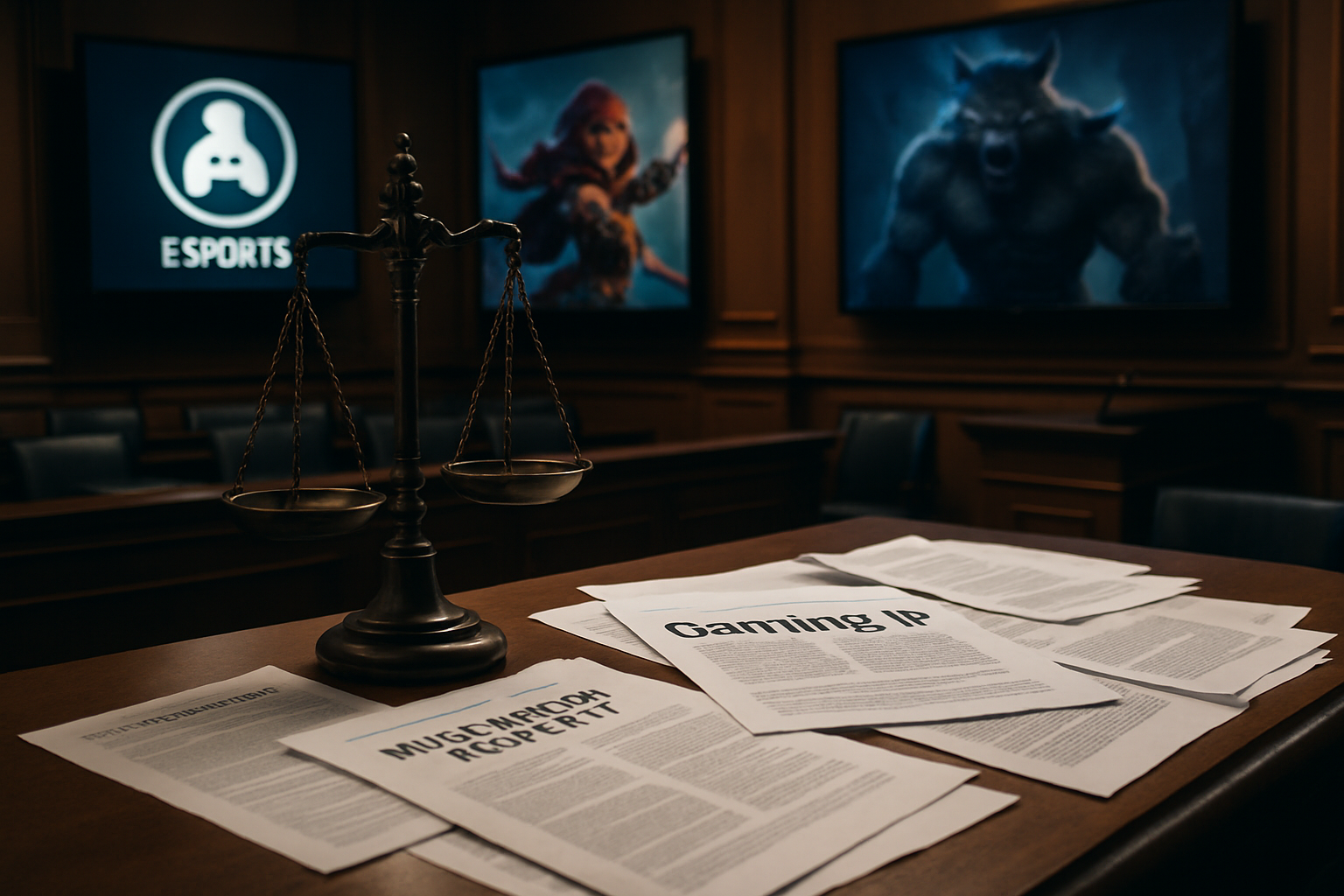
The gaming industry finds itself at the center of unprecedented legal and political controversies as major entertainment companies clash with government entities over intellectual property rights, unauthorized content usage, and trade disputes that could reshape the relationship between digital entertainment and public institutions.
In a dramatic convergence of legal challenges, Nintendo of America has filed a federal lawsuit demanding tariff refunds from the U.S. government, while Pokemon International faces off against the White House over alleged unauthorized use of beloved characters, and military propaganda videos have surfaced featuring Call of Duty gameplay footage.
Nintendo Demands Tariff Justice from Trump Administration
Nintendo of America escalated its dispute with the U.S. government on Friday, filing a comprehensive lawsuit in the U.S. Court of International Trade seeking reimbursement of tariffs imposed during Donald Trump's previous presidential term. The gaming giant is demanding the return of millions in duties paid on imported gaming hardware and accessories.
The lawsuit comes after the Supreme Court struck down Trump's global tariff program in February 2026, ruling that the International Emergency Economic Powers Act (IEEPA) does not authorize presidential tariff authority without congressional approval. Nintendo's legal team argues that the company paid substantial sums under what the Court has now deemed an unconstitutional tariff regime.
"The Supreme Court's ruling validates our position that these tariffs were improperly imposed," said a Nintendo spokesperson familiar with the litigation. "We seek only the return of funds collected under an authority the highest court has determined the president did not possess."
The case represents a broader challenge facing the gaming industry, which has invested billions in hardware production and distribution networks based on established trade frameworks. Nintendo's Switch console became the best-selling system in company history with 155.37 million units sold, but faced significant cost pressures from fluctuating tariff policies.
Pokemon Battles the White House Over Character Rights
In an equally dramatic development, Pokemon International has formally condemned the White House's unauthorized use of Pokemon characters in official communications, marking an unprecedented clash between the entertainment industry and the highest levels of government.
Norwegian media reports indicate that Pokemon characters appeared in government materials without proper licensing agreements, prompting the company to issue a stern rebuke against what they characterized as "unauthorized usage of our intellectual property." The dispute highlights growing tensions between content creators and government entities over digital rights and fair use policies.
The Pokemon franchise, celebrating its 30th anniversary in 2026, represents one of the world's most valuable entertainment properties with over $100 billion in total revenue since its inception. The unauthorized government usage threatens to set dangerous precedents for intellectual property protection in the digital age.
"Companies invest decades building these beloved characters and franchises," explained intellectual property attorney Sarah Mitchell, who specializes in entertainment law. "When government entities use copyrighted material without permission, it undermines the entire creative economy."
Call of Duty Footage Surfaces in Military Propaganda
Adding to the industry's legal woes, footage from Call of Duty: Modern Warfare 3 has surfaced in what Portuguese media describes as official U.S. military communications regarding Iran operations. The gaming footage was reportedly edited into compilation videos of actual military strikes, blurring the lines between virtual warfare and real-world military action.
The incident raises serious questions about government media practices and the unauthorized appropriation of gaming content for political messaging. Activision, the publisher behind the Call of Duty franchise, has not yet issued a public response to the reported usage of their copyrighted material.
This controversy emerges amid the broader "2026 Gaming Technology Renaissance," a period marked by unprecedented platform consolidation and the evolution of gaming from specialized entertainment to comprehensive digital ecosystems serving hundreds of millions of users worldwide.
Industry Under Unprecedented Pressure
These legal disputes occur against the backdrop of significant challenges facing the gaming industry. The global semiconductor shortage has created sixfold price increases affecting major manufacturers including Samsung, SK Hynix, and Micron, while platforms have evolved from simple gaming services to comprehensive entertainment destinations competing directly with traditional streaming services.
Major gaming platforms now operate thousands of titles with sophisticated AI-powered recommendation systems, mobile-first optimization, and multi-jurisdictional compliance frameworks. Companies like Frumzi manage over 6,500 games across categories, while BDM Bet Casino operates more than 6,000 titles from 97 providers, representing the industry's transformation into complex entertainment ecosystems.
The economic implications extend far beyond individual companies. The gaming industry has demonstrated remarkable resilience during economic uncertainty, serving as virtual social infrastructure and creating employment across technology development, content creation, customer service, and regulatory compliance sectors.
Constitutional and Legal Implications
The Nintendo tariff lawsuit could establish crucial precedents for corporate recovery of fees paid under subsequently invalidated government policies. Legal experts suggest the case may influence how courts handle restitution claims when federal agencies collect funds under later-determined unconstitutional authority.
"This case goes beyond gaming," explained constitutional law professor Dr. Robert Chen. "It addresses fundamental questions about government accountability when policies are struck down by courts. If agencies can retain funds collected under invalid authority, it creates moral hazard in policy implementation."
The Pokemon controversy, meanwhile, highlights the evolution of intellectual property law in the digital age. As government communications increasingly rely on visual content and social media platforms, traditional fair use doctrines face new challenges in determining appropriate usage boundaries.
Global Industry Transformation Context
These legal challenges occur during what industry analysts term the "2026 Gaming Technology Renaissance," characterized by platform consolidation, mobile-first optimization, and AI-powered user experiences. The industry has successfully adapted to changing consumer preferences while navigating complex regulatory frameworks across multiple jurisdictions.
Gaming platforms now support 11+ languages including English, German, Italian, French, Arabic, and Norwegian, with welcome bonuses exceeding $4,000 indicating substantial customer acquisition investments. The transformation extends beyond entertainment to encompass social infrastructure, community spaces, and economic opportunity creation.
Success factors include technology integration with traditional gaming knowledge, community ownership, and authentic cultural elements resonating across generations. The Pokemon franchise exemplifies this approach, demonstrating how technological advancement can enhance rather than replace traditional gaming experiences.
Looking Forward: Industry Resilience and Adaptation
Despite facing unprecedented legal and regulatory challenges, the gaming industry continues demonstrating remarkable adaptability. Companies are successfully navigating infrastructure constraints, rising costs, and market consolidation while maintaining innovation leadership and cultural authenticity.
The current legal disputes may ultimately strengthen industry positions by establishing clearer boundaries for government interaction with private intellectual property. As courts address these novel questions, the resolutions could provide greater legal certainty for future business operations and creative development.
Industry leaders emphasize that successful navigation of these challenges requires balancing technological sophistication with genuine user value creation, maintaining human-centered approaches that treat technology as amplification tools rather than creative replacements.
The gaming industry's response to these legal challenges will likely serve as a template for other creative sectors facing similar technological transformation pressures. The outcome of these disputes could influence entertainment industry relationships with government entities for decades to come, establishing crucial precedents for intellectual property protection in the digital age.