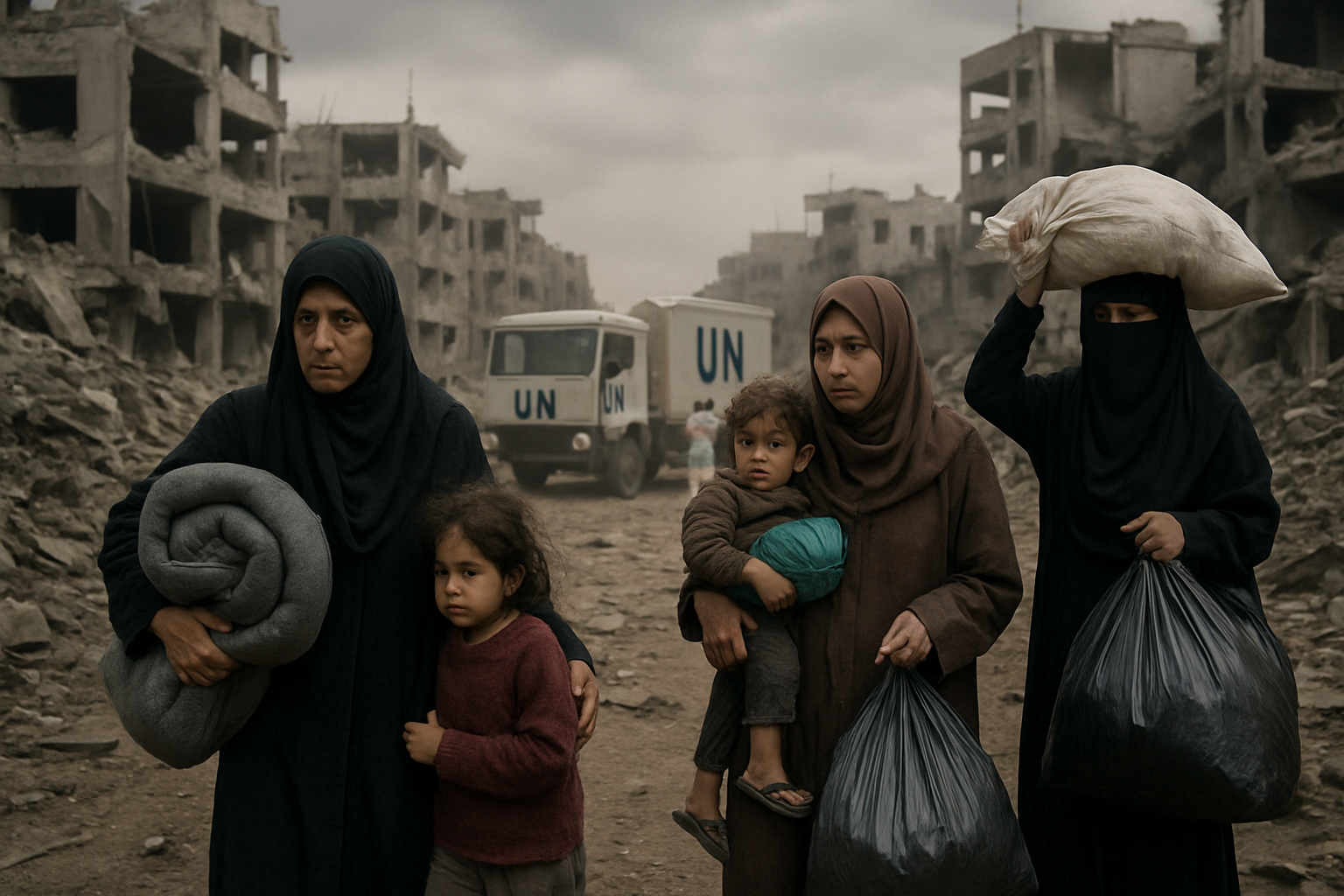
The death toll from the Gaza conflict has reached 72,549 Palestinians killed and 172,274 injured since October 7, 2023, according to the latest statistics from Gaza's Health Ministry, while a devastating new UN Women report reveals that over 38,000 women and girls have been killed, representing an average of 47 female casualties per day.
The latest figures, released on April 18, 2026, show that Gaza hospitals received 8 additional bodies in the past 48 hours, including 7 newly confirmed deaths and one recovered body, along with 24 new injuries from ongoing Israeli military operations. The escalating casualty count comes as systematic violations of the October 2025 ceasefire continue to mount, with over 1,600 documented breaches resulting in more than 680 Palestinian deaths during what was supposed to be a period of peace.
Devastating Female Casualties Documented
UN Women's comprehensive analysis, published on April 17, 2026, revealed the staggering toll on Palestinian women and children. Sofia Kaltorpb, UN Women's acting spokesperson, described the data as "most horrifying ever recorded" in modern conflict documentation. The report shows that of the over 38,000 women and girls killed between October 2023 and December 2025, more than 22,000 were women and 16,000 were girls under 18.
"This represents the systematic targeting of civilian populations, with women and girls bearing an disproportionate burden of this conflict,"
— Sofia Kaltorpb, UN Women Acting Spokesperson
The UN analysis aligns with previous independent studies, including a February 2026 Lancet Global Health peer-reviewed study that found actual Gaza casualties exceed 75,000, representing a 35% undercount in official figures and affecting 3-4% of Gaza's total population.
Systematic Ceasefire Violations Continue
Despite the October 10, 2025 ceasefire agreement, systematic violations have reached unprecedented levels. Over 1,600 documented incidents have resulted in 680+ Palestinian deaths during the supposed peace period. Dr. Mohamed Abu Selmiya, director of Al-Shifa Hospital, has repeatedly questioned "Where is the ceasefire?" as attacks on civilian areas continue.
The pattern of violations includes targeting of displacement camps, attacks on medical facilities, and restrictions on humanitarian access. Gaza's Civil Defense has been completely shut down due to fuel shortages, severely hampering emergency response capabilities when they are most needed.
Medical and Humanitarian System Collapse
Gaza's healthcare system faces total collapse, with the Rafah crossing - the territory's only non-Israeli controlled access point - restricted to just 27 people per day compared to the agreed quota of 200. Hamas officials condemn this as "systematic harassment" by Israeli security forces.
Zaher al-Wahidi, Gaza's Health Ministry Director, reports that 6-10 critically ill patients are dying daily while awaiting medical evacuation. Of the 20,000+ Palestinians on medical evacuation waiting lists, 1,400 have died since the May 2024 Israeli occupation of the Rafah crossing.
The crisis deepened further when the World Health Organization (WHO) suspended critical medical evacuations after an aid worker contracted to the organization was killed, representing the first time WHO has suspended operations due to security concerns.
Environmental and Public Health Emergency
Amjad al-Shawa, President of the Palestinian NGO Network, has warned of an impending environmental and public health emergency. Displacement camps are experiencing severe overcrowding with minimal sanitation, leading to waste accumulation, untreated wastewater, and rat and insect infestations that threaten disease outbreaks affecting hundreds of thousands of people.
The Gaza Municipal Union has issued emergency warnings about the approaching "comprehensive collapse" of vital municipal services due to acute shortages of diesel fuel and industrial oils. Water wells, sewage treatment plants, and electricity generators are at breaking point, threatening complete breakdown of basic services for 2.3 million residents.
International Response and Legal Implications
The crisis has prompted unprecedented international condemnation. Eighty-five UN member states have issued a joint statement - the most comprehensive since 1967 - condemning the systematic violations of international law. Eight Arab nations, including countries with normalized relations with Israel such as the UAE and Saudi Arabia, have called the situation a violation of international law.
Over 400 European Union diplomats have demanded increased pressure on Israel, while a European petition against EU-Israel partnerships has exceeded 400,000 signatures. The Euro-Mediterranean Human Rights Observatory has accused Israel of exploiting international attention focused on other regional crises to intensify what it calls "Gaza civilian starvation policies."
Impact on Peace Initiatives
The escalating crisis threatens major international peace initiatives, including the Trump administration's $17 billion Gaza reconstruction commitment from the February 2026 "Board of Peace" summit involving 27 nations. However, implementation faces fundamental obstacles from ongoing violations and Hamas's categorical rejection of disarmament, with an estimated 20,000 fighters remaining in the organization.
The systematic nature of ceasefire violations has been described by international experts as "systematic implementation failures" rather than isolated incidents, raising serious questions about the viability of negotiated solutions without addressing underlying political and security issues.
Broader Regional Context
The Gaza crisis occurs within a broader Middle East context of instability. The November 2024 Israel-Hezbollah ceasefire completely collapsed in March 2026 after Hezbollah chose "Iranian solidarity over Lebanese sovereignty" following the death of Iran's Supreme Leader Ali Khamenei on March 1. This has resulted in over 1.2 million Lebanese displaced and systematic targeting of medical personnel.
Palestinian officials argue that Israel is systematically exploiting the international community's focus on other regional conflicts to advance territorial and political objectives at the expense of civilian populations.
Legal and Historical Implications
Multiple international law experts cite systematic violations of UN Security Council resolutions and Geneva Conventions. The systematic targeting of civilian areas, medical facilities, and humanitarian infrastructure raises serious questions about international humanitarian law enforcement in the 21st century.
This crisis represents a template-setting moment for international humanitarian law enforcement and civilian protection frameworks. As UN Secretary-General António Guterres stated, it constitutes "the greatest test of multilateral cooperation in the modern era."
"The international community faces a crucial test of its commitment to civilian protection and humanitarian principles that requires immediate coordinated action beyond diplomatic statements,"
— António Guterres, UN Secretary-General
Critical Intervention Needed
For Gaza's 2.3 million residents, the convergence of military violence with humanitarian system collapse threatens a historic catastrophe. The combination of healthcare system breakdown, environmental crisis, and restricted access creates conditions that could lead to unprecedented civilian suffering.
International observers emphasize that this crisis will influence global precedents for territorial sovereignty disputes and humanitarian law enforcement credibility for decades to come. The success or failure of international responses will set precedents for occupied territories worldwide and shape approaches to 21st-century conflict resolution.
As the situation continues to deteriorate, the international community faces mounting pressure to move beyond diplomatic statements to concrete action to protect Palestinian civilians and uphold international law. The stakes extend far beyond Gaza itself, potentially reshaping how the world responds to systematic violations of international humanitarian law in an era of increasing global instability.