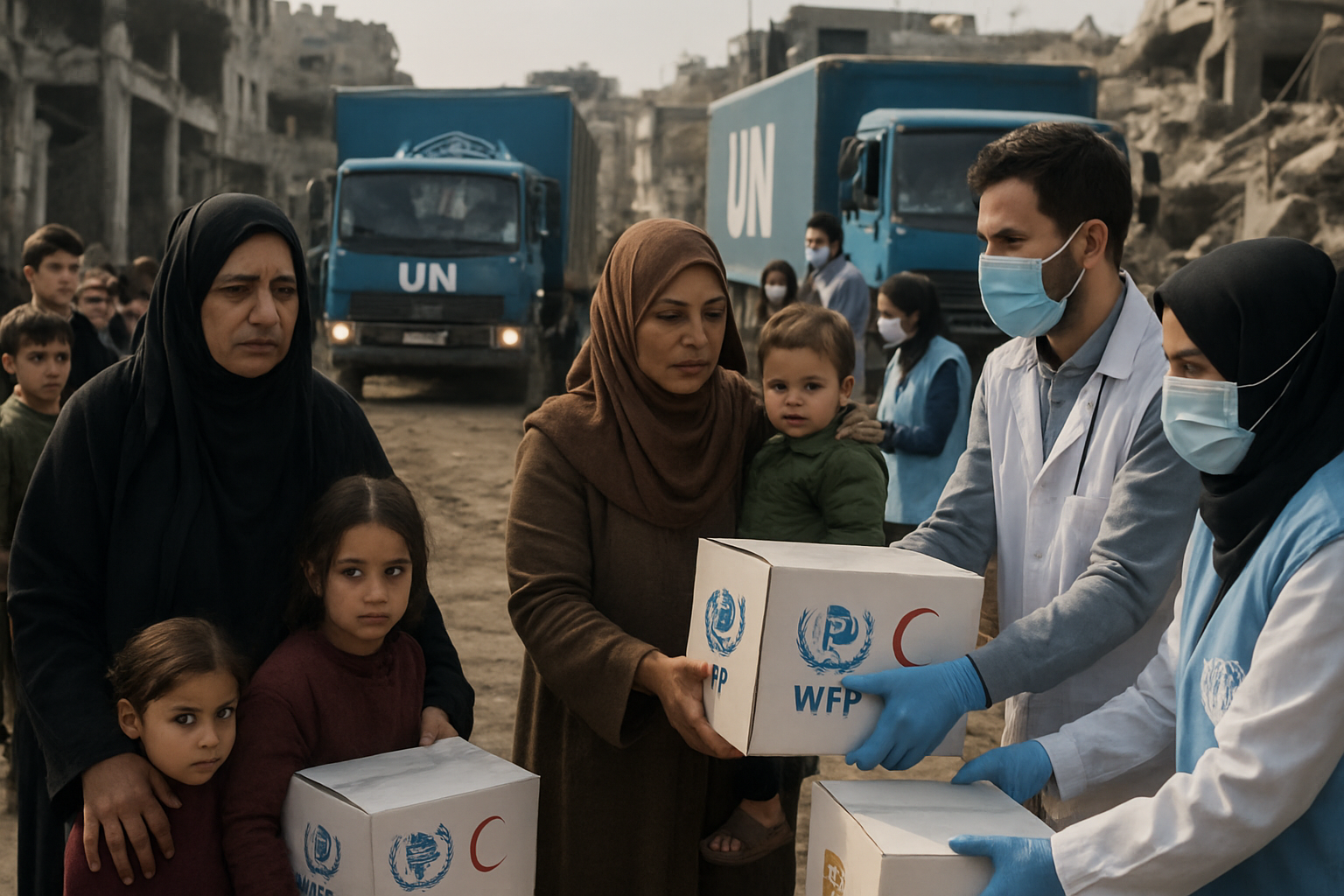
Palestinian Authority President Mahmoud Abbas accused Israel of creating "obstacles" blocking the second phase of the Gaza ceasefire agreement, as humanitarian organizations suspend critical medical operations and aid agencies collect thousands of tons of solid waste amid deteriorating living conditions in the devastated territory.
The accusations come as the ceasefire implementation faces mounting challenges, with Palestinian sources documenting over 1,620 systematic violations since the October 2025 truce began, resulting in more than 573 Palestinian deaths and 1,553 injuries according to Gaza Government Media Office records reviewed by international observers.
Medical Operations Suspended Amid Security Concerns
Doctors Without Borders (Médecins Sans Frontières) announced the suspension of non-critical medical activities at the Nasser Medical Complex in Khan Younis, citing concerns about "facility management, neutrality maintenance, and security violations." The organization halted operations on January 20, 2026, following reports from patients and staff about the presence of armed and masked individuals within the hospital complex.
The suspension affects one of Gaza's largest medical facilities at a time when the healthcare system remains severely compromised. Portuguese media reports indicate the organization expressed particular concerns about armed men circulating within the hospital premises, undermining the medical neutrality essential for humanitarian operations.
Gaza's Civil Defense operations have been completely shut down due to fuel shortages, hampering emergency response capabilities across the territory. The suspension comes as 20,000 Palestinians still await medical evacuation, with severely limited crossing operations at the reopened Rafah border.
Massive Cleanup Efforts Reveal Extent of Devastation
The United Nations Relief and Works Agency for Palestine Refugees (UNRWA) announced it has collected 5,000 tons of solid waste across Gaza Strip, highlighting the massive environmental and sanitation crisis facing the territory's 2.3 million residents.
Local radio stations are returning to the airwaves after nearly two years of silence, with broadcasters saying they aim to provide Palestinians with vital emergency information. However, they continue to face major challenges including intermittent Israeli attacks and severe shortages of electricity and broadcasting equipment, according to France 24 reporting.
The waste collection effort represents just one aspect of the humanitarian challenge, as Gaza's infrastructure remains severely damaged after months of conflict. The environmental crisis compounds existing challenges in healthcare delivery, water access, and basic sanitation services.
Egyptian-Israeli Diplomatic Coordination Continues
Egypt renewed its emphasis on the complete implementation of the second phase of the Gaza ceasefire agreement, including deployment of an international stability force to monitor compliance and oversee Israeli withdrawal, according to Palestinian media sources.
This coordination occurred during meetings between Egyptian Foreign Minister Badr Abdel Ati and Palestinian Prime Minister, demonstrating continued regional diplomatic efforts to advance the peace process despite implementation challenges.
Egypt has maintained 150 hospitals on alert with 300 ambulances deployed to handle potential medical evacuations through the Rafah crossing, though operations remain severely restricted with only 27 Palestinians crossing on the reopening day versus the 200 daily quota originally planned.
Phase 2 Implementation Obstacles
Abbas's accusations of Israeli obstruction focus on what Palestinian officials describe as continuing violations of the US-backed ceasefire agreement. The Palestinian Authority leader specifically criticized Jerusalem for "continuing to violate" the truce with Hamas, which has refused to disarm as stipulated in the ceasefire framework.
The dispute highlights fundamental disagreements over the implementation sequence of ceasefire provisions. While the US-backed agreement calls for Hamas disarmament as part of Phase 2, Palestinian negotiators argue that Israeli military presence and ongoing operations make such steps impossible to implement.
International observers note that Hamas maintains an estimated 20,000 fighters with substantial weapons stockpiles, despite the ceasefire period. The organization's leadership has categorically rejected disarmament demands, arguing that armed resistance remains justified "while there is occupation."
Broader Regional Diplomatic Pressure
Eight Arab nations - Saudi Arabia, Jordan, Egypt, UAE, Qatar, Indonesia, Pakistan, and Turkey - have maintained their condemnation of ceasefire violations, with the Organization of Islamic Cooperation describing ongoing incidents as "continuing massacres" and "dangerous escalation."
Over 400 European Union diplomats and officials have called for increased pressure on Israeli authorities, while a European Left Coalition petition against EU-Israel partnerships has exceeded 400,000 signatures, demonstrating growing international concern about ceasefire implementation failures.
The violations threaten broader regional peace initiatives, including the Trump administration's planned Board of Peace meeting scheduled for February 19, 2026, which aims to mobilize over $1 billion in Gaza reconstruction commitments from 27 participating nations.
Humanitarian Crisis Metrics
The current crisis occurs against a backdrop of devastating casualty figures, with Gaza's total death toll reaching 71,800 according to Palestinian health authorities. The humanitarian situation has been further complicated by the complete shutdown of Gaza Civil Defense operations due to fuel shortages, eliminating critical emergency response capabilities.
Infrastructure challenges extend beyond immediate security concerns. The territory faces systematic environmental degradation, with UNRWA's 5,000-ton waste collection representing only a fraction of the cleanup required. Power outages continue to threaten medicine storage and critical medical equipment, while transportation difficulties affect medical staff mobility.
International aid flows remain constrained by security restrictions and access limitations, despite Egypt's substantial medical response preparation. The gap between humanitarian needs and available resources continues to widen as diplomatic progress remains stalled.
Looking Forward: Diplomatic and Humanitarian Challenges
The current impasse represents a critical test for international ceasefire monitoring mechanisms and regional diplomatic coordination. Palestinian Authority accusations of Israeli obstruction, combined with Hamas's refusal to disarm, create a complex dynamic that challenges traditional post-conflict transition models.
Medical organizations' suspension of operations due to security concerns adds another dimension to the crisis, potentially reducing available healthcare at a time when medical evacuation capacity remains severely limited. The return of local radio broadcasting, while positive, underscores the fragility of communication infrastructure and ongoing security challenges.
Regional diplomatic efforts continue through Egyptian-Palestinian coordination and broader Arab League initiatives, but the fundamental disagreements over implementation sequence and security arrangements remain unresolved. The success or failure of Phase 2 implementation will likely determine the viability of longer-term reconstruction and governance arrangements in Gaza.
As international attention focuses on the February 19 Board of Peace meeting, the immediate humanitarian needs of Gaza's population continue to mount, with waste management, healthcare access, and basic infrastructure representing urgent priorities that transcend the broader political negotiations.